


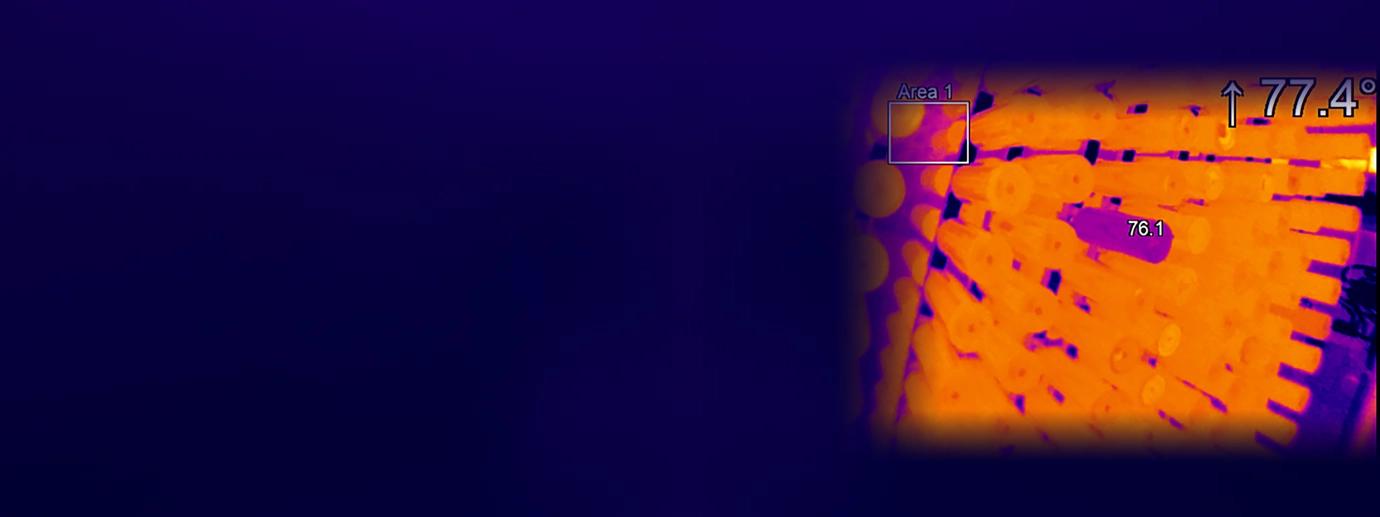
Advanced Thermal Imaging Detects Gas Cylinder Filling Defects
Improving Gas Cylinder Filling Processes with Infrared Camera Monitoring
Challenge
High-volume cylinder filling requires fast, reliable fault detection, but traditional manual inspections and pressure testing are slow, error-prone, and create production bottlenecks—especially when monitoring painted aluminum cylinders that mask temperature differences critical to identifying incomplete fills or leaks.
Solution
A real-time thermal monitoring system was implemented to detect abnormal temperature patterns during gas injection, enabling rapid, automated inspection of each cylinder in the filling rack without slowing down production or relying on manual quality control steps.
Benefits
- Enables immediate detection of faulty cylinders during the filling process.
- Replaces slow, error-prone manual inspections with automated thermal monitoring.
- Minimizes production downtime by preventing defective cylinders from advancing.
- Reduces waste and rework through early-stage defect identification.
- Ensures consistent, high-throughput quality control without disrupting workflow.
Challenges of Quality Control in High-Volume Cylinder Filling
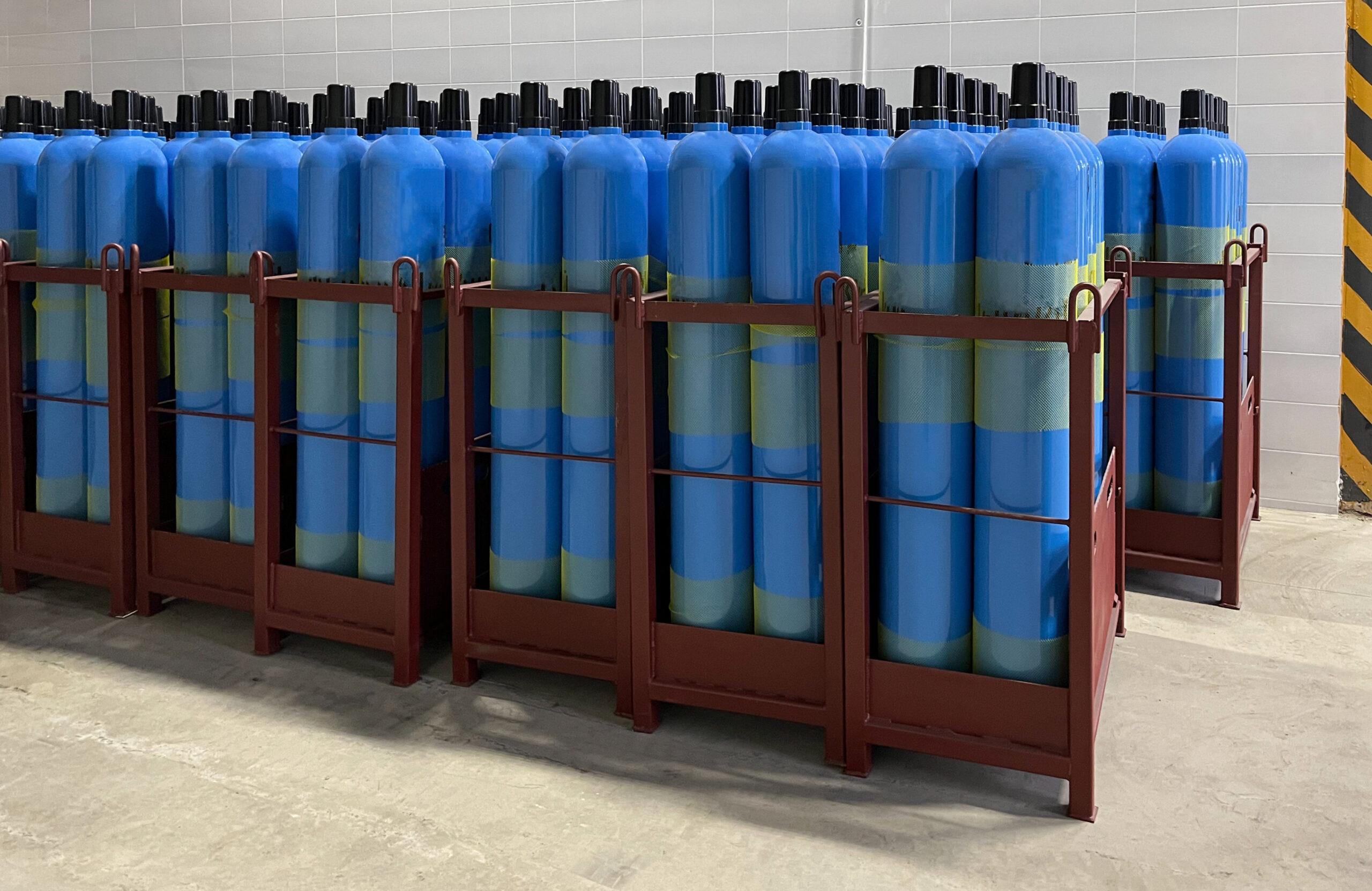
In the industrial gas industry, ensuring proper cylinder filling is essential for both safety and operational efficiency. Defective cylinders, often caused by leaks or incomplete fills, can compromise safety and lead to product quality issues. Traditionally, detecting these faults involved manual inspections or pressure testing, both of which are time-consuming and create bottlenecks in the production process. These methods slow down operations, making it difficult to meet high-volume demands.
The need for fast, accurate inspection is particularly crucial when filling a large number of cylinders in a short amount of time. One significant challenge is the precise monitoring of gas-filled cylinders made from painted aluminum, which can mask temperature variations. Identifying anomalies in the filling process based on surface temperature requires advanced tools.
The manufacturer of this application, operating in the industrial gas industry, faced difficulties with traditional methods that slowed down their production and led to bottlenecks. He sought a new solution to avoid time-consuming manual checks or pressure testing. These methods were not only inefficient but also prone to errors, further delaying the process. The customer needed a more efficient way to monitor the filling process, particularly because the temperature of the cylinders changes during gas injection, and faulty cylinders often display static or abnormal temperature profiles. These challenges created a pressing need for a solution capable of providing real-time temperature monitoring across the entire cylinder filling rack, ensuring that each cylinder could be inspected for potential defects without slowing down the overall workflow
Real-Time Data Enhances Gas Cylinder Filling Efficiency
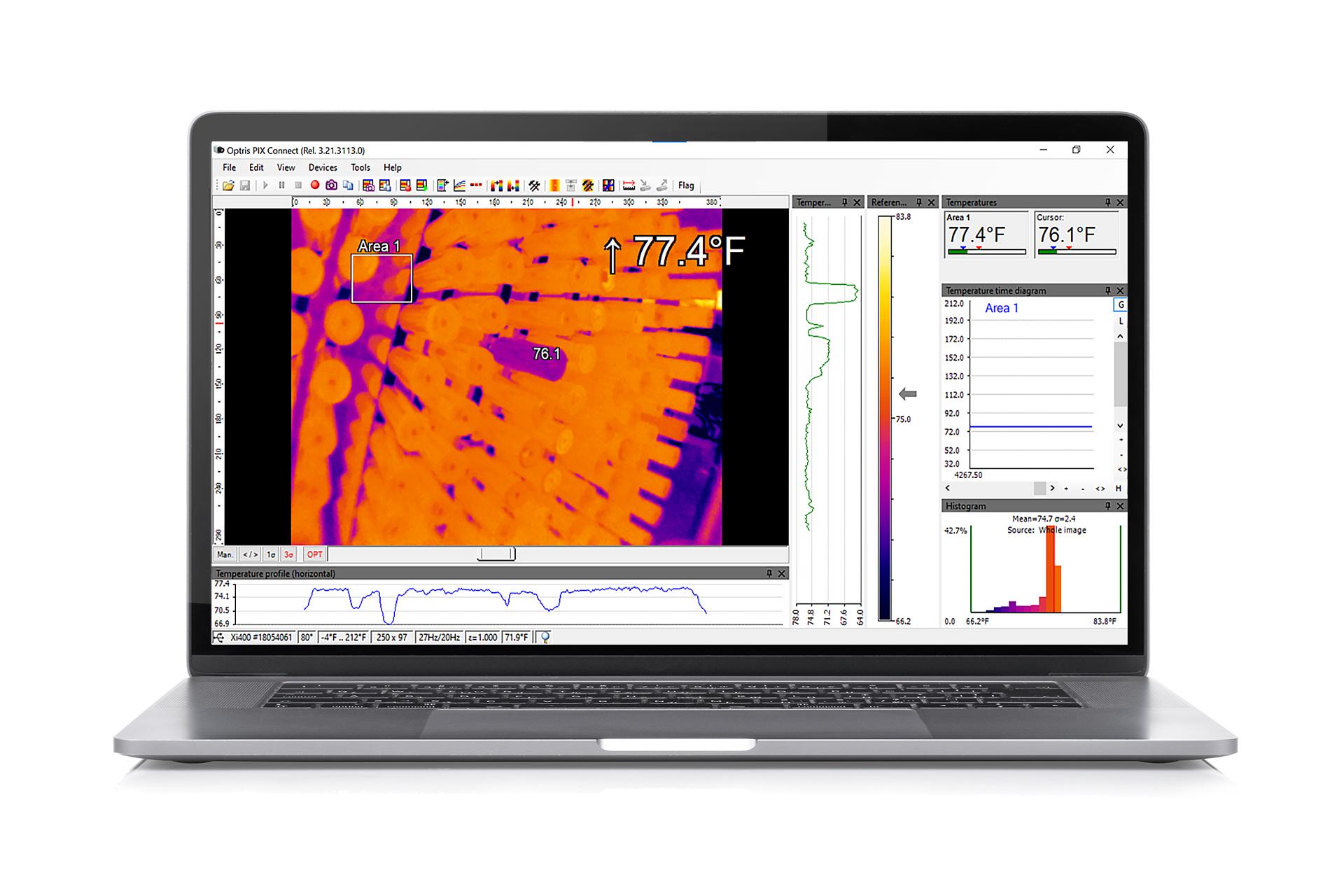
The Optris Xi 400 infrared camera system was implemented to optimize the gas cylinder filling process through precise real-time temperature monitoring. Multiple Xi 400 cameras, each with an 80-degree field of view, were positioned around the filling rack to capture thermal images of the painted aluminum cylinders. These cameras monitor a temperature range of 15 °C to 25 °C (59 °F to 77 °F), providing accurate thermal snapshots as the gas is injected. With a resolution of 382 x 288 pixels and a thermal sensitivity (NETD) of 50 mK, the Xi 400 offers precise, non-contact temperature measurements, allowing operators to detect deviations in the filling process quickly. When an abnormal temperature profile is detected, the cylinder is flagged for further inspection. This automated approach replaces traditional manual checks or pressure testing, significantly increasing efficiency without slowing down production. The Xi 400’s ability to provide continuous, real-time feedback ensures that only properly filled cylinders continue through the process, minimizing the risk of defects.
The Xi 400 was selected for its robust features, including an 80 Hz frame rate that allows for the monitoring of fast thermal processes, and its durable design, featuring IP 67-rated housing that can withstand industrial environments. The system also includes a motorized focus, which ensures precise measurements even at varying distances, and is equipped with accessories like water-cooled housing and a laminar air purge system to protect the camera from environmental factors like dust and fluctuating temperatures. The PIX Connect software complements the hardware by enabling operators to set alarm thresholds and analyze the data in real-time. With these features, the Optris Xi 400 delivers a reliable and efficient solution for automated quality control during high-volume gas cylinder filling.
Reducing Waste and Downtime with Infrared Camera Monitoring
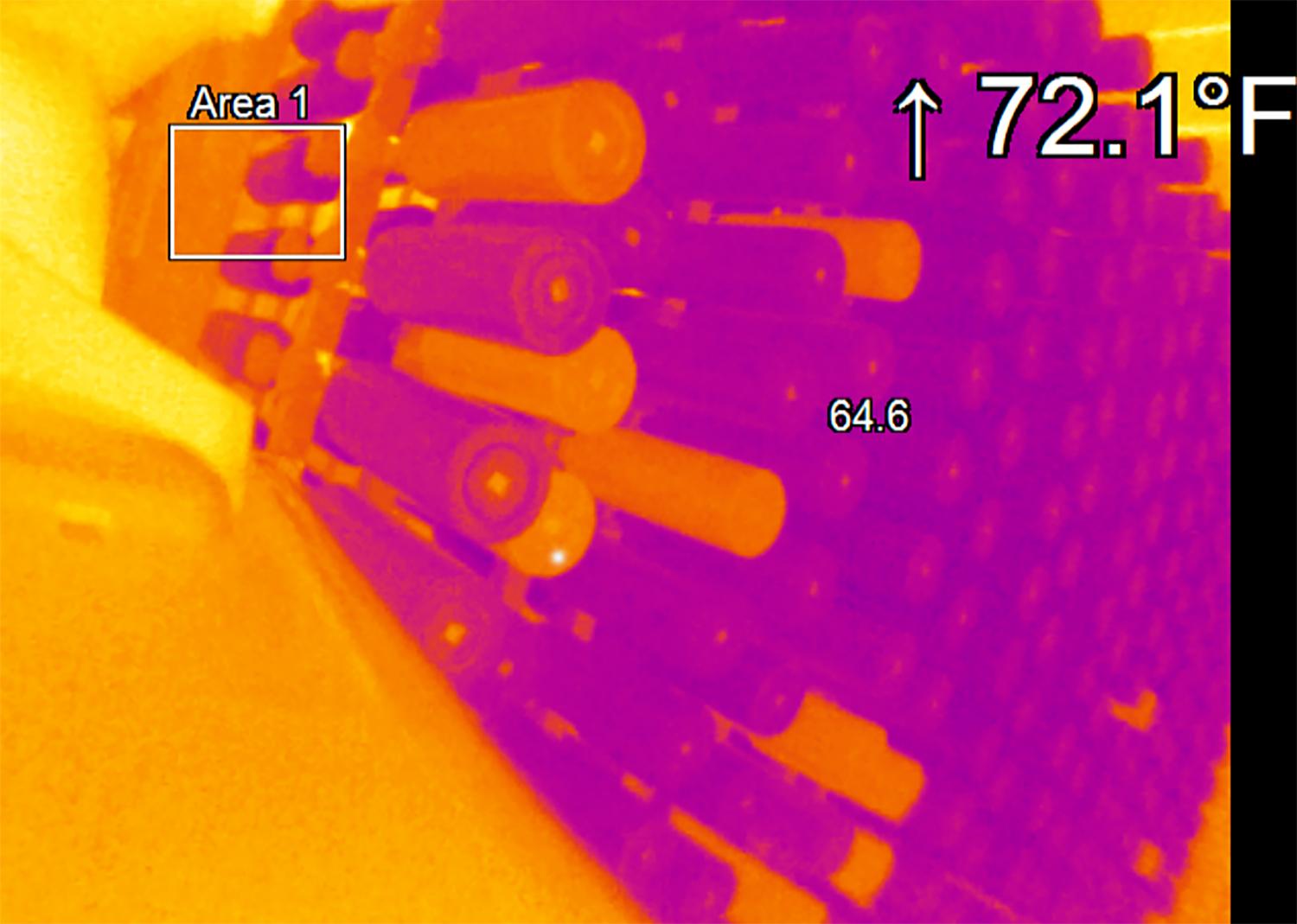
The implementation of the Optris Xi 400 infrared camera has significantly enhanced the customer’s ability to detect faulty gas cylinders during the filling process. Thanks to its wide-angle 80-degree optics and real-time temperature monitoring capabilities, the Xi 400 ensures thorough inspection of each cylinder for temperature inconsistencies. The system allows operators to quickly identify defects by visually inspecting thermal images immediately after filling, enabling fast removal of faulty cylinders. This has eliminated the need for manual pressure testing and inspections, which were previously slow and prone to errors. With precise temperature data from the Xi 400, the customer has accelerated their quality control process while maintaining a high level of accuracy.
In addition to improving inspection speed, the Xi 400 has helped reduce waste and downtime. Faulty cylinders are now identified in real-time during the filling process, minimizing the likelihood of defective products advancing through production. By detecting issues early, operators can quickly remove problematic cylinders from the line, reducing rework and avoiding production inefficiencies. This real-time detection has significantly boosted productivity by ensuring a smooth workflow without unnecessary interruptions.
The long-term reliability of the Xi 400 is another critical advantage. Designed for challenging industrial environments, the camera is equipped with water-cooled housing and a laminar air purge system to protect it from high temperatures, dust, and debris, ensuring accurate thermal readings over time. The Xi 400’s durability, combined with the ease of use provided by the PIX Connect software, allows operators to configure the system effortlessly, set alarms, and analyze thermal data in real-time. This user-friendly interface simplifies the quality control process, allowing the customer to maintain efficient production with minimal intervention. By adopting the Optris Xi 400, the customer has achieved faster, more accurate inspections, reduced downtime, minimized waste, and improved overall productivity
Recommended Products






Other Condition Monitoring Applications






Talk to us about your IR Temperature Measurement Requirements
There are over 300 different pyrometer variants to choose from in the Optris infrared pyrometer portfolio each optimized for material, spot size, distance from the target, and environmental conditions. Fortunately, there is a trained engineer to phone or chat with to guide you through the process of choosing the perfect infrared sensor for your application.
The same support is available for the extensive IR camera product line.
