


Boosting Quality in Hose Production via Precise Temperature Monitoring
Full Automation with Infrared Temperature Feedback Ensures Optimal Hose Layer Bonding
Challenge
In garden hose production, precise surface temperature control is essential to ensure proper layer bonding. Variations in heat during high-speed processing risk weak adhesion or material damage. Ambient heat and rapid hose movement make comprehensive surface monitoring difficult with traditional point-based sensors.
Solution
Infrared cameras continuously capture thermal images of the entire hose surface at high speed. Positioned at a safe distance, they monitor real-time temperature variations across different production stages, enabling precise thermal control. The automated system detects deviations instantly and adjusts heating elements to ensure consistent bonding throughout the hose.
Benefits
- Ensures consistent layer bonding by detecting temperature deviations in real time
- Reduces material waste through early detection of thermal inconsistencies
- Supports automated heating control for improved production efficiency
- Enhances overall product quality with full-surface thermal monitoring
- Minimizes downtime caused by manual inspection or defective batches
Precise and High Fast Temperature Measurement for Garden Hose Manufacturing
In this application, the manufacturer wants reliable temperature measurements for the garden hose production process.
A garden hose consists of several layers that give it its specific properties. The innermost layer, the hose jacket, is usually made of PVC or rubber. This layer guides the water and must be smooth and flexible to ensure efficient flow. Above this is the reinforcement layer, made of woven or wrapped textile fibers such as polyester or nylon. This layer provides the hose with pressure resistance and mechanical stability, allowing it to withstand high loads. The outermost layer, also made of PVC or rubber, serves as a protective layer.
Temperature plays a key role in bonding the different layers together because it affects the adhesion and fusion of the materials. If the temperatures are too low, the layers cannot fuse properly, resulting in a weak bond and compromising the hose’s integrity. On the other hand, if the temperature is too high, it can damage the material, alter its physical properties, and weaken the structure.
During this process, the hose passes through several temperature ranges, heating up to 200 °C (392 °F) or cooling down to room temperature at each station. These temperature changes are repeated throughout the process.
The manufacturer requires precise temperature measurements on the hose’s surface between individual stations to monitor its quality and regulate the heating process if necessary. The entire surface of the hose needs to be measured to detect even the smallest temperature differences and potential defects.
The biggest challenges are the ambient temperatures and the speed of the process as the hose passes through the measuring stations at high speed.
The manufacturer previously used pyrometers from other suppliers for temperature control. Still, the major disadvantage was that only point measurements were possible, and the entire surface area of the hose could not be monitored.
Automated Temperature Control with Infrared Imaging in Optimizing Hose Production
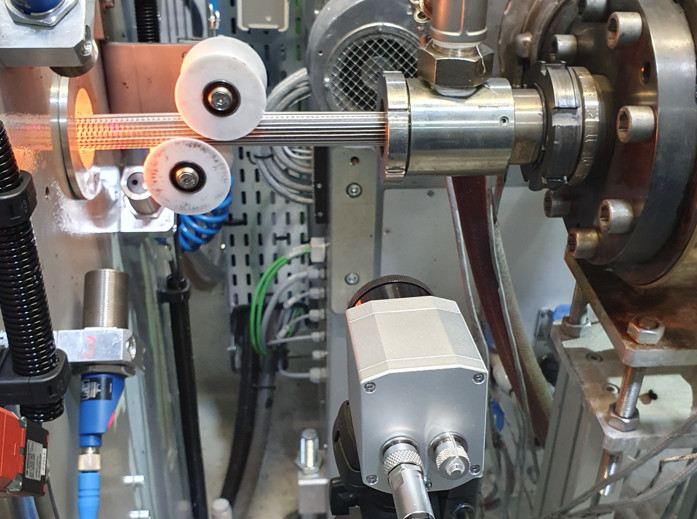
Optris delivers the ideal solution for the manufacturer’s application. Infrared cameras from the PI series are strategically installed at the measuring stations, positioned at a distance from the object to be measured. This setup ensures that higher ambient temperatures do not interfere with the accurate measurements provided by the Optris PI 400i cameras.
The PI 400i cameras are precisely aligned to capture the entire hose. With an 80 Hz measurement rate, these cameras accurately monitor the hose even at higher speeds, ensuring comprehensive coverage without missing any areas.
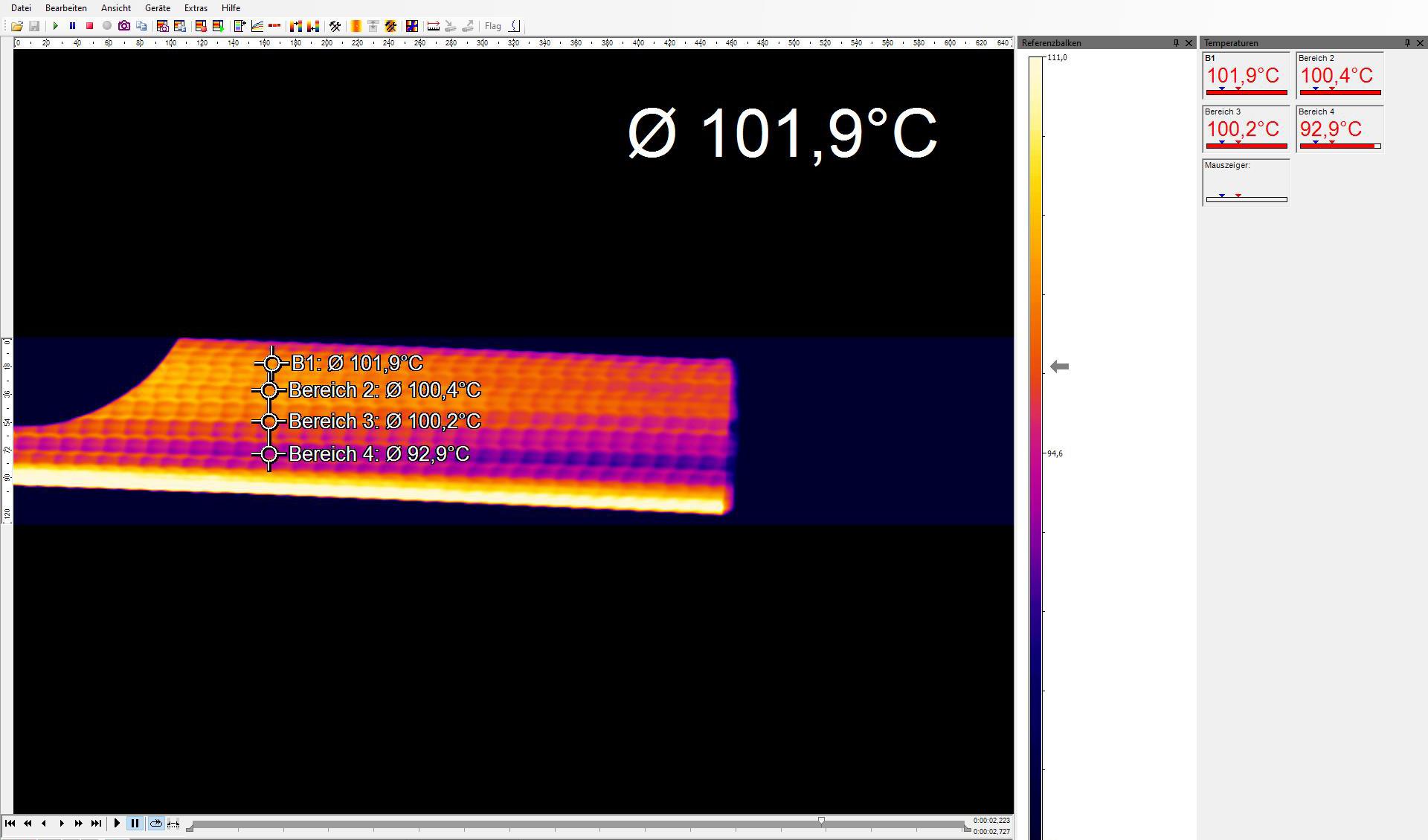
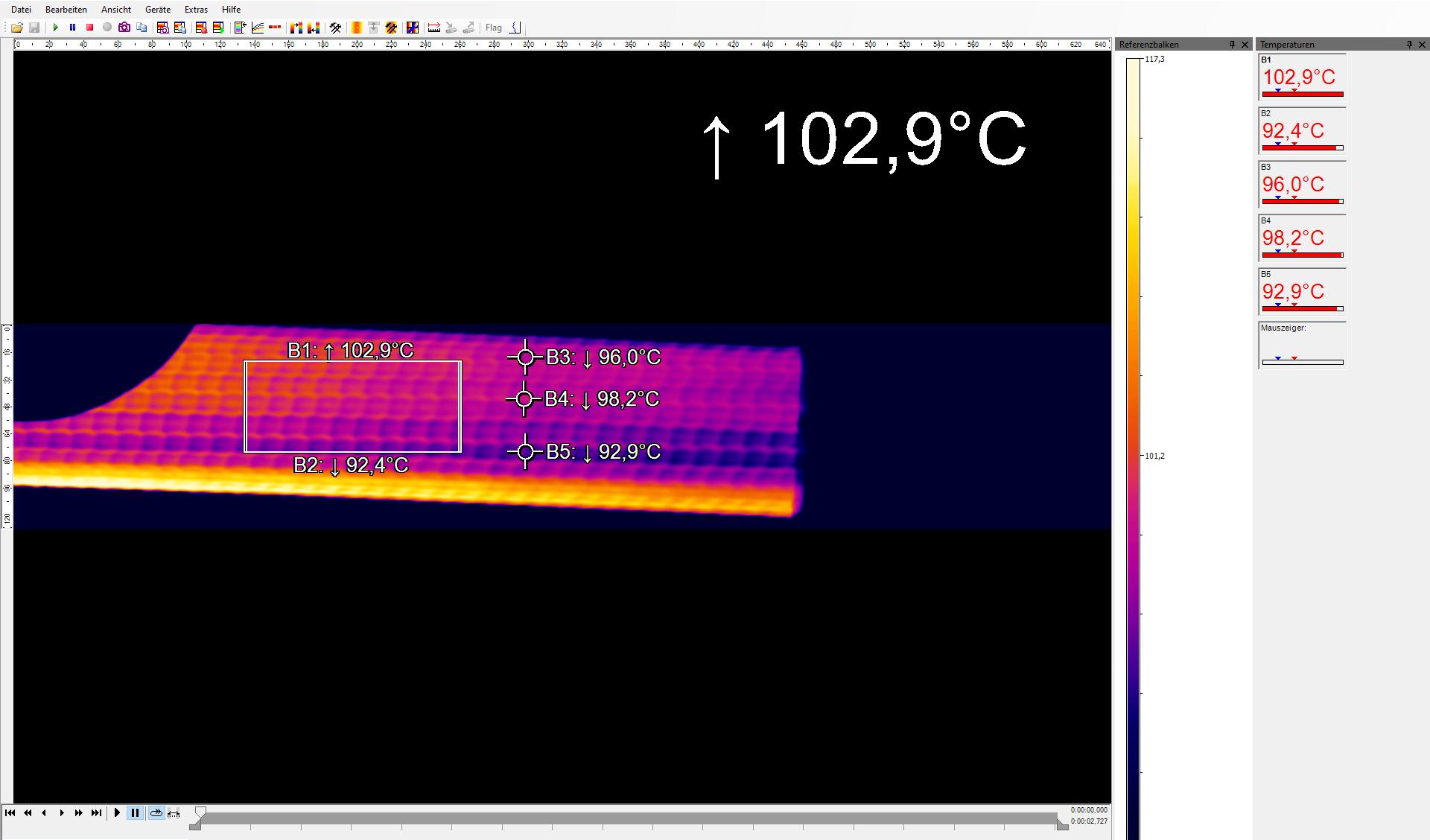
Using the Optris PIX Connect software, real-time thermal images are generated. The software allows for the creation of different measuring fields across the width of the hose, enabling precise temperature analysis in each area.
This level of precision is crucial for the manufacturer, as temperature distribution can vary with hose thickness. Any incorrect temperatures are immediately transmitted to the process control system via an alarm upon detection.
The cameras are seamlessly integrated into the PLC via an analog input using a PIF. This integration facilitates easy and automated regulation of the heating elements when incorrect temperature values are detected, ensuring optimal production quality.
Advantages of Optris Infrared Cameras Over Point-Measuring Pyrometers in Reducing Scrape
The PI 400i cameras significantly optimize the manufacturer’s process, enabling full automation and reducing the rate of faulty material due to incorrect temperatures and material defects.
A major advantage is the simple integration of the Optris PI 400i infrared camera model, which provides reliable temperature measurement.
Thanks to their robust and compact design, these measuring devices seamlessly integrate into almost any industrial application.
Additionally, various Optris accessories ensure that the PI camera series remains resilient in harsh industrial environments. For example, a water-powered cooling housing or a laminar air purge can protect the cameras from high ambient temperatures and dirty optics.
The infrared camera accurately detects even tiny temperature differences with an optical resolution of 382 x 288 pixels and a thermal sensitivity of 75 mK. This precision is maintained even when objects pass through the measuring range at high speed, as the PI 400i measures at a frame rate of 80 Hz. This capability is crucial in the manufacturer’s hose application.
Recommended Products





Other General Manufacturing Applications




Talk to us about your IR Temperature Measurement Requirements
There are over 300 different pyrometer variants to choose from in the Optris infrared pyrometer portfolio each optimized for material, spot size, distance from the target, and environmental conditions. Fortunately, there is a trained engineer to phone or chat with to guide you through the process of choosing the perfect infrared sensor for your application.
The same support is available for the extensive IR camera product line.
