


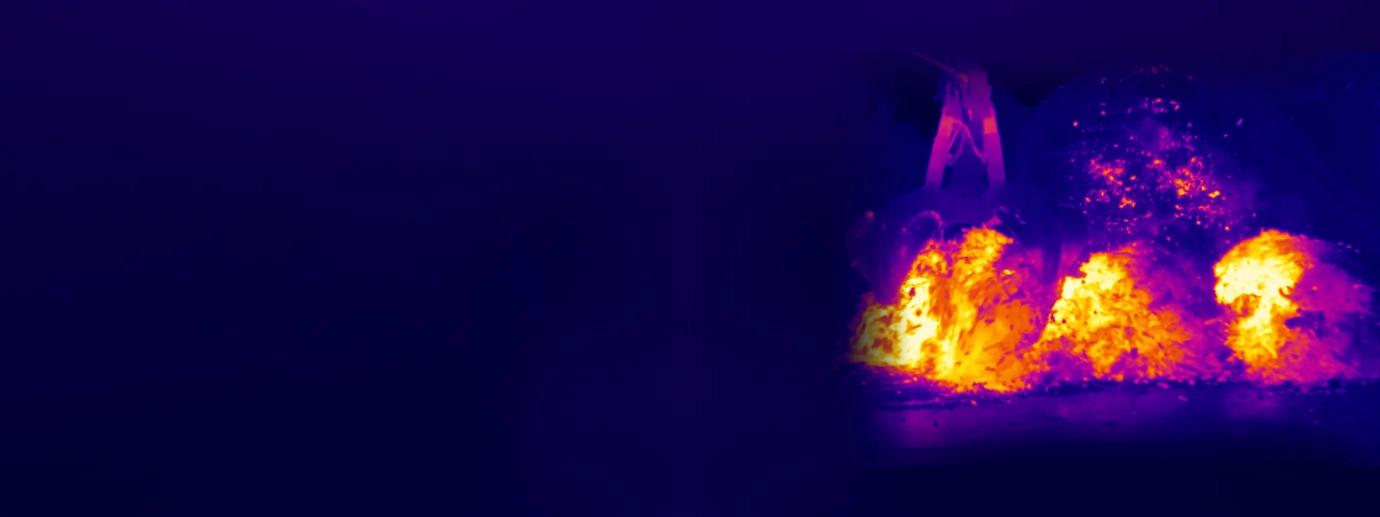
Early Reliable Fire Detection System with Fixed Infrared Cameras
Enhance Fire Safety Solution with 24/7 Monitoring using Advanced Infrared Technology and Custom Software
Challenge
Detecting fires early in industrial and storage environments is difficult due to wide areas, dust, and delayed smoke or heat dispersion. Traditional smoke, heat, and gas detectors often trigger too late or give false alarms, especially in dirty, open, or complex spaces like recycling plants and large warehouses.
Solution
Infrared thermal imaging enables early fire detection by sensing rising heat signatures before visible smoke or flames appear. By integrating infrared cameras into autonomous systems with intelligent analysis algorithms, fires can be detected quickly and accurately even in demanding environments, reducing reliance on delayed or error-prone traditional systems.
Benefits
- Detects fire risks before visible signs, minimizing potential damage
- Operates reliably in dirty, open, or harsh industrial environments
- Reduces false alarms by distinguishing real fire sources from heat disturbances
- Works autonomously around the clock without requiring constant human supervision
- Integrates easily into existing fire safety and suppression infrastructures
Fire Detection Challenges in Industrial and Storage Facilities
The risk of fires in industrial and storage facilities is ever-present. Early detection of smoldering and incipient fires is crucial to prevent significant financial losses and environmental damage. However, due to various external factors, conventional fire monitoring systems often struggle in environments like recycling plants, large warehouses, and open storage areas. Fire detection devices primarily include smoke, heat, flame, and gas detectors, each varying in detection timing and sensitivity based on the specific type used. Fire detection devices vary in detection timing and sensitivity. Conventional detectors include smoke detectors, heat detectors, and gas detectors.
Aspiration smoke detectors (ASDs) enhance precision by actively sampling air through a pipe system and using laser detection to identify smoke particles. They offer flexible installation and excel in large spaces but perform poorly in dirty environments. Ionization smoke detectors utilize radioactive material to charge air particles. When smoke disrupts this charge, the alarm triggers. They are highly responsive to flaming fires but prone to false alarms from steam or dust. On the other hand, photoelectric smoke detectors detect smoke by reflecting light onto a sensor when smoke enters the chamber, making them more responsive to slow, smoldering fires with fewer false alarms, though slower for fast fires. Fire sprinkler systems activate through heat-sensitive glass bulbs containing glycerin-based liquid. When temperatures rise to a certain threshold, the liquid expands, breaking the glass and triggering the sprinklers, with different liquid colors indicating various activation temperatures.
In addition, the industrial environment poses many other challenges for a fire detection system. Large warehouses and open storage areas pose particular challenges, as smoke and heat can spread over a wide area. This delays the detection of fires and can lead to fires remaining undetected until they have already caused considerable damage.
Given the combination of challenges faced by conventional fire monitoring systems in industrial and warehouse environments, it’s clear that new, innovative solutions are needed. This presents an exciting opportunity for the development of robust, next-generation fire detection systems that can ensure safety in these demanding environments.
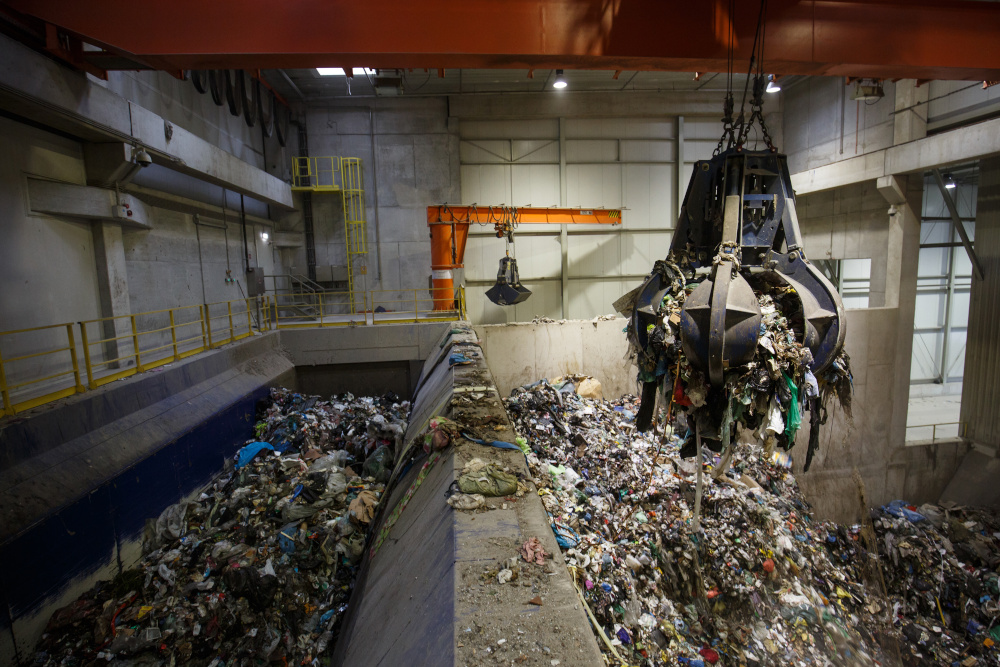
Effective Early Fire Detection by Infrared Sensing Heat Signatures Before Fire Erupts
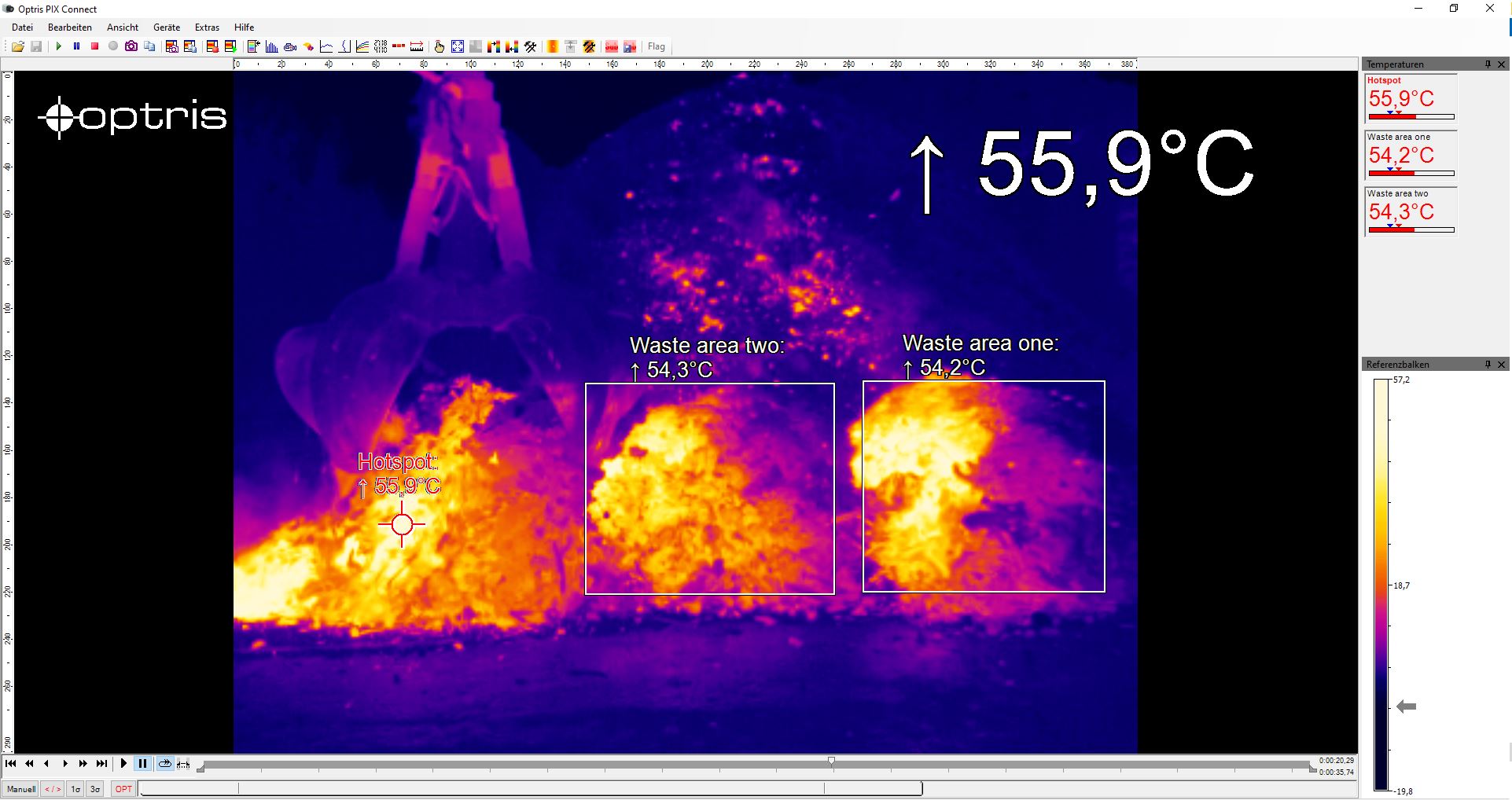
Infrared cameras are highly effective in early fire detection because they can sense heat signatures via radiation principles. As a fire develops, the temperature of surrounding materials increases, creating a detectable heat signature even before visible smoke appears. These cameras provide early alerts and precisely pinpoint hot spots, though they require a clear line of sight and only measure surface temperatures.
The Company GROMA 247, in collaboration with Optris, has developed an advanced fire detection system using Optris infrared cameras. This system leverages the precision and real-time capabilities of the Optris PI 640i VGA thermal imaging camera. Integrated into the GROMA Series 5A Infrared Sequential Analysis Detector (ISAD), the camera delivers accurate temperature measurements and early fire detection.
The Optris PI 640i camera features a resolution of 640 x 480 pixels, offering 110,016 or 307,200 measurement points. Housed in an industrial-standard aluminum housing that can be upgraded to stainless steel, it provides comprehensive monitoring with protective options like compressed air flushing, air curtain, cooling, and explosion protection. The system operates in ambient temperatures from -20 °C to +40 °C (-4 °F to +104 °F), with extended options from -30 °C to +80 °C (-22 °F to +176 °F), and functions within the spectral range of 8 µm to 14 µm. It can record radiometric videos at up to 125 Hz, ensuring thorough monitoring.
The GROMA Series 5A system, equipped with an advanced algorithm, can analyze infrared data and distinguish real fires from other heat sources within 60 seconds, significantly reducing false alarms and ensuring accurate alarm triggers. Its autonomous operation eliminates the need for continuous human supervision, making it GDPR-compliant and efficient for 24/7 operation.
Integrating the Optris PI 640i camera with the GROMA Series 5A provides a robust solution for fire detection in challenging environments. It is particularly effective in industrial and storage facilities, large warehouses, outdoor storage areas, hazardous areas in cable cars, recycling plants, and bulk material storage sites. The system can be seamlessly integrated into existing fire alarm and suppression setups, enhancing the overall safety and reliability of fire detection measures.
Advantages of Using Optris Infrared Cameras for Fire Safety
Optris cameras stand out as an excellent choice for demanding fire protection applications across various industrial sectors, thanks to their advanced features and capabilities.
The Optris PI 640i VGA thermal imaging camera delivers high precision and real-time functionality with a VGA resolution of 640 x 480 pixels. This high resolution facilitates precise temperature measurements and early fire detection, enabling swift responses to potential fires and significantly enhancing safety.
The GROMA 247 system further elevates the versatility of Optris cameras by offering an industrial-grade aluminum housing, which can be upgraded to stainless steel. It includes several protection options such as compressed air purge, air curtain, cooling, and explosion protection, making the system extremely robust and suitable for harsh environments. Operating within a temperature range from -20 °C to +40 °C (-4 °F to +104 °F), with extended options from -30 °C to +80 °C (-22 °F to +176 °F), the system adapts to various climatic conditions.
The Optris PI 640i camera features a high frame rate, capable of recording radiometric video at up to 125 Hz, ensuring comprehensive and continuous monitoring. The GROMA Series 5A system utilizes an algorithm that analyzes infrared data to distinguish real fires from other heat sources within 60 seconds, significantly reducing false alarms and ensuring alarms are only triggered for actual fires. This capability is crucial for the accurate and timely detection of fire sources.
The system’s autonomous operation and seamless integration into existing fire detection and extinguishing systems enhance overall reliability and safety. It does not require continuous human supervision, making it efficient for 24/7 operation and reducing manpower needs.
The GROMA software is built on the sophisticated Optris Software Development Kit (SDK), providing a robust foundation for advanced infrared measurement and analysis. The SDK enables seamless integration with a wide range of infrared cameras, ensuring precise temperature measurement and real-time data processing. With the temperature data provided, the system can perform complex thermal analysis, implement advanced object detection algorithms, and ensure reliable fire detection even in challenging environments. The continuous enhancements and adaptability of the Optris SDK keep the software at the forefront of infrared technology.
Recommended Products







Other Fire Detection & Safety Applications

Talk to us about your IR Temperature Measurement Requirements
There are over 300 different pyrometer variants to choose from in the Optris infrared pyrometer portfolio each optimized for material, spot size, distance from the target, and environmental conditions. Fortunately, there is a trained engineer to phone or chat with to guide you through the process of choosing the perfect infrared sensor for your application.
The same support is available for the extensive IR camera product line.
