


Optimize Hop Drying Process with Fixed Installed Infrared Cameras
Protect Hop Quality for Beer Brewing with Infrared Technology
Challenge
Hop cones contain high moisture post-harvest, making them prone to mold and quality loss during uneven drying. Traditional methods struggle to detect moisture pockets in layered kilns, especially in the upper hopper layer, leading to inconsistent drying and compromised hop storability and brewing quality.
Solution
Infrared cameras enable real-time thermal imaging of hops during drying, identifying moisture pockets early and ensuring even temperature distribution throughout the kiln layers. This facilitates prompt corrective action, preventing localized underdrying and securing uniform quality in the hop drying process.
Benefits
- Ensures consistent drying and prevents mold or spoilage in moist hop clusters
- Maintains the hops’ alpha and beta acid levels for optimal brewing results
- Enables early detection of irregular drying patterns for timely adjustments
- Improves storability of dried hops through uniform moisture reduction
- Enhances overall process efficiency with real-time visual thermal feedback
Challenges in Homogeneous Hop Drying
Hop cones, post-harvest, contain about 80% moisture, making them prone to quality degradation due to condensation and uneven drying. This high moisture content is problematic as it can lead to mold and a decrease in the vital alpha and beta acids crucial for brewing. Consequently, drying the hops uniformly and promptly is essential to preserve their quality and make them storable for extended periods.
The drying process usually takes place in a kiln comprising several layers, where hops move from the top to the bottom layer. The top layer, or “hopper,” is particularly challenging as it is most susceptible to forming moisture pockets, which impede uniform drying. If not addressed, these pockets can lead to inconsistent drying, affecting the overall quality and storability of the hops.
Traditional methods often fail to detect these moisture pockets early, leading to degraded hop quality. It is, therefore, crucial to employ advanced monitoring techniques to ensure even drying. Implementing precise temperature control and monitoring technologies is vital to detect and rectify these inconsistencies promptly.

Preserve Hops During Drying in Industrial Brewing with Infrared Imagers
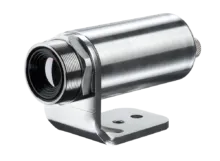
Optris provides state-of-the-art industrial infrared cameras like the Xi 80 and Xi 400, designed to monitor and control applications like the hop drying process. These infrared cameras ensure the hops are dried uniformly by providing real-time thermal imaging and temperature measurements, crucial for detecting and addressing moisture pockets early in the drying process.
The Xi 400 series cameras feature high-resolution thermal imaging with pixel resolutions up to 382 x 288 and thermal sensitivity down to 80 mK, making them ideal for detecting even minor temperature variations. These cameras can operate in harsh environments, with ambient temperatures up to 50 °C (122 °F), ensuring consistent performance under challenging conditions in the hop drying kilns.
By integrating Optris infrared cameras, hop processors can achieve a more uniform drying process, preventing the formation of moisture pockets. This not only improves the quality of the dried hops but also enhances their storage life and brewing performance. The cameras’ plug-and-play setup allows for easy integration and immediate benefits, making them a practical solution for modern hop drying challenges.
Boosting Hop Quality with the Advantages of Optris Infrared Technology
Using Optris infrared cameras in hop drying offers several significant benefits. First, they provide precise temperature monitoring, ensuring that hops are dried evenly. This precision helps in preventing the formation of moisture pockets that can lead to quality degradation and spoilage. By maintaining an even drying process, the quality and flavor profile of the hops are preserved, which is critical for brewing.
Second, the high resolution and sensitivity of Optris cameras allow for early detection of any inconsistencies in the drying process. This early detection enables immediate corrective actions, ensuring that the drying process remains optimal and efficient. The ability to monitor and adjust in real-time means that the risk of producing inferior-quality hops is significantly reduced.
Third, the robustness of Optris cameras means they can withstand the harsh conditions of hop-drying kilns. With an operating range that accommodates high ambient temperatures and high humidity levels, these cameras continue to perform reliably, providing continuous monitoring without interruption.
Finally, the implementation of Optris infrared technology is straightforward. The plug-and-play design ensures that the cameras can be easily installed and integrated into existing systems. This ease of use means that hop processors can quickly start benefiting from improved drying processes without significant downtime or training requirements.
Overall, the adoption of Optris infrared cameras leads to higher efficiency, better quality control, and ultimately, superior hop products.

Recommended Products





Other Food Applications


Talk to us about your IR Temperature Measurement Requirements
There are over 300 different pyrometer variants to choose from in the Optris infrared pyrometer portfolio each optimized for material, spot size, distance from the target, and environmental conditions. Fortunately, there is a trained engineer to phone or chat with to guide you through the process of choosing the perfect infrared sensor for your application.
The same support is available for the extensive IR camera product line.
