


Atmospheric Windows
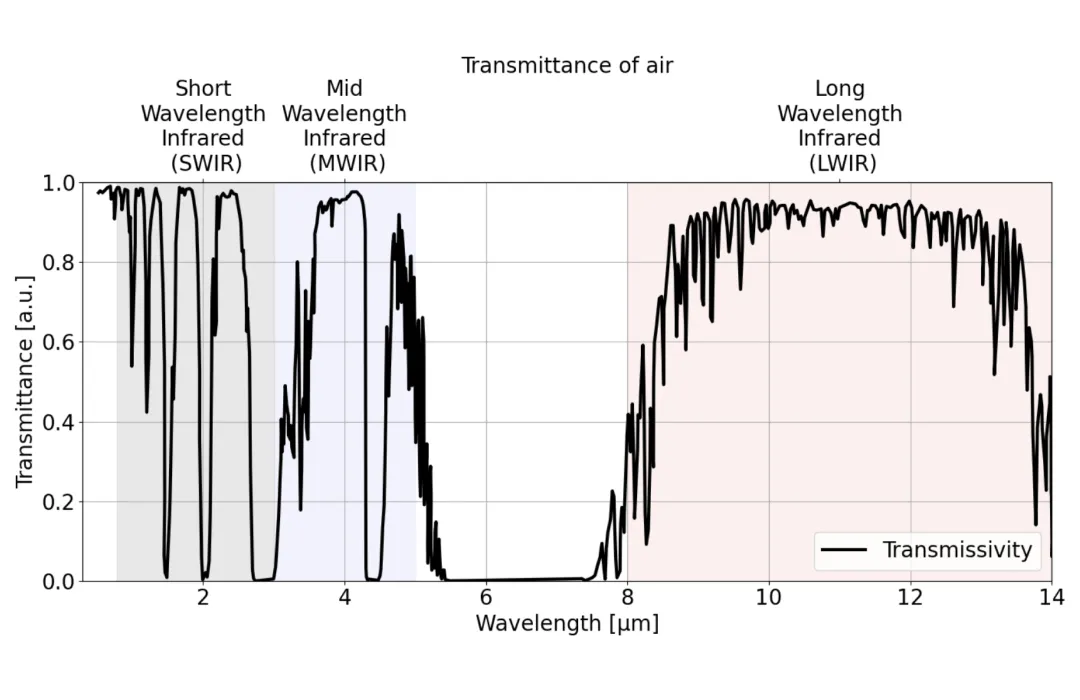
The atmospheric windows refer to specific areas of the electromagnetic spectrum where radiation can travel through the atmosphere with minimal interference.
Electromagnetic radiation can interact with the gases in the Earth’s atmosphere through various mechanisms. In the visible and UV radiation range, electronic transitions are crucial, while in the infrared radiation range, interactions between photons and molecular vibrations are dominant. A key condition for interaction is the presence of a dipole moment, which arises in asymmetrical charge distributions during molecular oscillations. Atomic gases like noble gases usually have symmetrical charge distributions and are therefore unable to interact with infrared radiation. Similarly, symmetrical molecules like oxygen (O2) and nitrogen (N2), which only vibrate along the atomic connection axis, do not have a dipole moment and are thus infrared-inactive. On the other hand, gases like water vapor, carbon dioxide, and carbon monoxide are infrared-active and can absorb or emit infrared radiation when heated. The type of radiation absorbed depends on the mass of the vibrating atoms and the chemical bond strength between them. The broad bands present in the transmission spectrum of these gases, instead of narrowly defined absorption lines, are a result of the coupling of these vibrations with molecular rotations, requiring detailed analysis through quantum mechanics.
Manufacturers of infrared thermometers aim to ensure that atmospheric conditions do not interfere with the accurate measurement of surface temperatures of distant objects. They achieve this by incorporating optical filters in the thermometers to restrict sensitivity to only the infrared radiation within the atmospheric window range, independent of the gases present in the atmosphere. This approach minimizes the impact of factors such as scanning range and daily humidity, which could otherwise distort the measured values.
Back to Lexicon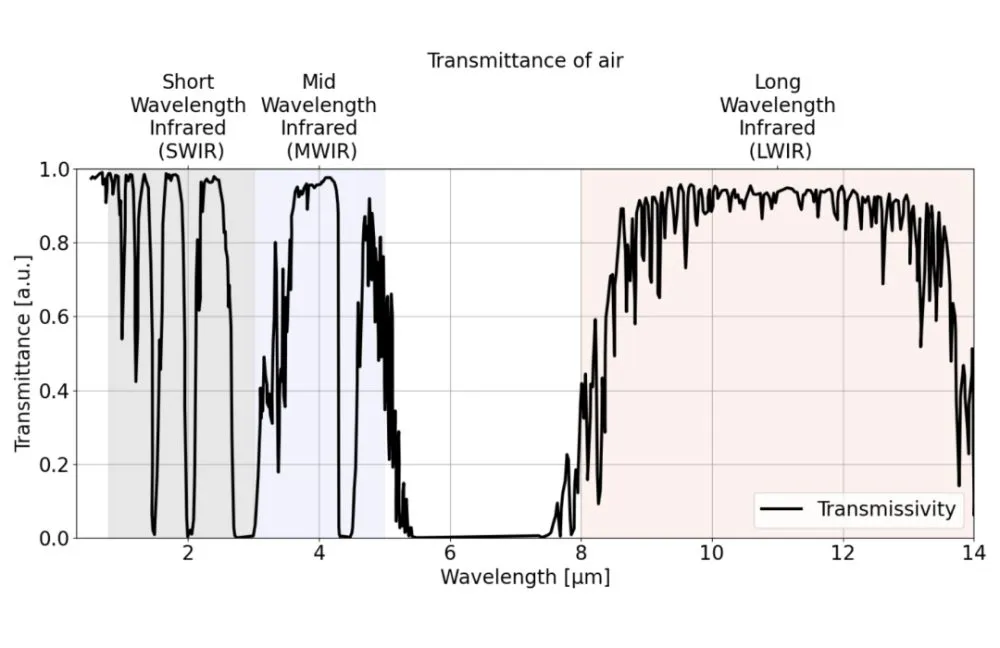
Recommended Products



Talk to us about your IR Temperature Measurement Requirements
Our Infrared Temperature Measurement experts can help you find the right Optris product for your application.
