


Background Radiation
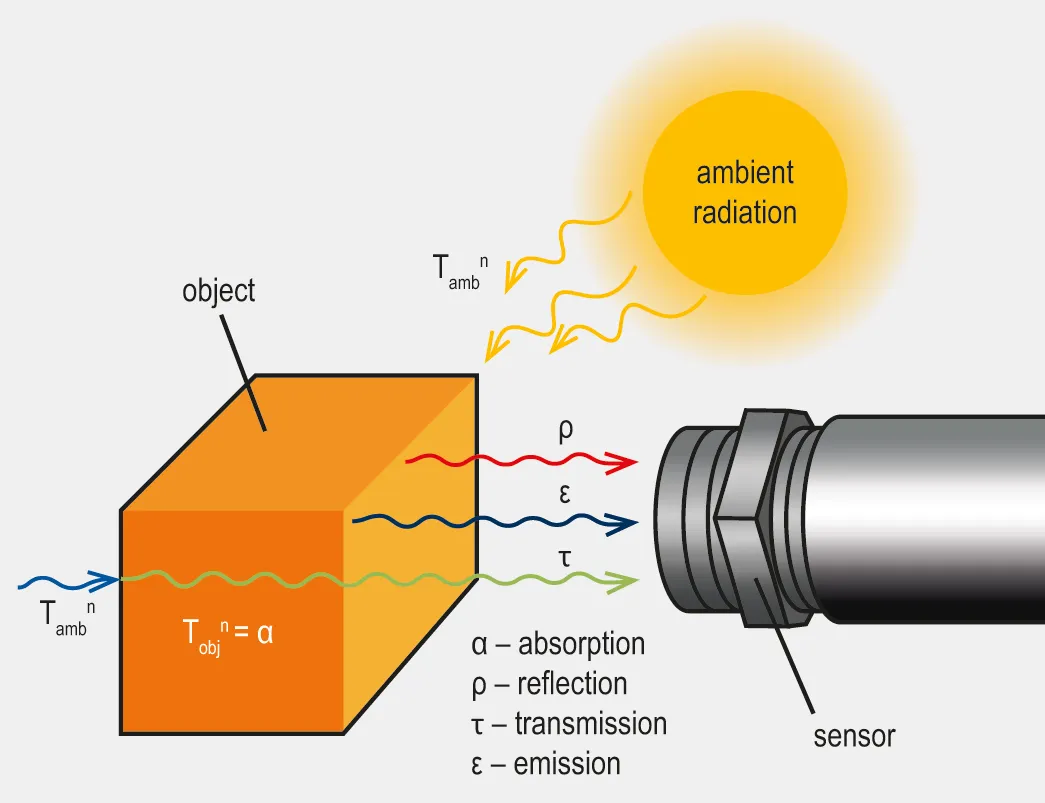
In infrared temperature measurement, background radiation refers to the contribution to the sensor signal from a radiation source that radiates through a partially transparent measurement object. The higher the transmittance of the measured object and the higher the temperature of the background, the greater the impact of the background radiation.
An infrared thermometer detects any radiation within its field of view for which it is spectrally sensitive. It doesn’t matter whether this radiation comes from the measurement object, is reflected by the measurement object, or is transmitted through the measurement object from the background. The last two types of radiation can interfere with the temperature determination of the measurement object, especially if their contribution to the overall signal is similar to or greater than the signal of the emitted radiation of the measurement object. If the level of background radiation is known, its influence can be compensated for through calculation, provided that the transmittance of the measurement object is known. However, it is generally better to avoid interfering with radiation by taking technical measures, such as shading hot radiation sources.
Back to Lexicon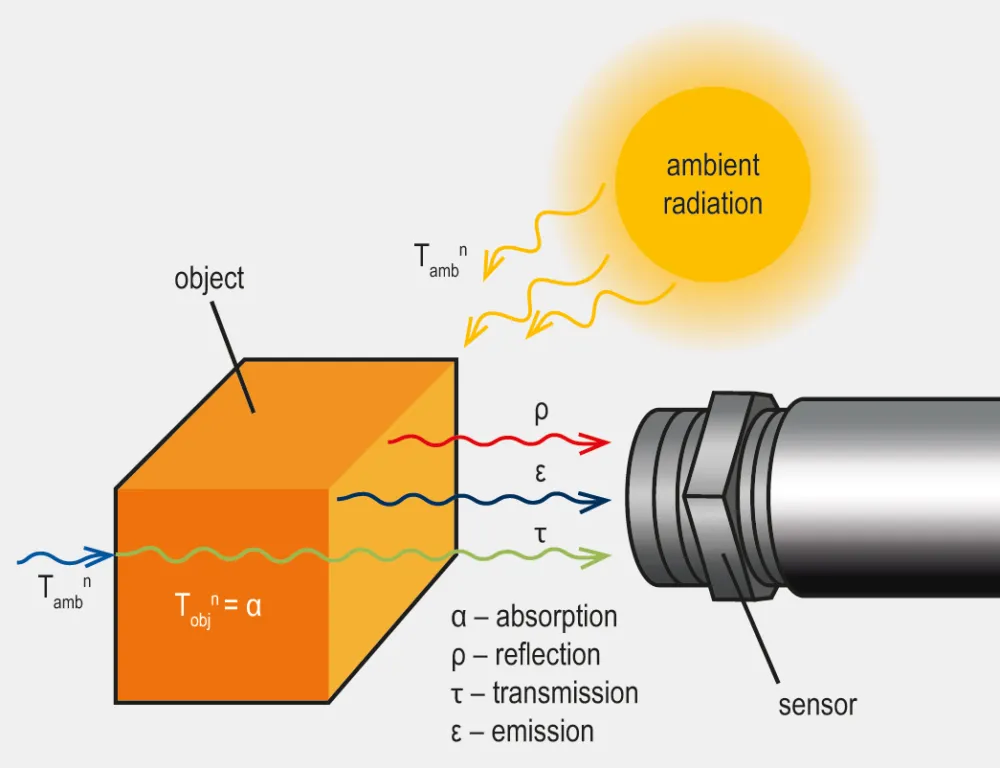

Talk to us about your IR Temperature Measurement Requirements
Our Infrared Temperature Measurement experts can help you find the right Optris product for your application.
