


CO2 filter
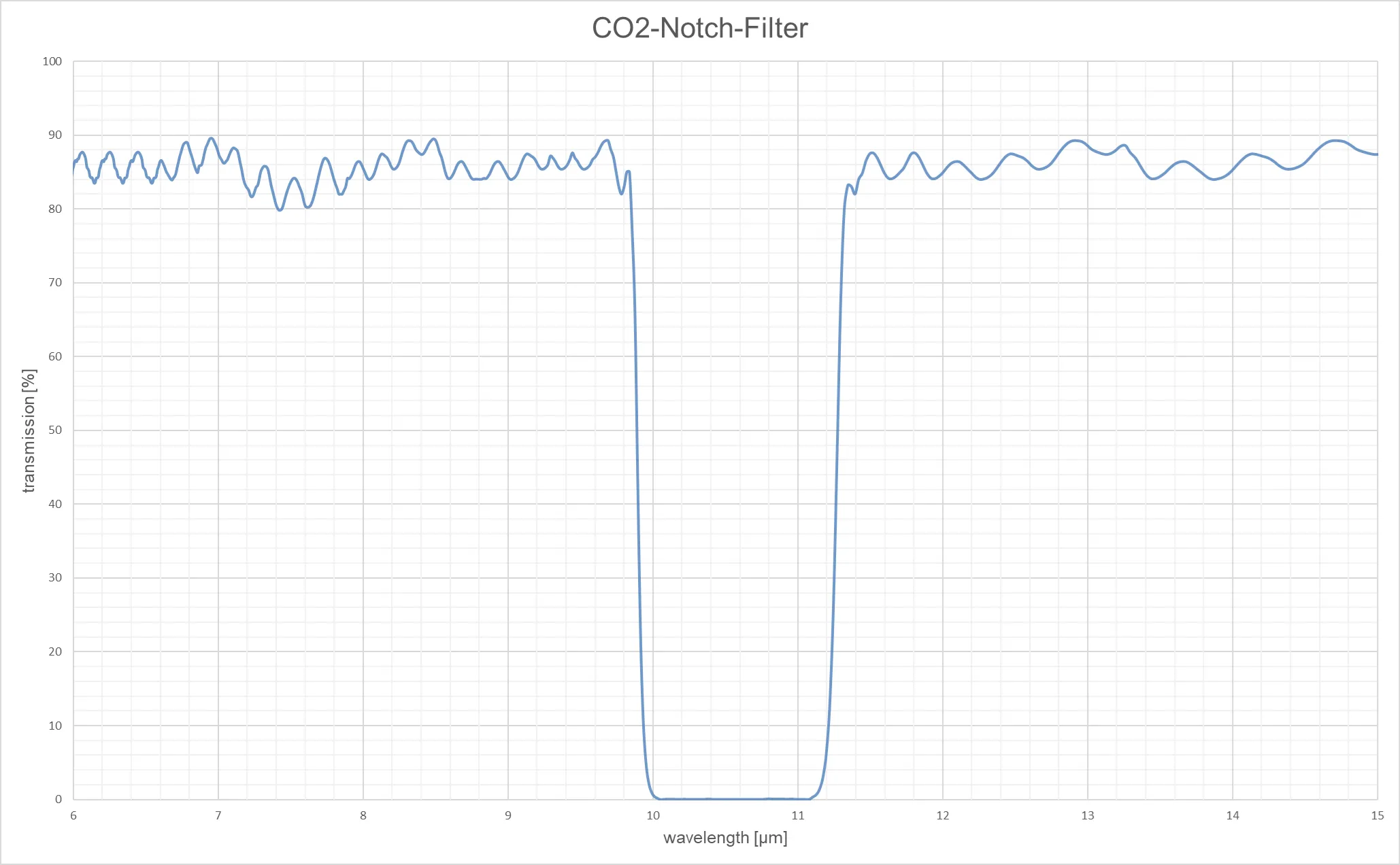
An infrared CO2 filter is a specialized optical component designed to selectively block specific wavelengths of infrared light associated with the absorption bands of carbon dioxide (CO2). In the context of an infrared camera, these filters are crucial for protecting the camera’s sensitive microbolometer detectors from potential damage caused by CO2 laser emissions. Most CO2 lasers operate at a wavelength of 10.6 micrometers (µm) in the infrared region of the electromagnetic spectrum, though they can also function at other wavelengths, such as 9.6 µm. The 10.6 µm wavelength is the most commonly used in various applications.
Infrared cameras, particularly those using uncooled microbolometers, are designed to detect and measure infrared radiation emitted by objects to visualize temperature distributions. However, CO2 laser light, particularly at 10.6 µm, can be intense enough to damage the microbolometer if it directly reaches the detector. The infrared CO2 filter addresses this issue by blocking the specific wavelengths emitted by CO2 lasers, thereby protecting the camera’s delicate components.
The construction of an infrared CO2 filter involves materials that are transparent to most infrared light but are engineered to absorb or reflect the CO2 laser wavelengths. Common materials include germanium or zinc selenide, coated with dielectric thin films that provide the precise filtering properties needed. These coatings are typically applied using vacuum deposition techniques to ensure high accuracy and performance.
Back to Lexicon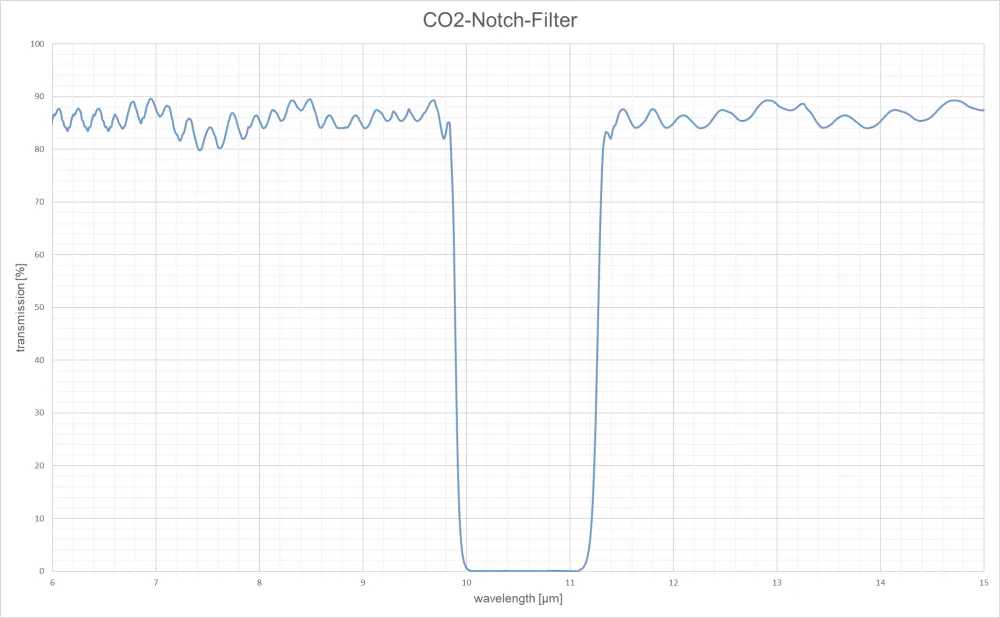
Recommended Products



Talk to us about your IR Temperature Measurement Requirements
Our Infrared Temperature Measurement experts can help you find the right Optris product for your application.
