


Color Palettes
These color palettes are essential for translating measured radiation intensities into an understandable visual form. The infrared radiation spectrum, ranging from about 780 nm to 1 mm, is a small part of the overall electromagnetic spectrum. Because we cannot perceive this radiation and its respective temperatures with our eyes, the measured values must be transformed into appropriate false colors to make temperature differences visible. The simplest way to do this is by using dark colors for the lower end of the temperature range and bright colors for the upper end. Color palettes are used to define exactly which colors represent which temperatures, ensuring that any temperature within the range has a corresponding color.
The most common color palette is the “Iron palette,” which was originally used in the steel industry but is now employed for many other purposes. Other palettes may be used in different application fields. There are many possibilities to match the false color presentation to specific situations:
High contrast palettes: Small temperature changes correspond to bigger color changes.
Non-linear color assignment: This reveals fine details in a scene with a high dynamic range.
Combining two palettes: For example, a gray palette and a palette with just red tones, with a temperature threshold between, to focus on an alarm level.
Back to Lexicon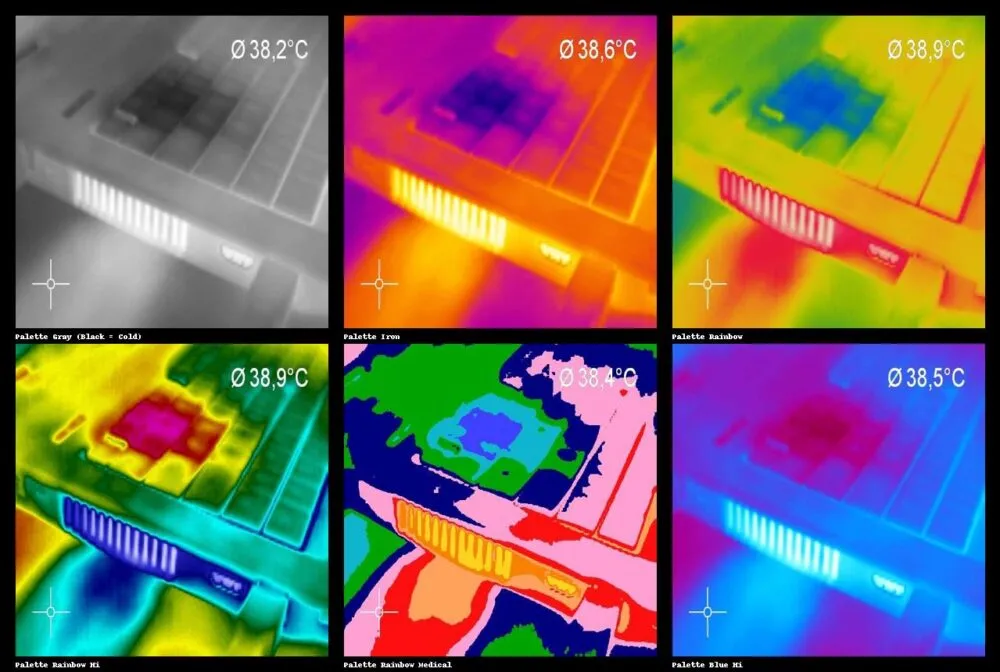
Recommended Products




Talk to us about your IR Temperature Measurement Requirements
Our Infrared Temperature Measurement experts can help you find the right Optris product for your application.
