


Cooled Thermal Imaging Cameras
Thermal imaging cameras that use a cryogenic cooler are advanced devices capable of cooling the thermal image core to temperatures as low as -196 C (-321 F). This cooling process significantly enhances the camera’s sensitivity and accuracy, allowing it to detect minute temperature differences and produce highly detailed thermal images. Cooled thermal cameras typically operate in the mid-wave infrared (MWIR) range, using 3-5 µm wavelengths.
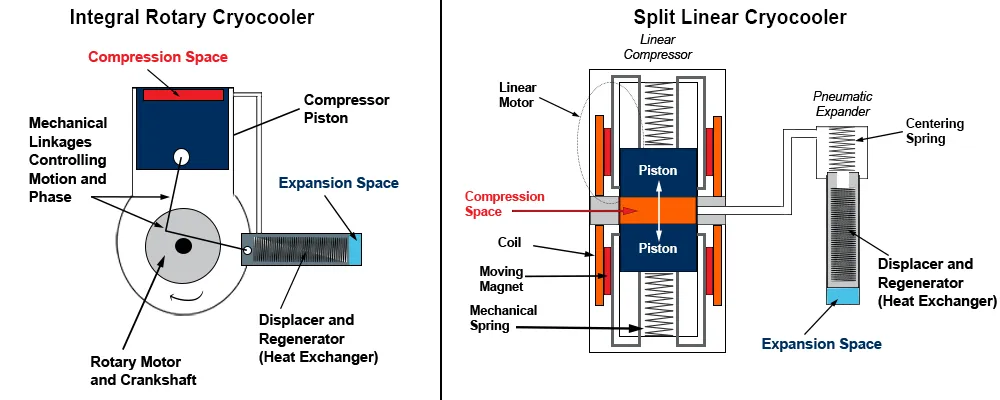
These systems detect radiated heat from objects. Any additional heat within the camera itself can introduce unwanted background noise, which reduces the clarity and accuracy of the thermal images. Cooled infrared cameras minimize this internal thermal noise by using a cryocooler to lower the sensor temperature to cryogenic levels. This cooling mechanism allows the cooled infrared camera to detect even the smallest temperature variations between the target and its background. The cryocooler runs continuously to maintain the low temperature, typically around 77 Kelvin (-196 C or -321 F). This continuous operation is important for achieving the high sensitivity required for precise thermal imaging. The cooler, often filled with volatile gas, needs to be built to extremely close mechanical tolerances. Unfortunately, it wears out over time and eventually requires maintenance or replacement after a couple of thousand hours of operation.
The primary advantage of cooled infrared cameras is their enhanced sensitivity to small temperature differences at fast speeds. This allows them to detect even the faintest thermal anomalies. Cooled cameras can use larger lenses with more optical elements without degrading the signal-to-noise ratio, resulting in higher magnification and better image detail. These cameras are ideal for applications that require the detection of minute temperature differences, fast response times, or high-speed thermal phenomena.
Nevertheless, there are significant drawbacks to using cooled infrared cameras. One of the most considerable disadvantages is their high cost. Integrating a cryogenic cooler, a special detector, large optics, and the need for precise manufacturing significantly increases the price compared to uncooled thermal cameras. The cryocoolers used in these cameras have moving parts and a cooling medium that slowly leaks over time, necessitating periodic maintenance and replacement of the cooler. This maintenance can be costly and time-consuming. The cryogenic cooling system adds complexity to the camera, making it more prone to mechanical failures. The seals and dewar assemblies can also fail, necessitating additional repairs. To maintain their low operating temperature, the cryocooler must run continuously to achieve such cryogenic temperatures. Despite the disadvantages, including higher cost, maintenance requirements, complexity, and continuous operation needs, cooled infrared cameras remain valuable, especially in scientific and military applications that require the highest levels of thermal imaging performance.
Back to Lexicon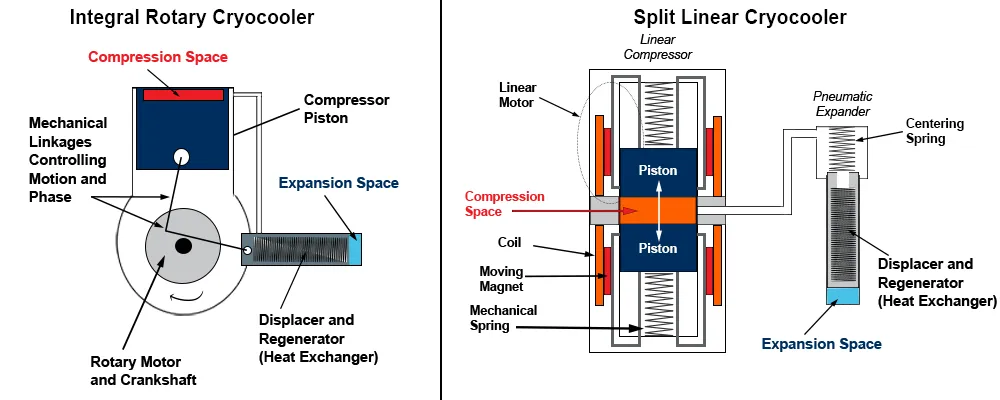
Recommended Products



Talk to us about your IR Temperature Measurement Requirements
Our Infrared Temperature Measurement experts can help you find the right Optris product for your application.
