


Dual Wavelength Measurement
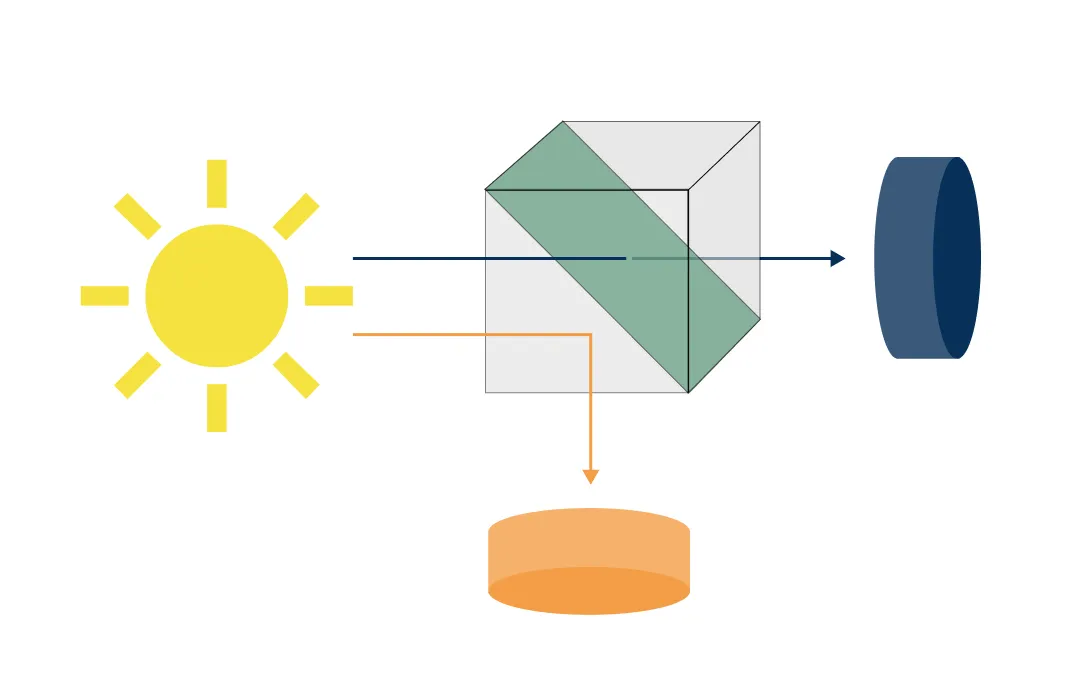
The dual wavelength measurement is an advanced non-contact temperature measurement technique and a special variant of ratio pyrometry that does not use sandwich detectors. It involves using two separate color channels, which are spatially separated using a wavelength-selective optical element (beam splitter), and then feeding them to two independent detectors.
In this technique, the ratio of radiation intensities at two distinct wavelengths is quantified, instead of directly evaluating radiation intensities. This approach allows for greater flexibility in the choice of infrared detectors and spectral ranges, enabling the adaptation of pyrometers to specific applications. Additionally, the other advantages of ratio pyrometry, such as tolerance of partial obscuration and variations of the emissivity, should be retained.
Typically, this method is used with two spectral ranges that are further apart from each other. The further apart the spectral ranges are, the less likely the assumption that the emissivity changes in the same way for both spectral ranges becomes.
Back to Lexicon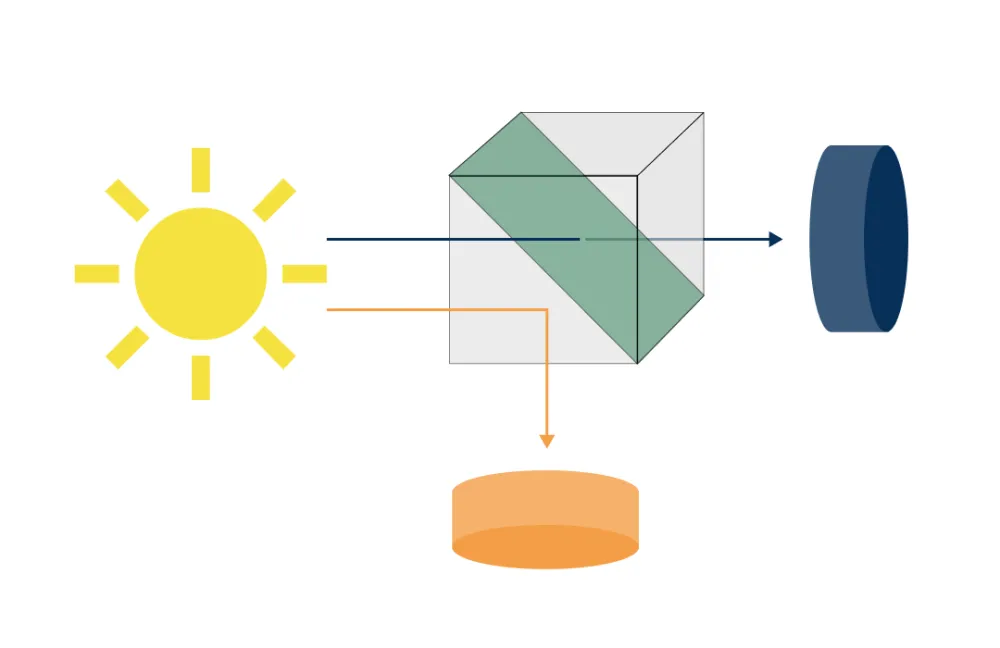

Talk to us about your IR Temperature Measurement Requirements
Our Infrared Temperature Measurement experts can help you find the right Optris product for your application.
