


Exposure Time
When the surface temperature of an object changes suddenly from a low constant level to a higher constant level, the time taken for the output signal of a pyrometer or an infrared camera to adjust to at least 90% of the new value is called the exposure time. The 100% value corresponds to the difference between the final and initial temperature.
The exposure time depends on the detector technology used, particularly its time constant and whether the input pulse electronic signal processing of the measuring device is synchronized. In the case of unsynchronized signal acquisition, this value can fluctuate by one cycle time (with pyrometers) or one image period (with infrared cameras), which can be important when recording fast events. The larger value must be specified in the device specifications. It’s important to distinguish the response time from the exposure time, as the response time takes into account time delays caused by (digital) signal processing.
Back to Lexicon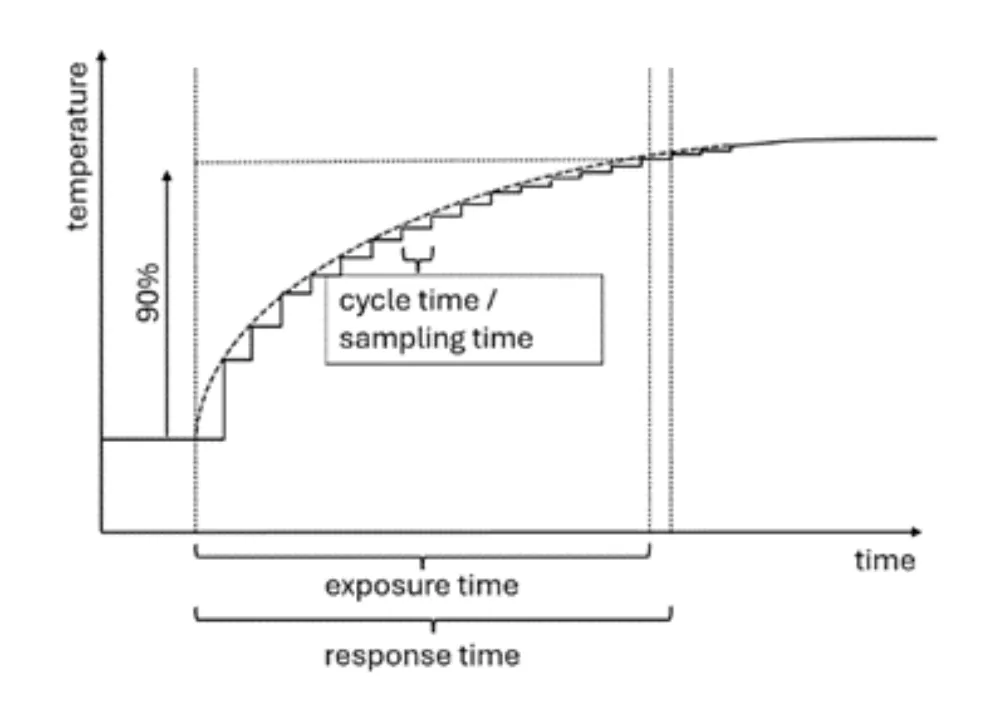

Talk to us about your IR Temperature Measurement Requirements
Our Infrared Temperature Measurement experts can help you find the right Optris product for your application.
