


Infrared Microscope
An infrared microscope is an optical instrument designed to visualize and analyze microscopic samples using infrared radiation. It combines the principles of infrared spectroscopy and microscopy, utilizing specialized infrared microscope optics to achieve high spatial resolution and precise imaging. Infrared microscopes enable the study of chemical compositions, molecular structures, and thermal properties of materials at a microscopic level. They are widely used in various fields, including materials science, biology, and forensic analysis, providing detailed information that is not accessible with visible light microscopy.
The primary challenge in infrared microscopy lies in the complexity of infrared microscope optics. Achieving high resolution and accurate imaging in the infrared spectrum is more difficult than in the visible spectrum. Infrared wavelengths are longer, which impacts the diffraction limit and reduces the achievable spatial resolution. The optical elements must be precisely designed and fabricated to minimize aberrations and maintain high transmittance for specific infrared wavelengths.
Moreover, infrared detectors, often uncooled microbolometers, have their own set of limitations. Smaller pixel pitches, while beneficial for higher resolution, reduce the effective absorption area of each pixel, affecting sensitivity and signal-to-noise ratio. Maintaining the balance between pixel size and detector sensitivity is crucial for accurate measurements. Advanced materials and multilayer structures are being developed to enhance detector performance.
Another significant issue is the diffraction limit imposed by the optics. As infrared light passes through the microscope optics, diffraction causes the light to spread, creating an Airy disk pattern. This spreading limits the ability to resolve fine details and can result in overlapping diffraction patterns from adjacent points, making it challenging to distinguish between closely spaced features.
Back to Lexicon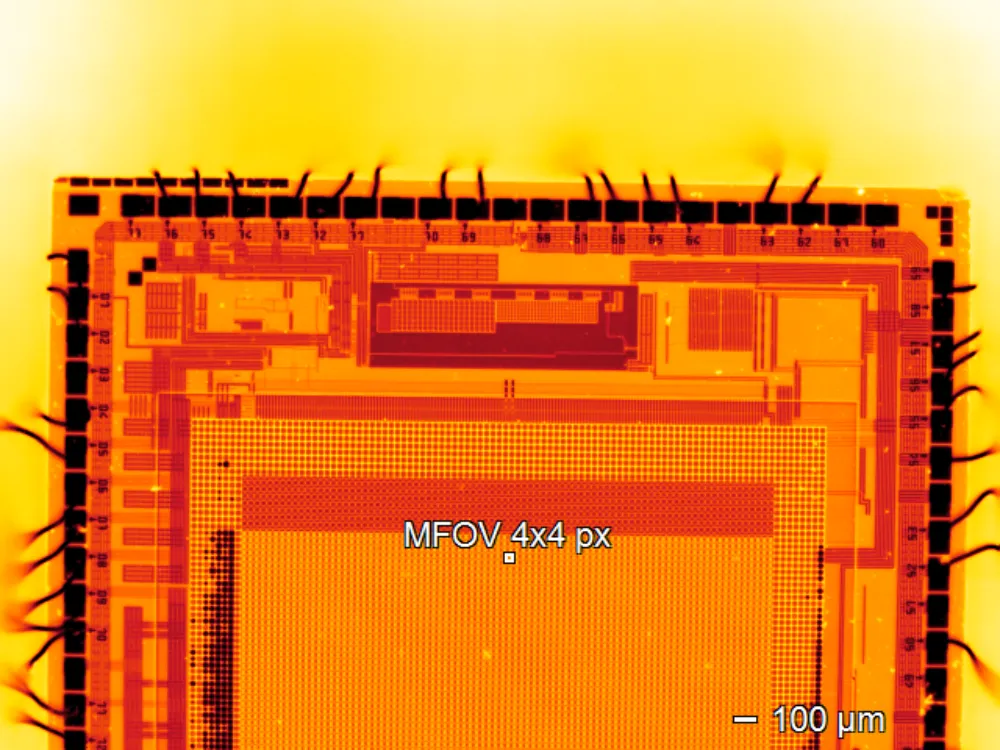



Talk to us about your IR Temperature Measurement Requirements
Our Infrared Temperature Measurement experts can help you find the right Optris product for your application.
