


Peak Hold
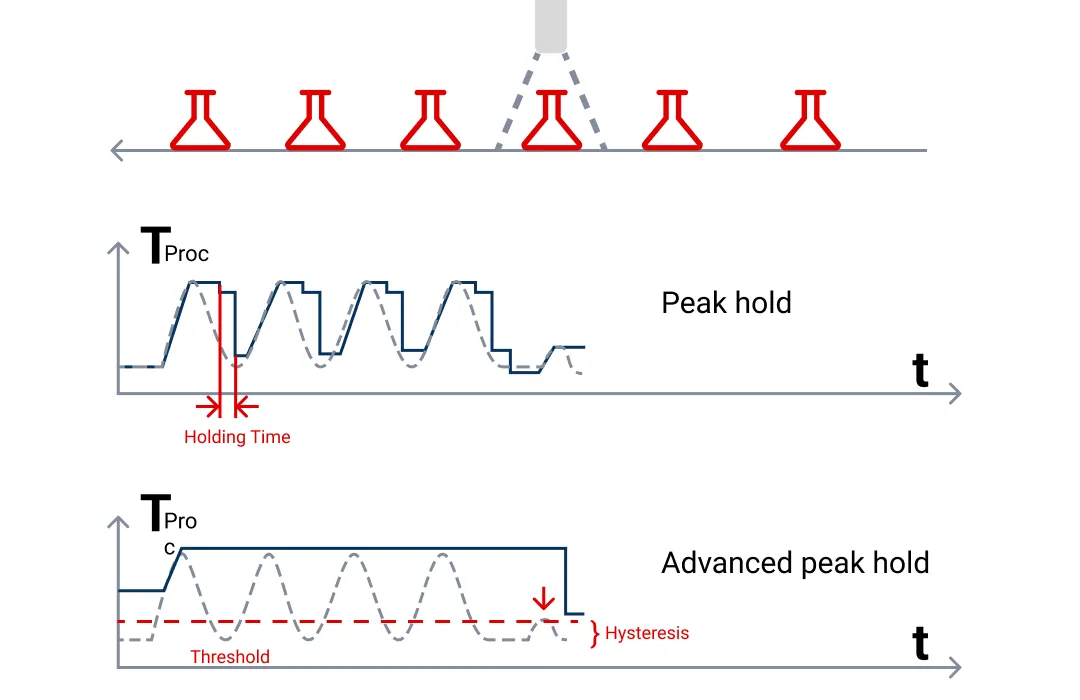
“Peak hold” is a crucial feature in temperature sensors like bolometers or pyrometers, enabling them to process measured temperature effectively at a low level. In Optris temperature sensors, peak hold refers to the ability to retain the highest measured temperature over a specified period, called the “holding time,” and deliver this value as “TProc” to the sensor’s output. When enabled, the sensor continuously records temperature values and maintains the highest temperature value detected. If the temperature drops below the highest recorded value, the holding time countdown begins. Once this time expires, the TProc value gradually approaches the current temperature with increasing step sizes until it either matches the current value or the temperature rises again, prompting TProc to follow as long as it rises.
Additionally, there is an advanced peak hold mode available. In this mode, similar to peak hold, the TProc output follows the rising amplitude of the measured temperature to maintain its highest value recorded so far. If the temperature decreases, the highest value measured is retained. To reset the measured highest value, the temperature must follow a nonlinear curve characterized by falling below a predefined threshold value, then rising again until it exceeds this threshold, and finally falling again by the amount of the user-defined hysteresis. This process causes a reset of the TProc output to the last measured maximum, which is then maintained as the highest temperature until the current temperature value rises again and surpasses the previous highest value, prompting TProc to update accordingly. Another reset will occur if the temperature follows the described nonlinear curve again.
Back to Lexicon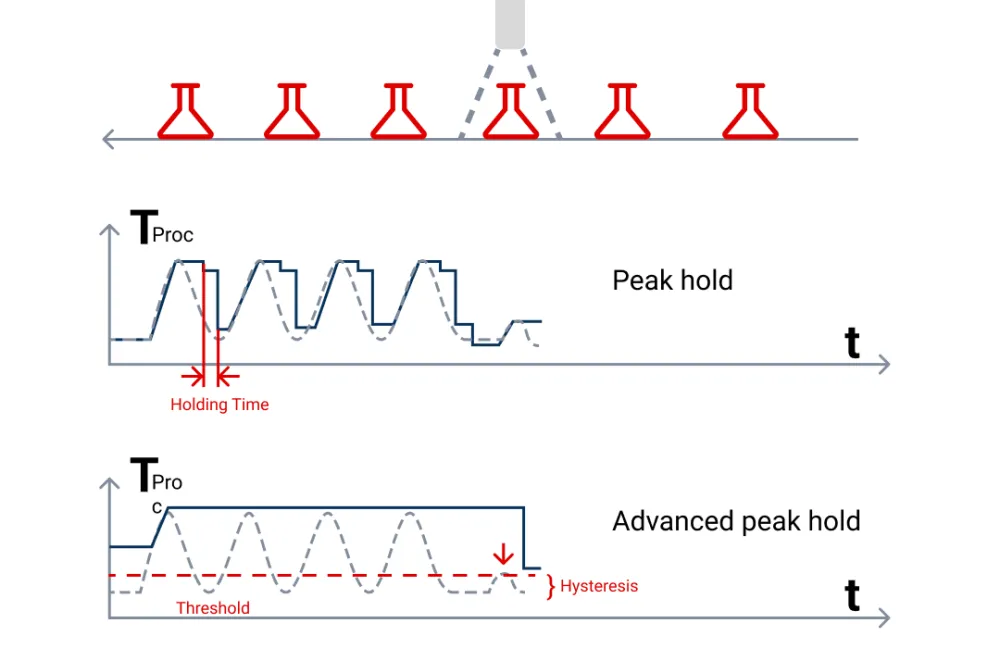
Recommended Products






Talk to us about your IR Temperature Measurement Requirements
Our Infrared Temperature Measurement experts can help you find the right Optris product for your application.
