


Precision
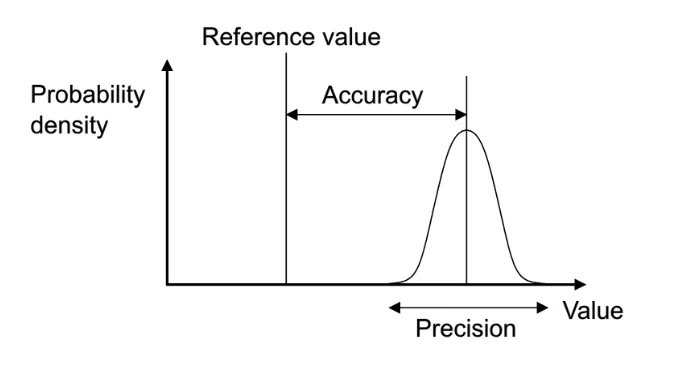
Precision in infrared imaging refers to the consistency and repeatability of measurements taken by the infrared instrument. It indicates how closely repeated measurements under unchanged conditions are to each other.
In contrast, accuracy refers to how close a measured value is to the true value or the actual temperature of the object being measured. While high accuracy ensures that the measurement is correct, high precision ensures that repeated measurements yield similar results.
An infrared measurement instrument can be precise without being accurate if it consistently measures the same value that is far from the true value. Conversely, an infrared sensor can be accurate without being precise if it hits the true value on average but with significant variation in individual measurements. For example, if an infrared sensor measures the temperature of an object and consistently reads 98 C when the actual temperature is 100 C, it is precise but not accurate. If another sensor reads between 95 C and 105 C, averaging out to 100 C, it is accurate but not precise.
Achieving high precision involves minimizing random errors and ensuring the stability of the measurement system. This includes using high-quality sensors, maintaining stable operating conditions, and employing robust signal processing techniques. Precision is typically quantified by statistical measures such as standard deviation or variance of the measurements.
Back to Lexicon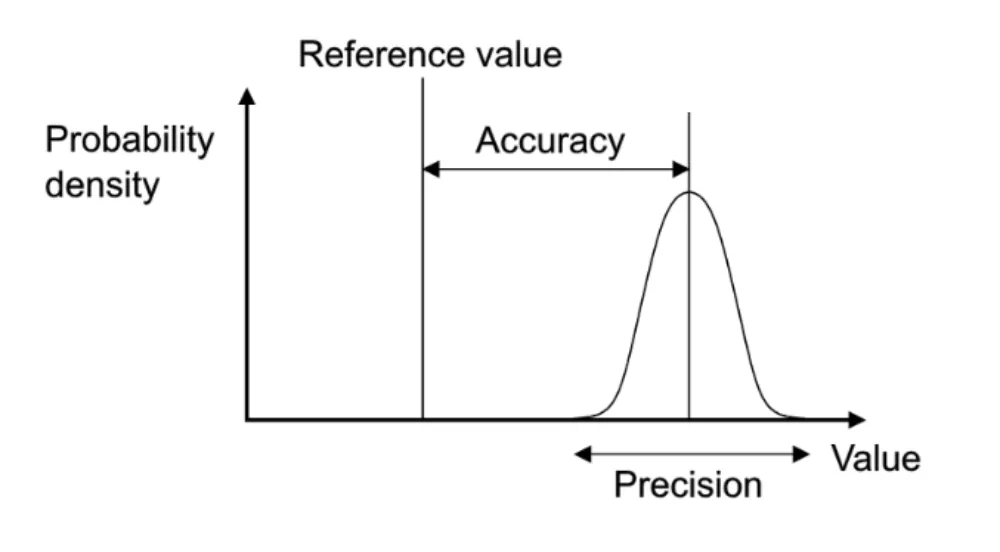
Recommended Products



Talk to us about your IR Temperature Measurement Requirements
Our Infrared Temperature Measurement experts can help you find the right Optris product for your application.
