


Pyroelectric Detectors
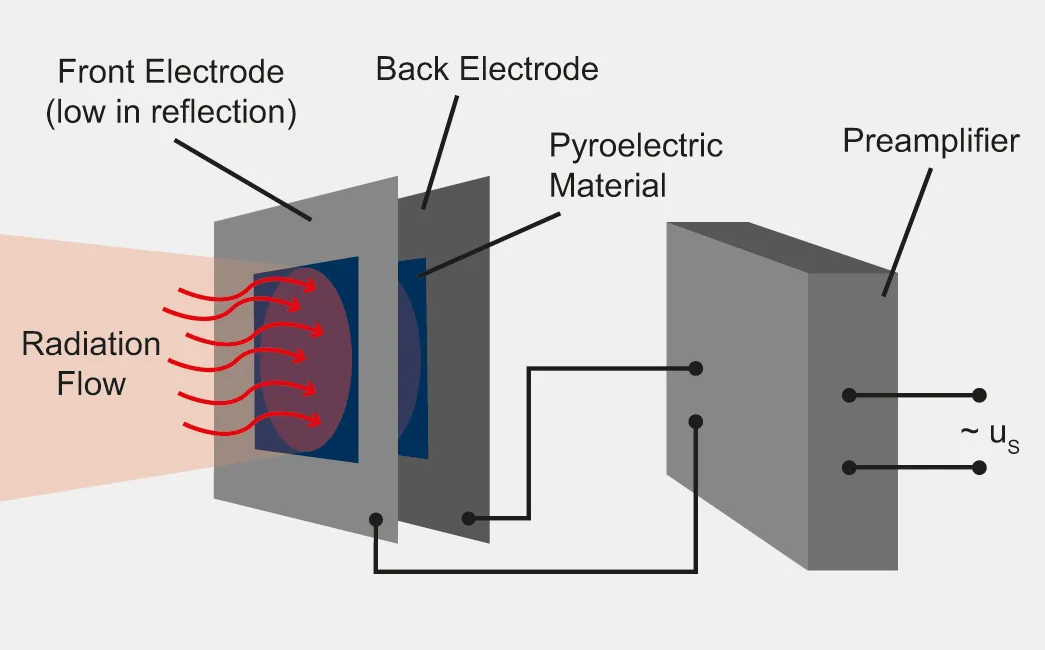
A pyroelectric detector is a type of thermal detector that operates based on the pyroelectric effect. This effect occurs when a temperature change in a pyroelectric material, typically a ceramic, causes a spontaneous polarization change, generating an electrical charge proportional to the temperature change. Pyroelectric detectors use this effect to detect infrared radiation. When the temperature of the pyroelectric material changes, the alignment of its molecular dipoles shifts, creating a temporary voltage across the material. This charge is proportional to the rate of temperature change.
However, pyroelectric detectors only generate an output signal in response to changes in temperature. They are designed to detect variations in infrared radiation, meaning they are most effective when there is a dynamic thermal environment, such as movement or fluctuating heat sources. If the temperature remains constant, the detector does not produce an output signal, making it unsuitable for applications requiring continuous temperature monitoring.
In such cases, it is better to use thermopiles, which deliver an output correlated to the target’s temperature and not just to the target’s temperature change.
Back to Lexicon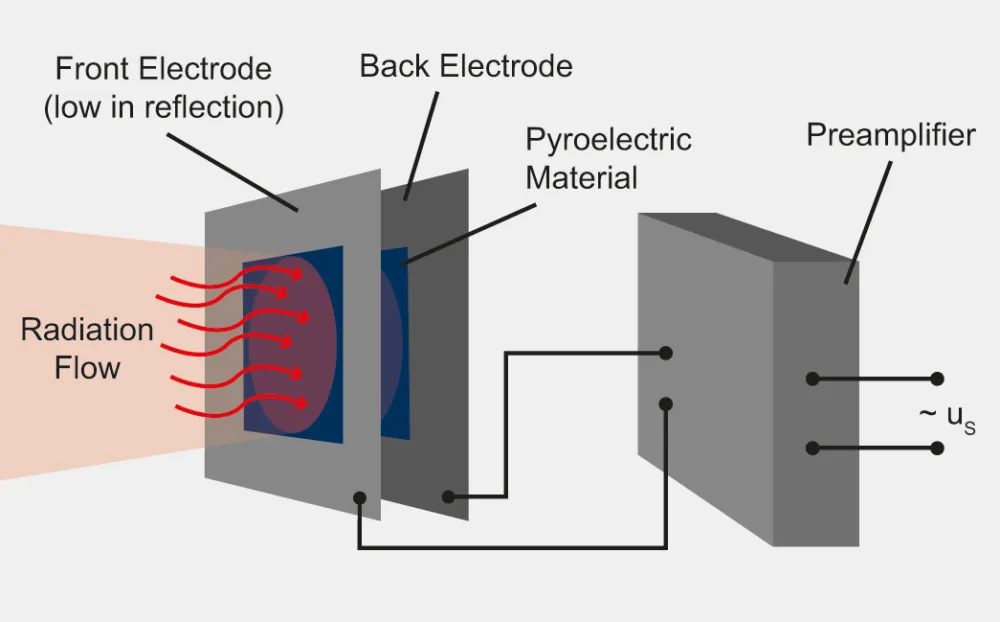

Talk to us about your IR Temperature Measurement Requirements
Our Infrared Temperature Measurement experts can help you find the right Optris product for your application.
