


Ratio Pyrometer
A ratio pyrometer is an advanced device for non-contact temperature measurement using a two-wavelength approach. These instruments, often called two-color, quotient, or dual-wavelength pyrometers, function differently from single-color pyrometers. Unlike single-color pyrometers, which measure radiation at a single wavelength, multi-color pyrometers can improve accuracy and ensure reliability under varying conditions such as changes in emissivity or the presence of contaminants like dust or smoke.
Wien’s displacement law states that the peak wavelength of radiation emitted by a black body is inversely proportional to its temperature. As an object’s temperature rises, its emitted radiation increases across the overall wavelength range, and the maximum of the spectral-specific radiation shifts to shorter wavelengths.
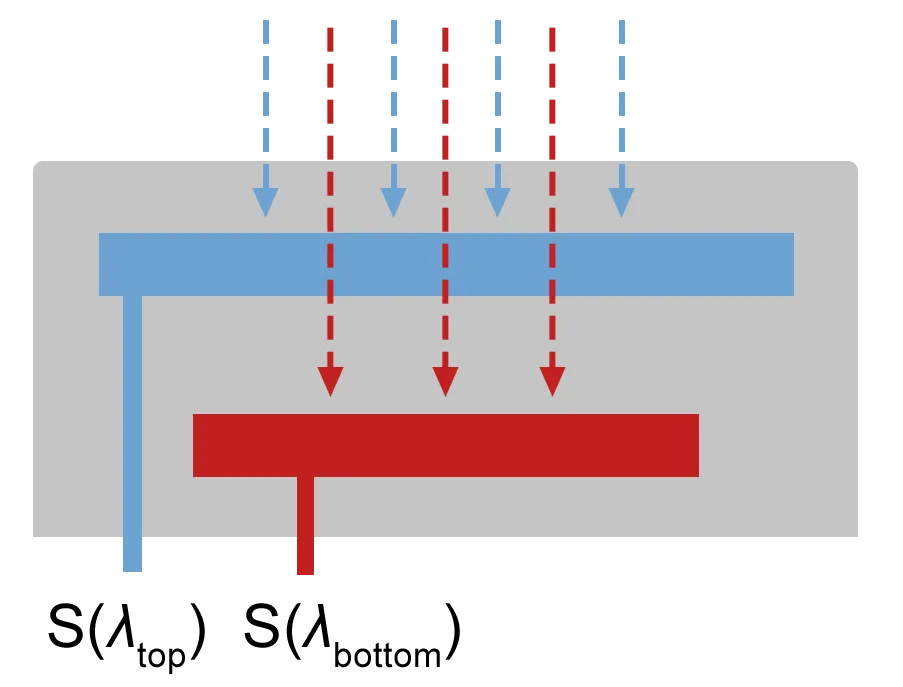
There is a significant difference between intensity-based single-color pyrometers and ratio-based pyrometers. Single-color pyrometers measure the power of the emitted infrared radiation within a specific bandwidth. In contrast, ratio-based pyrometers measure the infrared radiation at two closely spaced wavelengths and evaluate the relationship between the two intensities. The bandwidth of these two colors can be partly overlapping or completely separated. This unique approach of ratio pyrometers allows for more accurate and reliable temperature measurements.
Unlike single-color devices, a ratio pyrometer can measure reliably even when the emissivity is unknown or changing with temperature, as long as both wavelength signals are affected proportionally by emissivity or process changes. Therefore, one of the standout features of the two-color pyrometer is its ability to provide repeatable and accurate measurements even in adverse conditions.
Ratio pyrometers are often used when the measuring spot is not fully placed on the object, the object is smaller than the pyrometer spot size, or when changing transmissions are present in the optical path of the pyrometer—such as dust, steam, dirt, and windows. These devices are utilized in challenging industrial applications, such as metal processing, where emissivity is unknown and changing but alters equally at both wavelengths.
Most ratio pyrometers use semiconductor detectors, allowing for time constants of 1 ms to 20 ms for temperature measurements. The starting point of the temperature measuring range is usually well above 100 C.
Many suppliers offer a parallel representation of the temperature measured using the single-wavelength measurement. If the slope and emissivity are set correctly, many quotient pyrometers can also calculate and display the percentage signal loss due to shading or window contamination. While a classic single-color pyrometer cannot distinguish between a drop in the temperature of the measurement object and contamination of the optics, a ratio pyrometer has this ability.
Back to Lexicon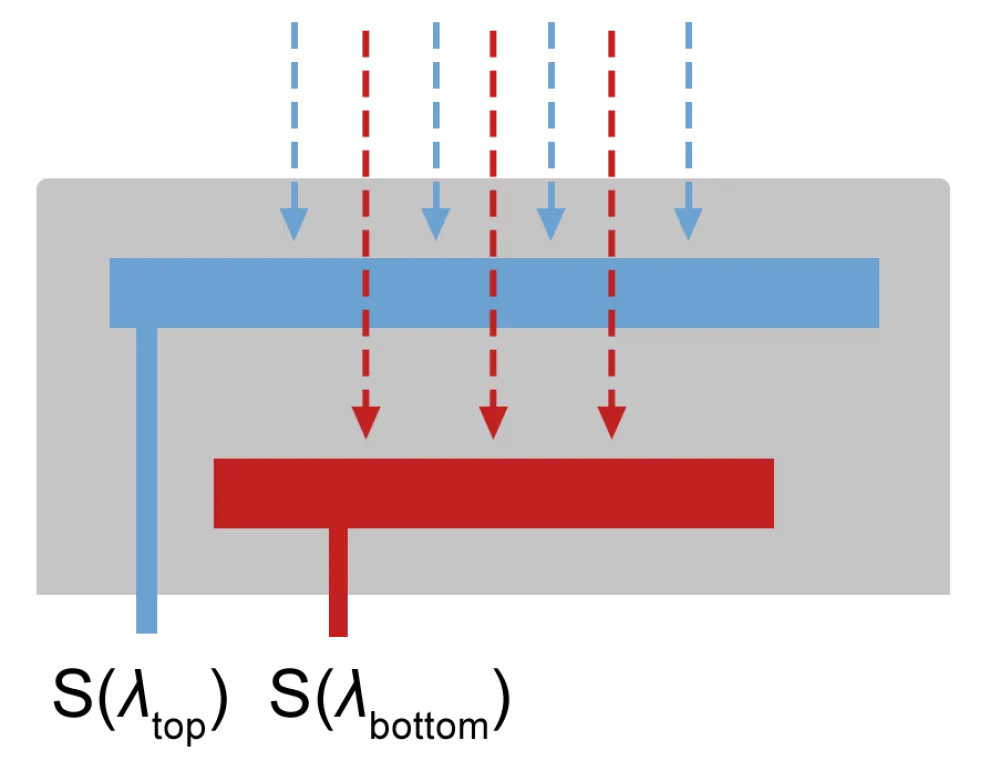
Recommended Products



Talk to us about your IR Temperature Measurement Requirements
Our Infrared Temperature Measurement experts can help you find the right Optris product for your application.
