


Reflectivity
Alongside absorption and transmissivity, reflectivity is one of the three basic material properties of objects that characterize the interaction of electromagnetic radiation with matter. Reflectivity is the ratio of the radiation intensities after and before reflection on a surface, denoted as r = I/I_0. As a ratio variable, it is unitless and can take on values between 0 and 1, where 0 means no reflection occurs at all, and 1 means all the radiation is reflected, as with a perfect mirror. Reflectivity 𑟠is connected to transmissivity 𑡠and absorption 𛼠according to the equation:
1=α+r+t
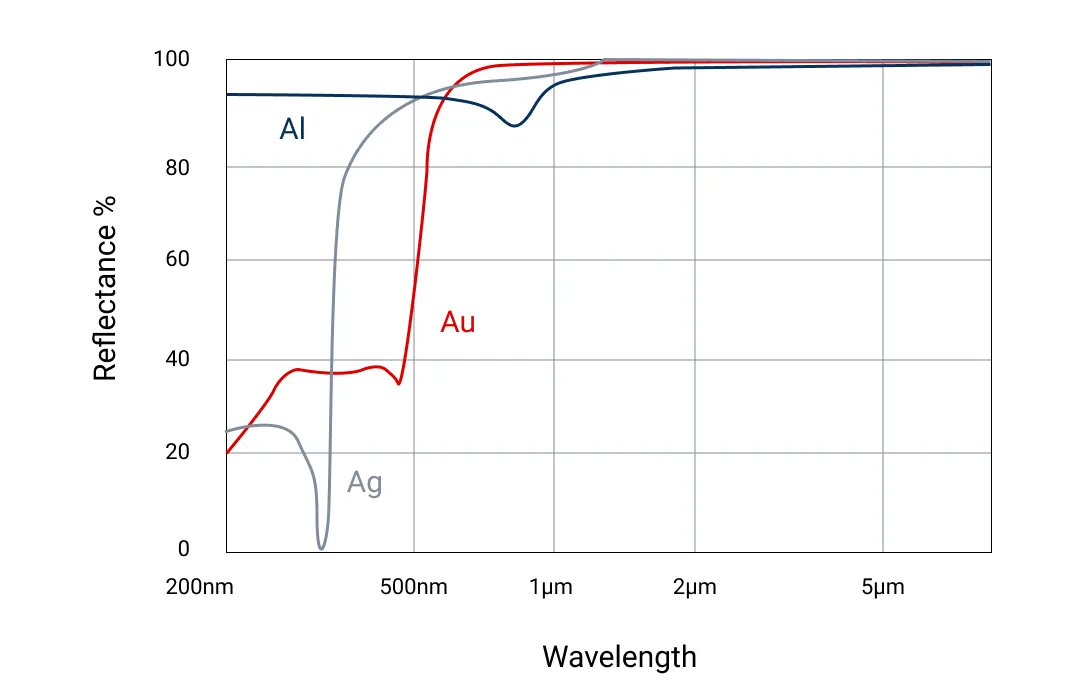
For a black body, the reflectivity is zero by definition, but this is not the case for any real measurement object. Like absorption or transmissivity, reflectivity depends on the wavelength under consideration. Metals, in particular, show a very strong wavelength dependence and can have reflectivity values of over 90% for longer wavelengths. Uncoated glasses or plastics often have values below 20%. With appropriate coatings, the reflectivity of optics can be minimized in a limited spectral range to maximize transmissivity. There are also blackening coatings that reduce undesirable reflectivity by maximizing absorption.
Reflectivity and reflectance are often used interchangeably, but they refer to distinct concepts in the field of optics. Reflectivity is defined as the ratio of the reflected power to the incident power on the surface of a material, considering only the properties of the material itself without regard to the conditions of the light or the environment. Reflectance, on the other hand, is the ratio of the reflected intensity to the incident intensity and can vary depending on the external factors affecting the surface.
Back to Lexicon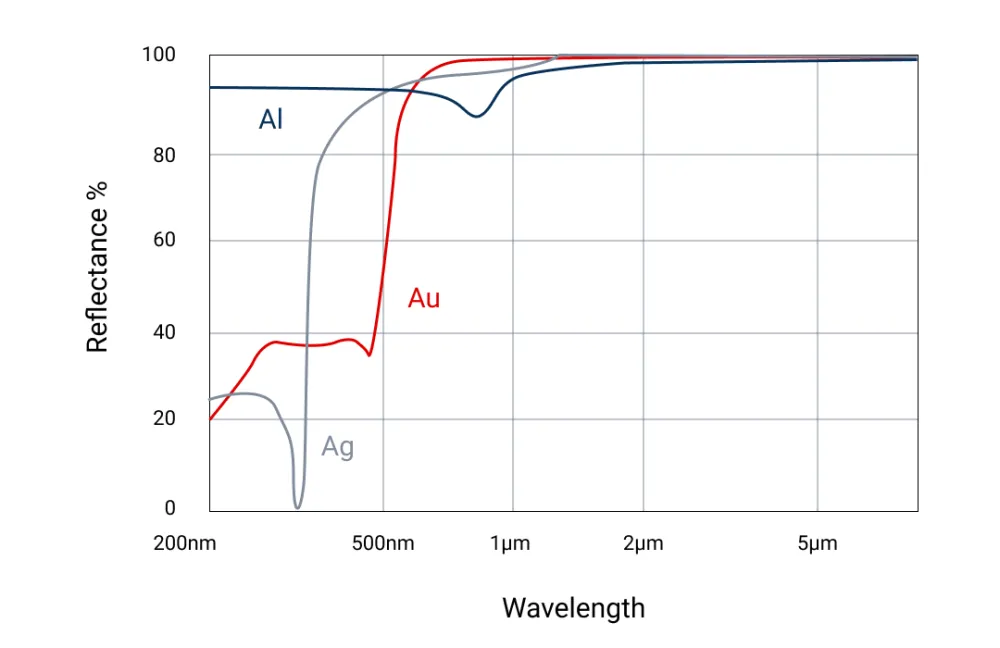
Recommended Products





Talk to us about your IR Temperature Measurement Requirements
Our Infrared Temperature Measurement experts can help you find the right Optris product for your application.
