


PI 640i G7
The Optris PI 640i G7 infrared cameras are the glass-industry-specific thermal imaging cameras in the PI series.
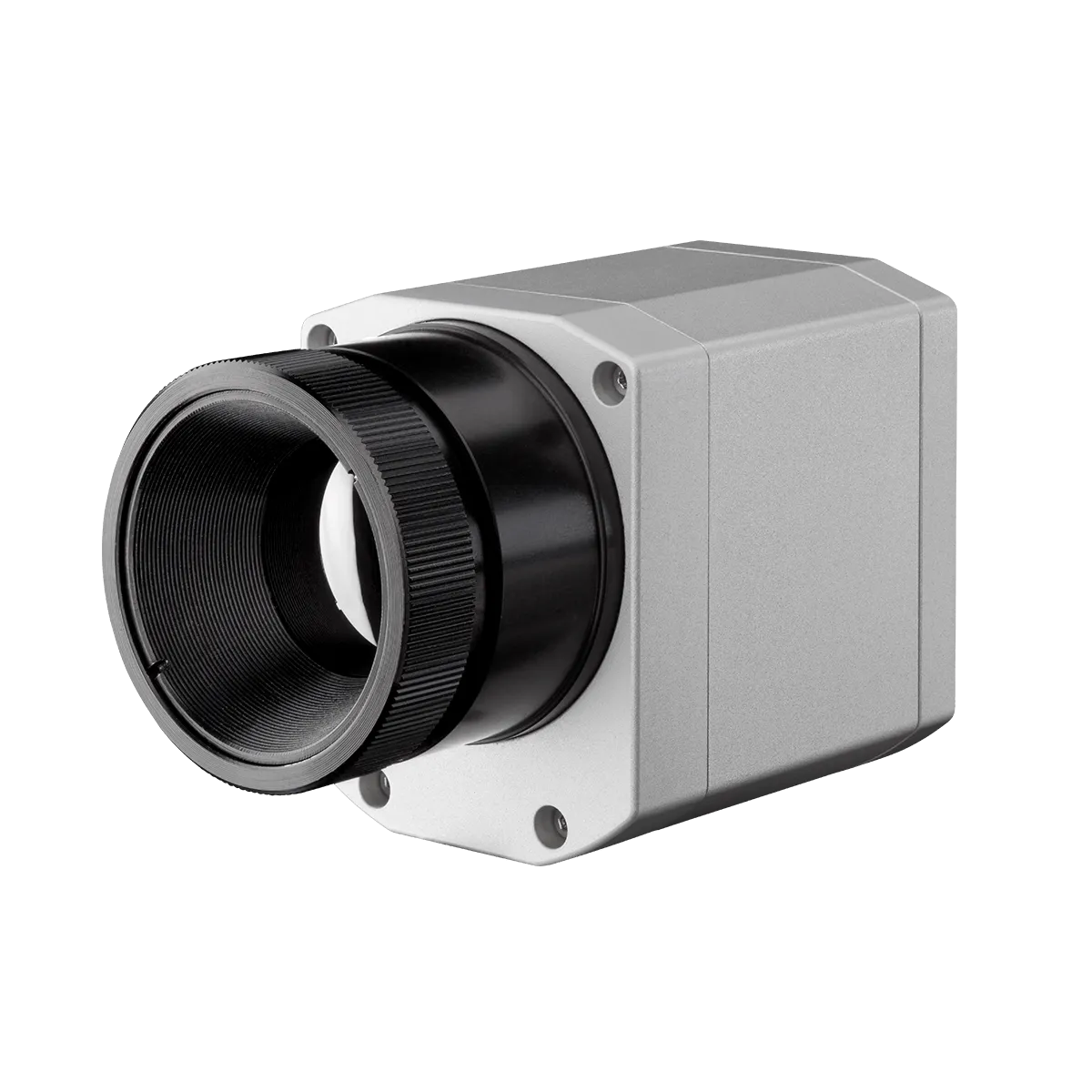
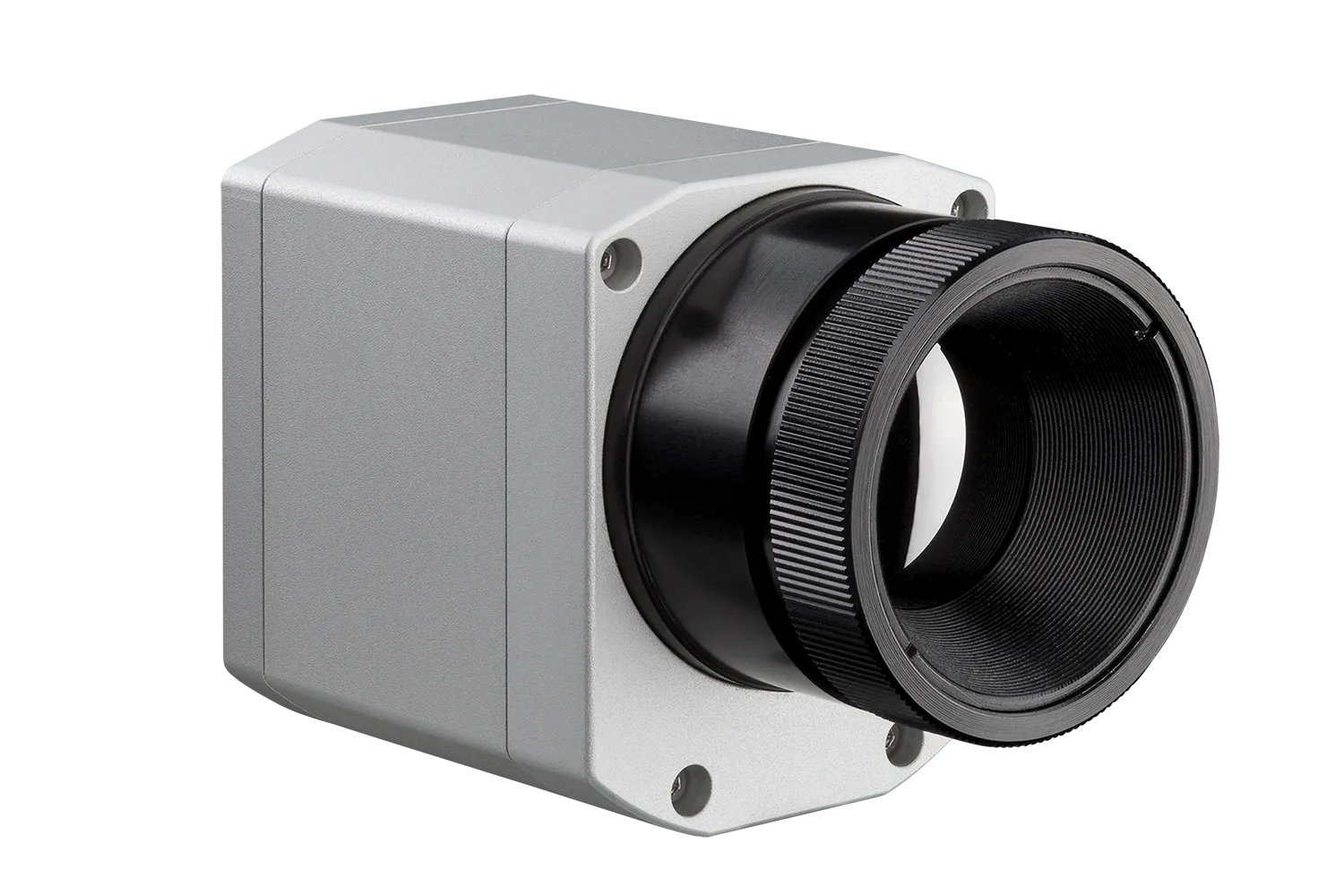
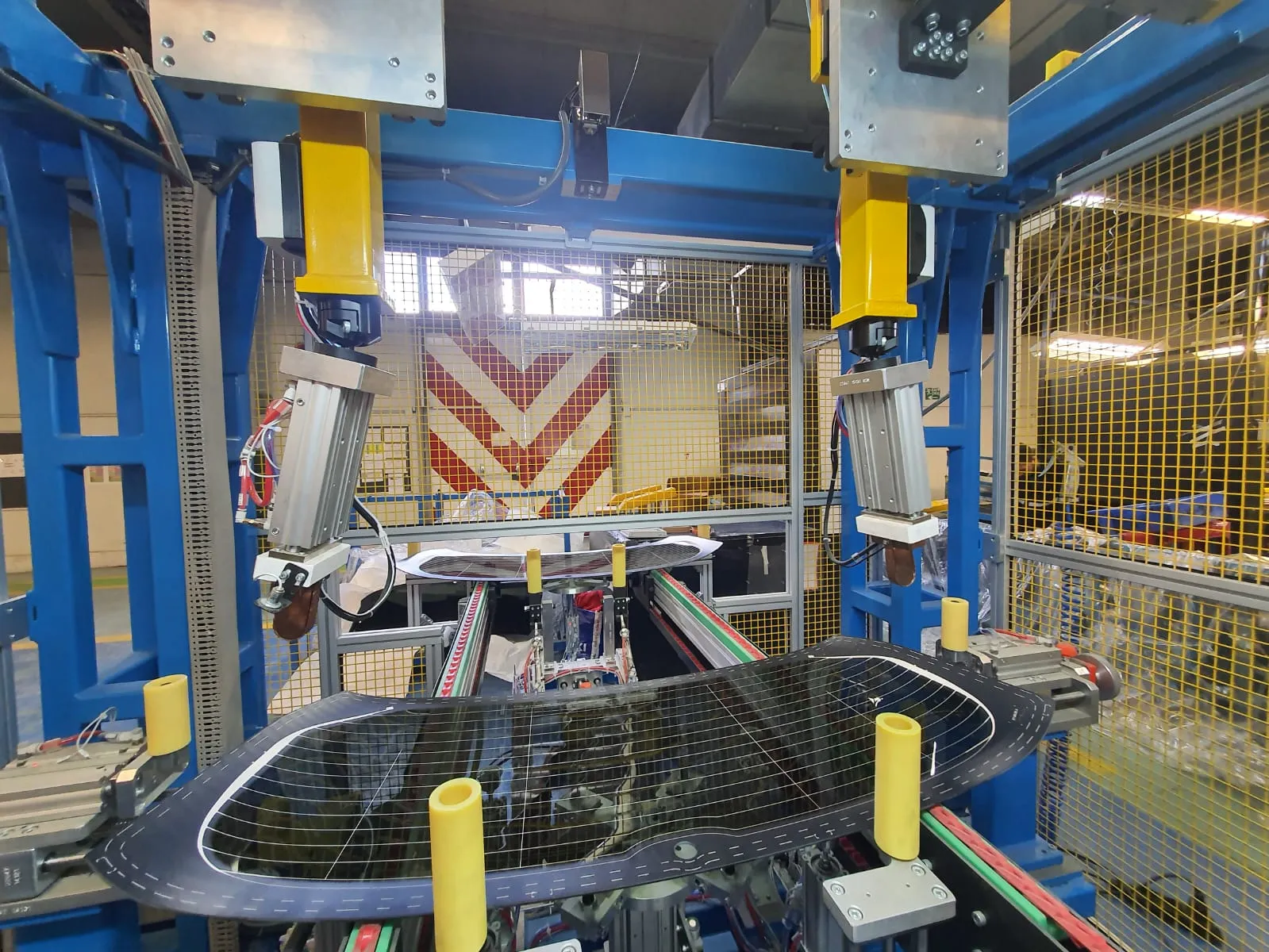
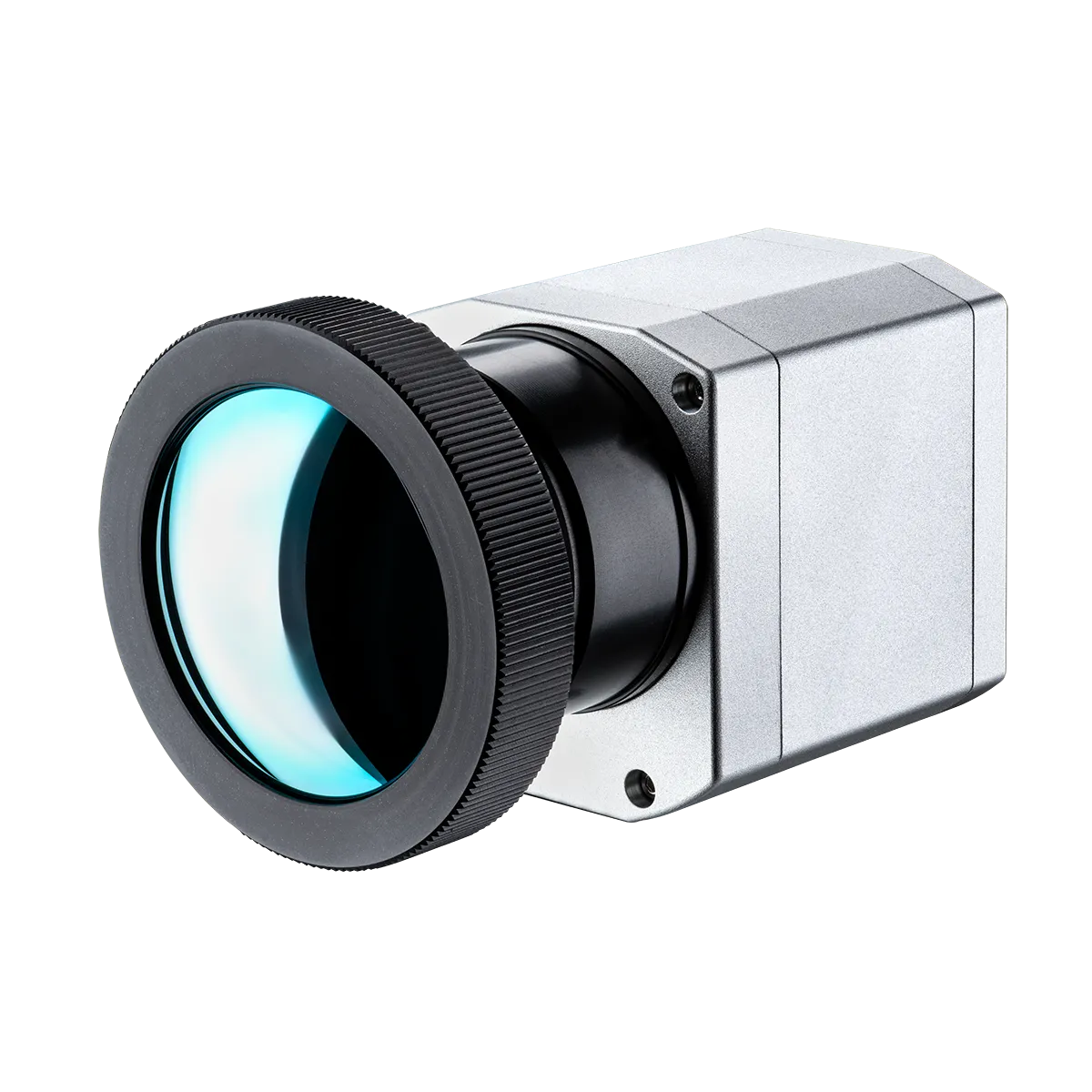
The Optris PI 640i G7 infrared camera, specifically designed for the glass industry, operates in the G7 spectral range and is now available with the innovative 120° ultra-wide-angle optics. This groundbreaking lens, the first of its kind in industrial infrared thermography, delivers an unprecedented 120° x 100° field of view (FOV), enhancing monitoring capabilities for large-scale industrial processes, glass tempering, and other glass manufacturing applications.
With a high optical resolution of 640 x 480 pixels, fast image sampling up to 125 Hz, and a dedicated line scanner mode, the PI 640i G7 provides detailed, accurate, and innovative infrared images of glass sheets and products. Its superior radiometric measurement characteristics and exceptional image quality ensure precise measurement and detection, particularly in line scanner mode, making it ideal for glass manufacturing processes.
Capable of measuring temperatures up to 3000 °C, the PI 640i G7 offers a range of interchangeable optics, from telephoto lenses (15° x 11° FOV) to the new ultra-wide-angle lenses (120° x 100° FOV), allowing you to select the perfect lens for your application. This high-performance, uncooled infrared camera comes equipped with industrial accessories and a free-of-charge software package from Optris, ensuring seamless integration and operation.
- High-performance uncooled USB infrared camera with pixel resolution of 640 x 480
- Temperature range: 150 °C to 3000 °C (302 °F to 5432 °F)
- Spectral sensitivity matches glass' highest emissivity at 7.9µm
- Frame rate up to 125 Hz
From $10,995.00
excl. sales taxes, custom tariffs and shipping
Product Description
The PI 640i G7 is a high-performance infrared camera designed to meet the needs of both researchers and process engineers. The PI 640i G7 thermal imager is a versatile, high-performance infrared camera that supports remote infrared temperature measurement applications for research and process control applications. In its standard configuration, this versatile thermal imager boasts high VGA resolution and image quality, capable of measuring the full temperature range from -20°C to 900°C. The camera can be calibrated for high-temperature infrared measurements with a temperature range of up to 3000°C. Superior radiometric measurement characteristics and high image quality define the Precision Line of Optris.
Accurate temperature measurement of glass relies significantly on emissivity, a crucial factor that varies depending on several influences and must be carefully considered according to the specific application. The special G7 spectral range of 7.9 µm matches the glass material’s highest emissivity, which eases remote temperature measurement as the spectral region of reflectivity and transmissivity is minimized. In addition to reduced reflection issues, another advantage is the decreased angle dependency of glass surface emissivity within this wavelength range. As a result, surface temperature can be measured independently of reflection, even at inclined viewing angles.
Unlike other infrared cameras with smaller pixels, the optimal pixel pitch size of 17 µm for long-wavelength infrared radiation allows a small measurement field of view (MFOV) of just 3 x 3 pixels. The superior quality and larger size of optics also guarantee high image quality, with minimal image distortion and uniform attenuation maintained across the entire image. A wide variety of interchangeable lens optics are available to properly frame and maximize pixel count on the target to be measured. The infrared camera supports a frame rate of 32 Hz in standard mode or 125 Hz in the high-speed subframe mode to monitor fast manufacturing processes.
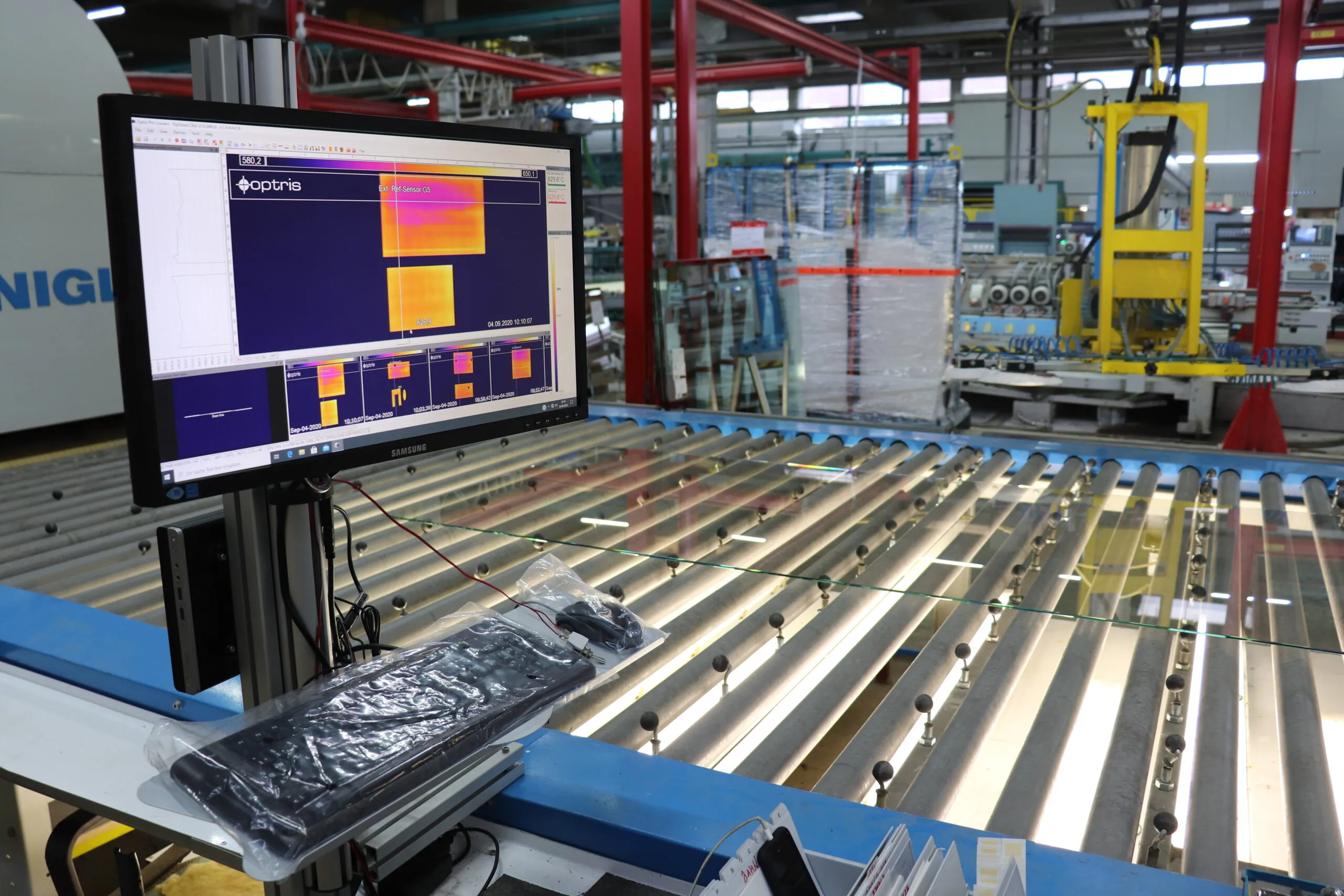
The PI 640i G7 works with Optris PIX Connect software, available as a free download with updates provided on a no-charge basis. The PIX Connect package includes the ability to seek hot spot and cold spot locations, histogram, temperature profiling, image subtraction, and other thermal image processing tools. For researchers and process engineers, the PC-based PIX Connect platform offers a powerful thermal image processing capability that allows users to extract and document fully calibrated temperature measurements from any pixel in the scene. Time-versus-temperature data can be extracted from both live and recorded thermal video files containing stored temperature data. Additionally, the software supports data collection of the highest, lowest, and average temperatures from areas of any size or shape, as well as from complex alarm signals. Engineers can replay stored thermal video frame by frame, enabling them to capture and store radiometric images and trigger snapshots during temperature changes.
The PI 640i G7 revolutionized the idea of line scanners in the glass industry. Glass line temperature measurements are facilitated through a special line scan feature of the PIX Connect software. This feature converts the two-dimensional visual output from the thermal imager into a continuous display of temperature variations across a single line, enabling accurate monitoring and analysis of temperature fluctuations along the glass line. Traditionally, line scanners are used in the glass industry for various measurement procedures. In these devices, a point detector is coupled with a rotating mirror to generate a linear optical scan of the object. These devices are bulky and expensive, requiring a lot of manual effort to set up. When using an infrared camera as a line scanner, an arbitrary line is selected from the detector array. In addition to the more compact construction and the lower price, there are two significant benefits: the line to be scanned can be positioned and dimensioned anywhere using the software, and the user receives a complete IR image effectively as additional information – these are important advantages, especially during system setup. Infrared cameras can accurately measure the surface temperatures of moving measurement objects using minimal apertures. This function is particularly significant in the glass industry since the glass temperature directly impacts the quality. Accordingly, temperatures are recorded at many points during production and transmitted directly to the process control system. With this mode, the infrared camera becomes the perfect replacement for bulky mechanical infrared line scanning cameras using a fraction of the space necessary for mounting older mechanical line scan technology.
For example, the PI 640i G7 with a 90° lens can scan the complete glass sheet width using the float process (Up to 4 m). Multiple IR cameras and infrared images can be merged into the software if a larger width is required. Using a subframe mode of 640 x 120 pixels, data can be captured at 125 Hz, which allows undistorted images without image blur.
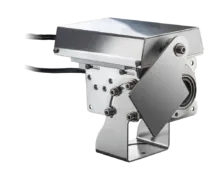
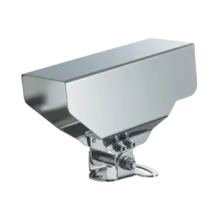
The small PI 640i G7 camera head was designed to move easily from the lab bench to small spaces on the factory floor. The robust IP 67 (NEMA 4) can withstand ambient temperatures from 0°C to 70°C without any enclosures. A full family of accessories equips the camera for data collection and temperature control in extreme process environments. Water-cooled enclosures are available to protect the camera in ambient temperatures as high as 315°C and include mounting provisions for the Industrial Process Interface referenced below. Air purging accessories keep the optics free from the attenuating effects of factory dust or vapors and are factory-designed and tested. Thermal imager outdoor enclosures with integral heating equip the PI640i G7 thermal imager for outside mounting locations.
The PI 640i G7 infrared camera and PIX Connect software platform were meticulously crafted to seamlessly support the flow of temperature data from the camera to external Programmable Logic Controllers (PLCs) or control interfaces. With the Industrial Process Interface accessory, current or relay outputs containing temperature or alarm data from specific areas can be sent to an external PLC. Furthermore, external triggering functionality enables the capture of a single image or live video sequence when conditions align with user-defined temperature thresholds.
The PI 640i G7 infrared camera is designed and manufactured in Germany and offers calibration certificates for customers who need to document traceability.
Specification
| MODEL | PI640i G7 15°x11° | PI640i G7 33°x25° | PI640i G7 60°x45° | PI640i G7 90°x64° | PI640i G7 120°x100° |
| DETECTOR | |||||
| Optical resolution | Full resolution: 640×480 pixels Linescan: 640×120 pixels |
||||
| Pixel pitch | 17 µm | ||||
| Detector | Uncooled bolometer | ||||
| Spectral Range | 7.9 µm | ||||
| Optical Filter | Integrated | ||||
| Frame rate | Full resolution: 32 Hz Linescan: 125 Hz |
||||
| OPTICAL | |||||
| Field of View | 15°x11° | 33°x25° | 60°x45° | 90°x64° | 120°x100° |
| Focal length [mm] | 41.5 mm | 18.7 mm | 10.5 mm | 7.7 mm | 3.5 mm |
| F Number | 1 | 0.8 | 0.8 | 0.8 | 1 |
| Optical Resolution | 800:1 | 354:1 | 181:1 | 105:1 | 61:1 |
| Minimum Distance to target | 400 mm (15.7 in) | 300 mm (11.8 in) | 200 mm (7.9 in) | 200 mm (7.9 in) | 200 mm (7.9 in) |
| Interchangeable optics | Yes | ||||
| MEASUREMENT | |||||
| Object Measurement Range | 200 °C … 1500 °C (optional: 200 °C … 3000 °C) 150 °C … 900 °C (Sighting range 0 °C … 250 °C) |
||||
| Accuracy | ±2 °C or ±2 %, (±3.6 °F or ±2 %) whichever is greater **1) | ||||
| Thermal Sensitivity (NETD) *1 | 80 mK | ||||
| Smallest detectable Spot Size IFOV: 1 pixel | 0.2mm (0.01 in) | 0.3mm (0.01 in) | 0.4mm (0.02 in) | 0.7mm (0.03 in) | 1.2mm (0.05 in) |
| Smallest measurable Spot Size MFOV | 0.6mm (0.02 in) | 0.9mm (0.04 in) | 1.2mm (0.05 in) | 2.1mm (0.08 in) | 3.6mm (0.14 in) |
| Measurement Field of View (MFOV) | 3×3 pixels | ||||
| Warm-up time | 10 min | ||||
| Emissivity /Transmissivity/ Reflectivity | adjustable: 0.100…1.100 | ||||
| INTERFACES | |||||
| Interface | USB optional: USB GigE (PoE) interface |
||||
| Supported Protocols | USB 2.0 | ||||
| Compatible Software | PIX Connect, ConnectSDK, EasyAPI, ExpertAPI | ||||
| ANALOG INPUT/OUTPUT | |||||
| Direct output/input | 1x analog output (0/4-20 mA) 1x input (analog or digital); optically isolated |
||||
| Optional Industrial Process interface (PIF) | 2x 0 – 10 V input, digital input (max. 24 V), 3x 0/4 – 20 mA outputs, 3x relay (0 – 30 V/ 400 mA), fail-safe relay |
||||
| Cable length | USB: 1 m (3.3 ft) (standard), 5 m (16 ft), 10 m (32 ft), 20 m (65 ft)
5 m (16ft) and 10 m (32 ft) also have high temperature USB cables, 180 °C or 250 °C (356 °F or 482 °F) |
||||
| IMAGE PROCESSING | |||||
| Configuration | via PIX Connect | ||||
| Operation | computer-enabled | ||||
| Capabilities | For Measurements on Glass, Measure Areas of Interest, Linescanner, EventGrabber, Merger, Alarming, Comparison Functions, Temperature-Time Diagrams, Temperature Profiles, Recording & Playing, Triggering … | ||||
| GENERAL | |||||
| Size | 46 x 56 x 76 – 100 mm (1.8 x 2.2 x 3 – 3.9 in) | ||||
| Housing Material | Aluminium housing | ||||
| Weight | 269 – 340 g (9.6 – 11.5 oz) | ||||
| Tripod | 1/4-20 UNC | ||||
| Focus | Manual | ||||
| Country of Origin | Germany | ||||
| ENVIRONMENTAL & CERTIFICATIONS | |||||
| Operating Temperature Range | 0…70°C (32 °F…158 °F) | ||||
| Storage Temperature Range | -40 °C … 85 °C (-40 °F … 185 °F) | ||||
| Relative humidity | 10 – 95 %, non-condensing | ||||
| Protection Class | IP67, NEMA-4 | ||||
| EMC | 2014/30/EU | ||||
| Shock | IEC 60068-2-27 (25 G and 50 G) | ||||
| Vibration | IEC 60068-2-6 (sinus shaped) IEC 60068-2-64 (broadband noise) |
||||
| Standards | CE, UKCA, RoHS | ||||
| POWER | |||||
| Power Supply | USB | ||||
| Power Consumption | max. 2.5 W | ||||
| Part number | OPTPI64IG7O15T150 | OPTPI64IG7O33T150 | OPTPI64IG7O60T150 | OPTPI64IG7O90T150 | OPTPI64IG7O120T150 |
| Additional Remarks | *1) at object temperature = 650°C (1202 °F) | ||||
Areas of Application

Software
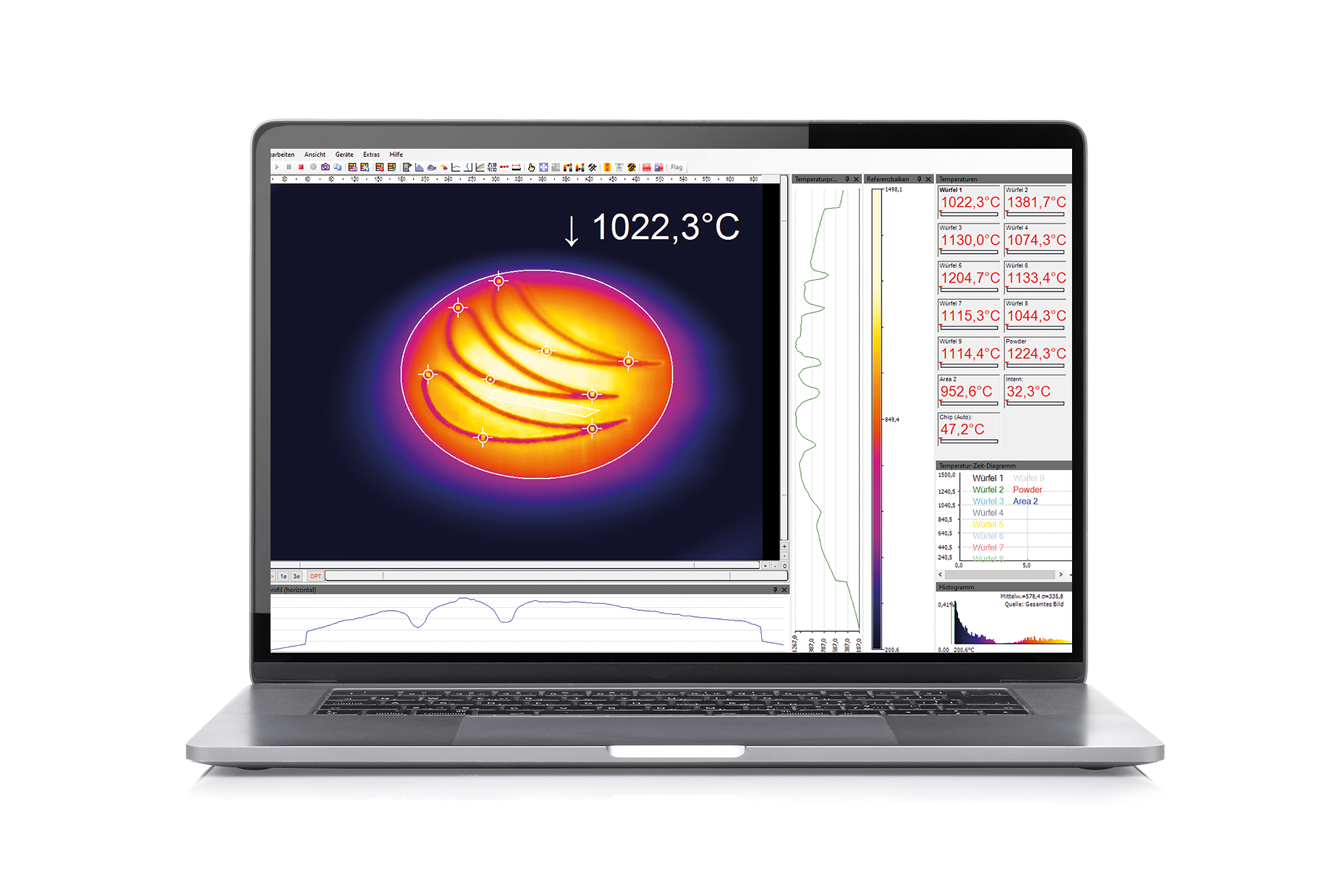 Thermography software optris PIX Connect is included and license-free.All infrared cameras are delivered with the thermography software optris PIX Connect, developed specifically for the extensive documentation and analysis of thermal images. The Windows-based PIX Connect software enables users to tailor the infrared cameras to meet specific requirements. It analyses live and recorded temperature data and triggers alarm signals for process integration.The key to leveraging the Optris infrared camera is a correct configuration. This includes detailed device-specific configurations such as frame rate, measurement range adjustments, external communication settings, and USB/Ethernet configurations. Moreover, PIX Connect facilitates firmware updates and the download of configuration files over the Internet.
PIX Connect
Thermography software optris PIX Connect is included and license-free.All infrared cameras are delivered with the thermography software optris PIX Connect, developed specifically for the extensive documentation and analysis of thermal images. The Windows-based PIX Connect software enables users to tailor the infrared cameras to meet specific requirements. It analyses live and recorded temperature data and triggers alarm signals for process integration.The key to leveraging the Optris infrared camera is a correct configuration. This includes detailed device-specific configurations such as frame rate, measurement range adjustments, external communication settings, and USB/Ethernet configurations. Moreover, PIX Connect facilitates firmware updates and the download of configuration files over the Internet.
PIX Connect
 Optris offers several different SDKs for our Xi and PI thermal imaging cameras. Depending on the operating platform, the infrared camera, the coding language, and the hardware platform, different software interfaces can be utilized:
SDK
Optris offers several different SDKs for our Xi and PI thermal imaging cameras. Depending on the operating platform, the infrared camera, the coding language, and the hardware platform, different software interfaces can be utilized:
SDK
 The Optris IRmobile allows users to set up and commission an Optris infrared pyrometer or infrared camera with an Android smartphone or tablet. This tool becomes handy for commissioning and aligning the infrared camera’s field of view or adjusting the configuration. The app analyzes the connected infrared camera’s live infrared image stream with auto hot and cold spot detection. For pyrometers, a temperature-time diagram or the video signal is displayed. This app works on most Android devices running 5.0+ with a USB port supporting USB-OTG (On The Go).
Google Play
The Optris IRmobile allows users to set up and commission an Optris infrared pyrometer or infrared camera with an Android smartphone or tablet. This tool becomes handy for commissioning and aligning the infrared camera’s field of view or adjusting the configuration. The app analyzes the connected infrared camera’s live infrared image stream with auto hot and cold spot detection. For pyrometers, a temperature-time diagram or the video signal is displayed. This app works on most Android devices running 5.0+ with a USB port supporting USB-OTG (On The Go).
Google Play
Downloads
DATASHEET
PDF - 666.95 KB
PI 640i G7 Datasheet (US)
Complete the form to download the file
FAQs
Why should I measure glass with a G7 infrared camera?
Accurate temperature measurement relies significantly on the emissivity of glass, a crucial determinant affected by multiple factors and tailored to specific applications. The narrowband G7 spectral range, peaking at 7.9 µm, aligns with the highest emissivity of glass, facilitating remote temperature measurement by minimizing issues related to reflectivity and transmissivity. Additionally, within this wavelength range, the angle dependency of glass surface emissivity is reduced, enabling temperature measurement irrespective of reflection, even at inclined viewing angles.
How do I align the camera?
The PI 640i G7 infrared camera offers a sighting mode in which an infrared image is shown, but no temperature values are measured.
Do I need a high-resolution IR camera like the PI 640i G7, or can I use a less expensive, lower-resolution camera?
It depends on the temperature measurement requirement. In addition to delivering infrared images with higher clarity, the higher pixel count of high-resolution cameras measures smaller targets because each pixel covers a smaller physical area. High-resolution cameras can often be positioned further away from the part to be measured and still deliver accurate measurements, combining the advantages of higher resolution with telephoto optics. It is also important to consider future uses for the camera that may require higher resolution. Purchasing a high-resolution camera that may not be necessary to service an immediate requirement may eliminate the need for an additional camera purchase.If the area to be measured is not small, an inexpensive resolution camera can be a more affordable measurement solution. It is important to note that a low-resolution IR camera can often deliver better small-spot size performance than single-spot pyrometers. To determine the ability to measure small targets with any camera and optic combination, use the Optris Optics Calculator and the MFOV (Measurement Field of View) to determine spot size.
Can the PI 640i G7 be calibrated with more than one lens?
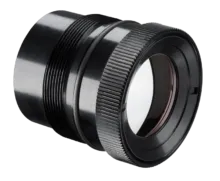
Six different lens options are available for the PI 640i G7; each can replace the optic installed on the camera. Each optic attenuates infrared signals in varying degrees and needs to be calibrated with the camera to deliver accurate temperature measurements, so it is best to anticipate future optic requirements and include these in the initial camera order.
Can I purchase another later if I do not order more than one infrared lens with my first PI 640i G7 IR camera?
Yes. Optris frequently performs post-purchase IR lens calibrations, but you will need to return your camera to Optris so the attenuating effects of the new lens can be properly accounted for in the calibration process.
How do I load different calibration files if I change optics?
Calibration files for every optic combination for your PI 640i are available on Optris servers and loaded onto your PC when connected to the internet to initiate the load process. Additionally, a USB drive with the software and the calibration files comes with the infrared camera.
Is the PI 640i G7 export controlled?
The high resolution of the PI 640i G7 qualifies it for export control in both the EU and US markets. Check with local compliance authorities for procedures to manage export outside U.S. or European markets.
Can I use the PI 640i G7 to measure metal temperatures?
Most metal targets have low emissivity and tend to reflect heat temperatures from any area incident upon the target. IR cameras with long wave detectors like the PI 640i G7 are particularly vulnerable to this low emissivity effect. For this reason, it is best to use a short wavelength camera like the Optris PI 1M (link here) when measuring metal targets unless it is possible to coat or paint the metal part to improve surface emissivity. Emissivity can also be improved on metal surfaces when rough textured or when there are holes or crevices where measurements can be made inside the cavity.
Where is the PI 640i G7 made, and do its memory components come from outside the U.S. or the European Union?
The PI 640i G7 is designed, manufactured, and calibrated in Berlin, Germany. Some electronic components may be sourced from outside the EU or the US. Still, it is important to note that the PI 640i G7 does not store any thermal images or temperature values in volatile memory. The PI 640i G7 only stores full thermal images, thermal video (.ravi files), and temperature values in the customer PC hosting the PIX Connect software necessary to operate the camera. The camera uses memory components inside the camera electronics, which may be sourced outside the EU or the US to store a reference picture (also called dark picture) of the non-uniformity correction paddle or flag and some reference temperatures used to correct temperature drift. All these memory elements are deleted when the power to the camera head is terminated.
Does the PI 640i G7 have any wi-fi or other communication capabilities?
The PI 640i G7 has no electronic components that enable external communication.
Can the PI 640i G7 operate without a connection to a computer?
The PI 640i G7 must be connected to a PC loaded with Optris PIX Connect software to produce thermal images and remote temperature measurements. By eliminating processing in the camera head and leveraging PC processing power, the camera head size can be reduced, and the ambient operating temperature can be increased. Autonomous operation (without the use of a PC) is supported in Optris Xi-series infrared cameras.
Can the PI 640i G7 send temperature information from spots or areas to my PLC?
The PI 640i G7 can send temperature information or temperature alarms from the Process Interface connection on the back of the camera. A cable with integrated electronics and a terminal block is included with the camera. It can be programmed in PIX Connect software as an Analog Input (AI) and Digital Input (DI) to control the camera or as an Analog Output (AO) to control the process. The signal level is always 0-10 V (DI = 24 V). An optional industrial process interface is also available, delivering up to three independent temperature values or alarms to a user-supplied PLC. USB-RS485 adapters are available for applications with output requirements for more than three areas.
Scope of Supply
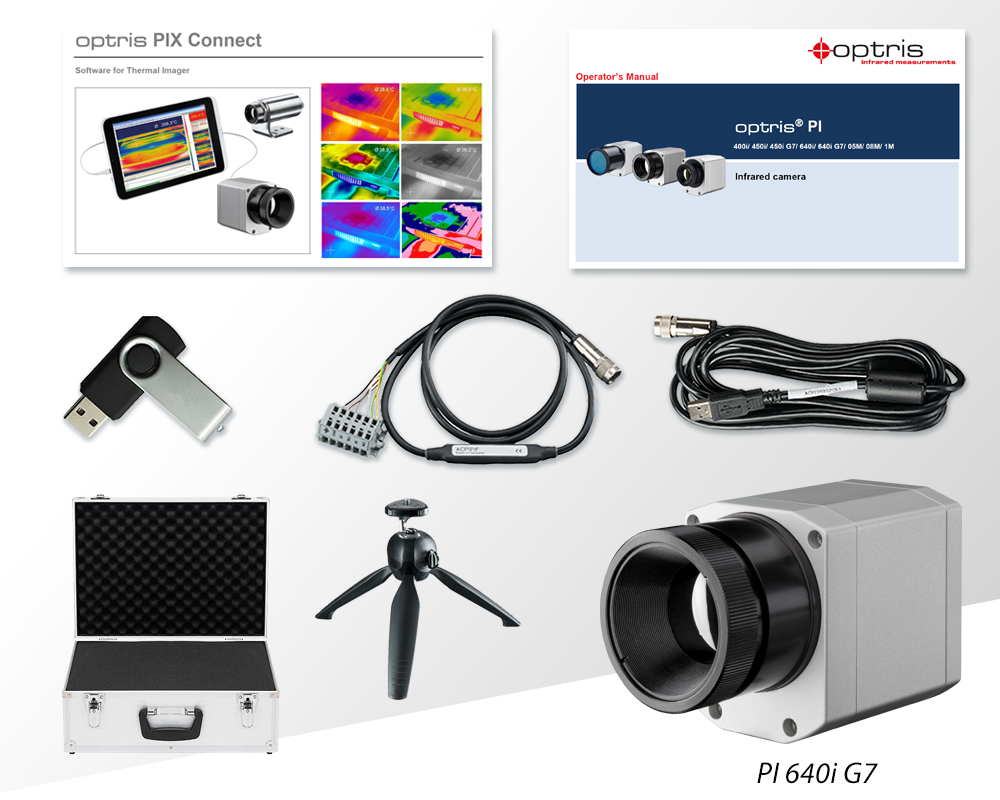
- Infrared Camera PI 640i G7
- USB cable 1 m (3.3 ft)
- Cable for output/input 1 m (3.3 ft) incl. terminal block
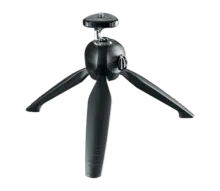
- Tripod
- Rugged outdoor transport case (IP67)
- Software package Optris PIX Connect
- PI Product Manual
Accessories






Talk to us about your IR Temperature Measurement Requirements
Our Infrared Temperature Measurement experts can help you find the right Optris product for your application.
