


PI 640i Microscope Optics with 2X Magnification
Precision High-Resolution VGA Infrared Microscope Camera with 2X Magnification.
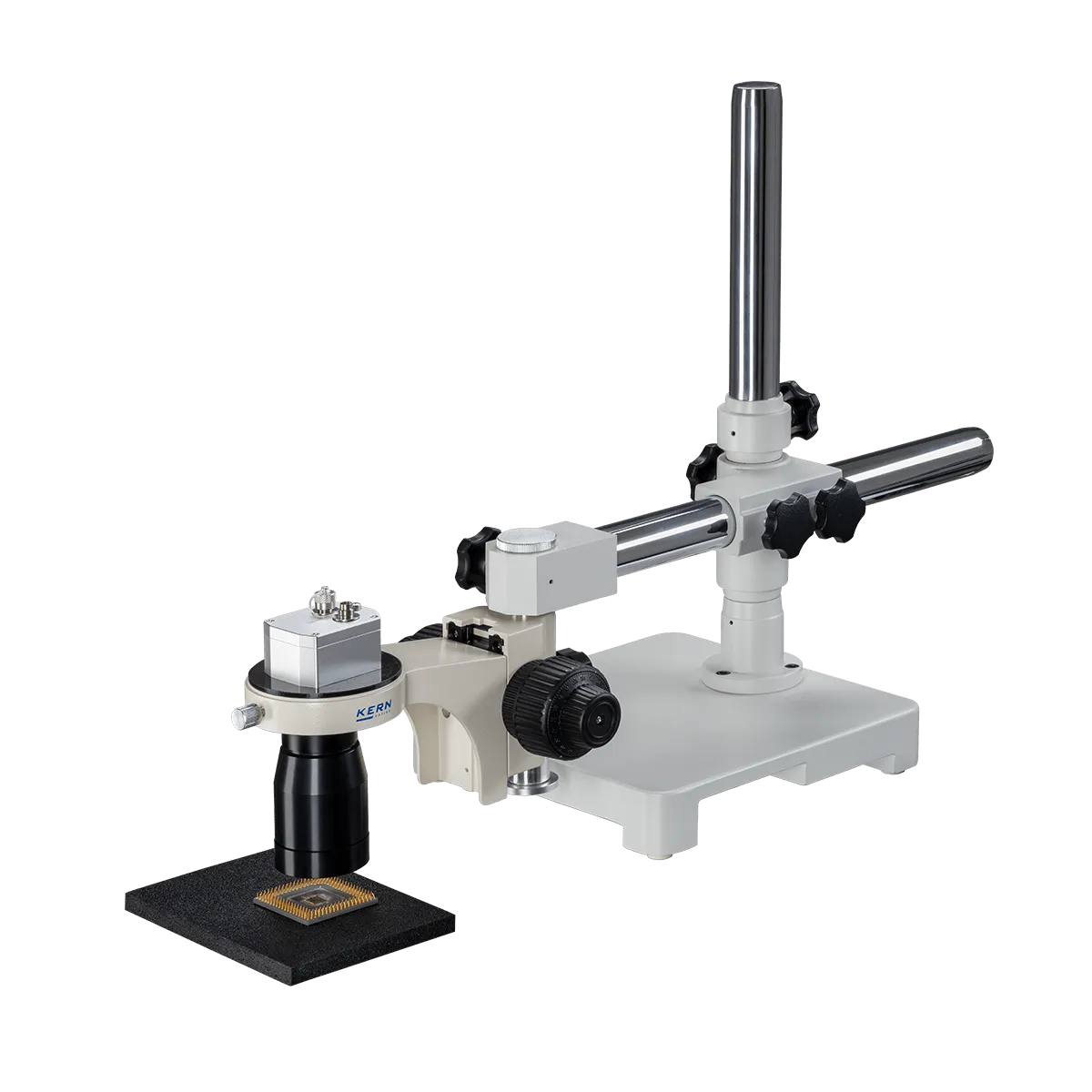
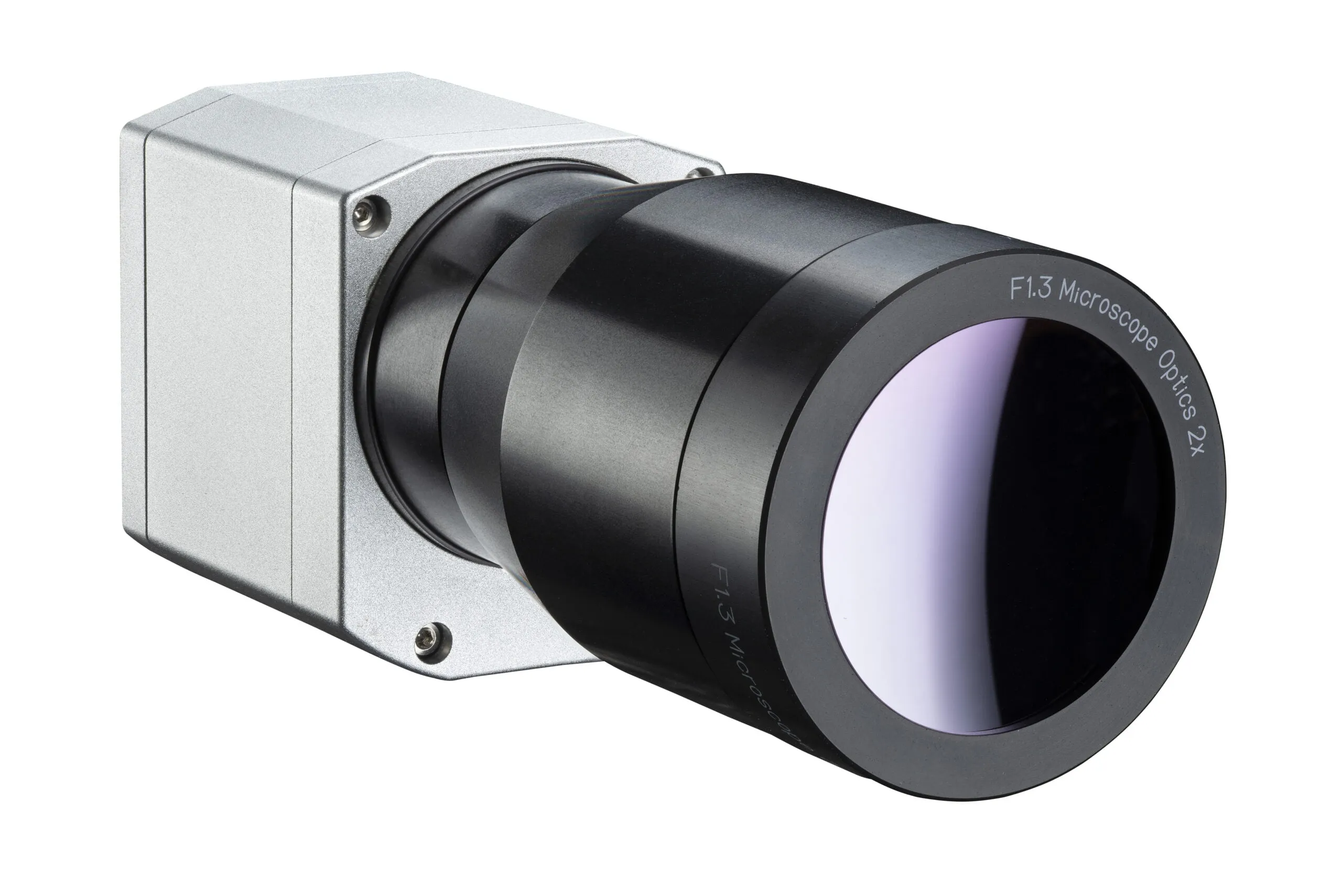
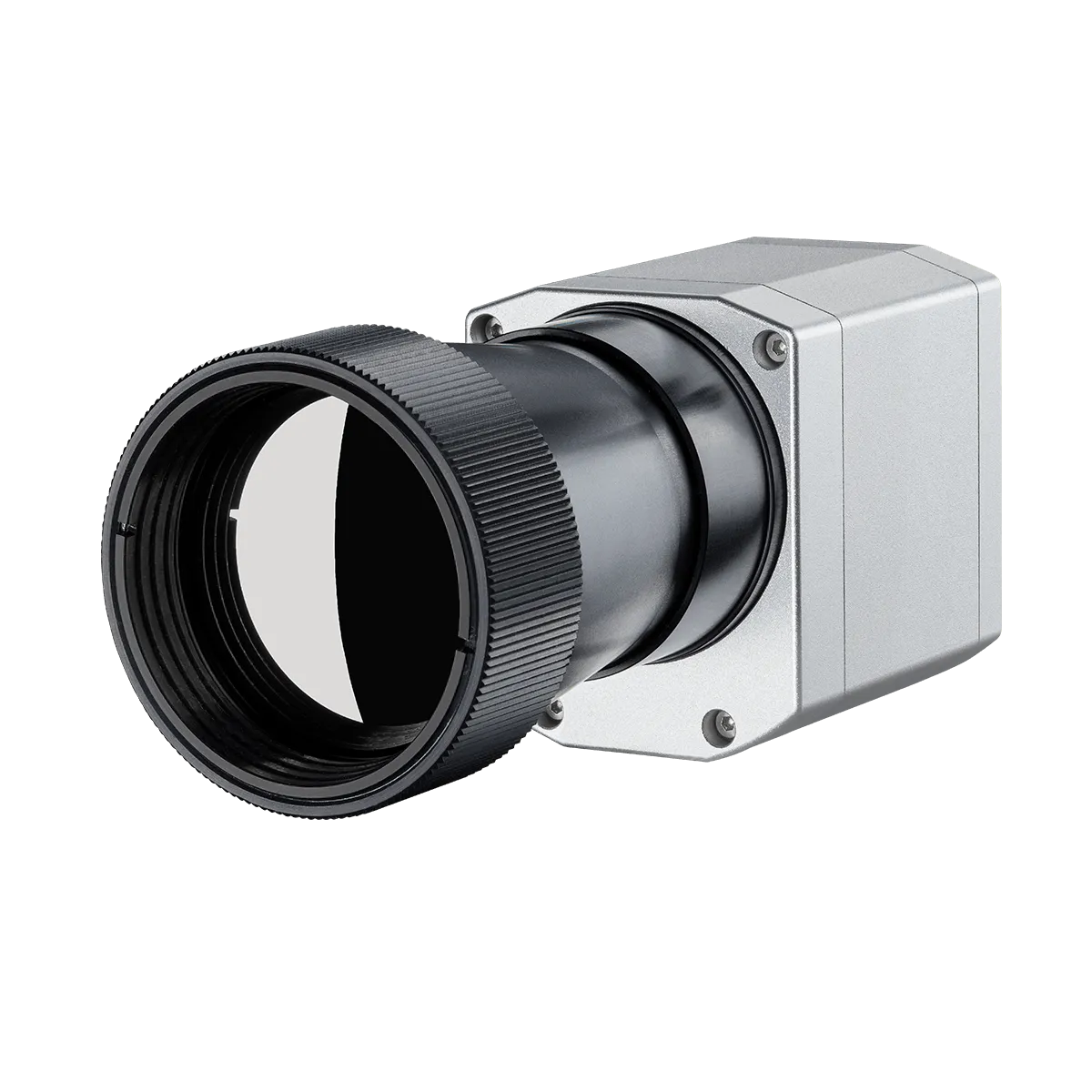
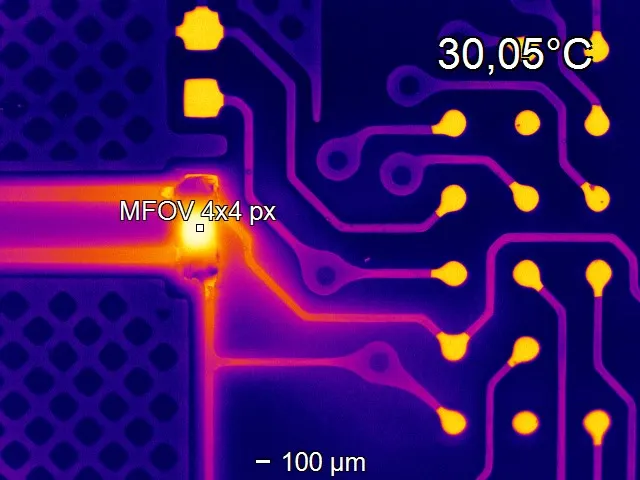
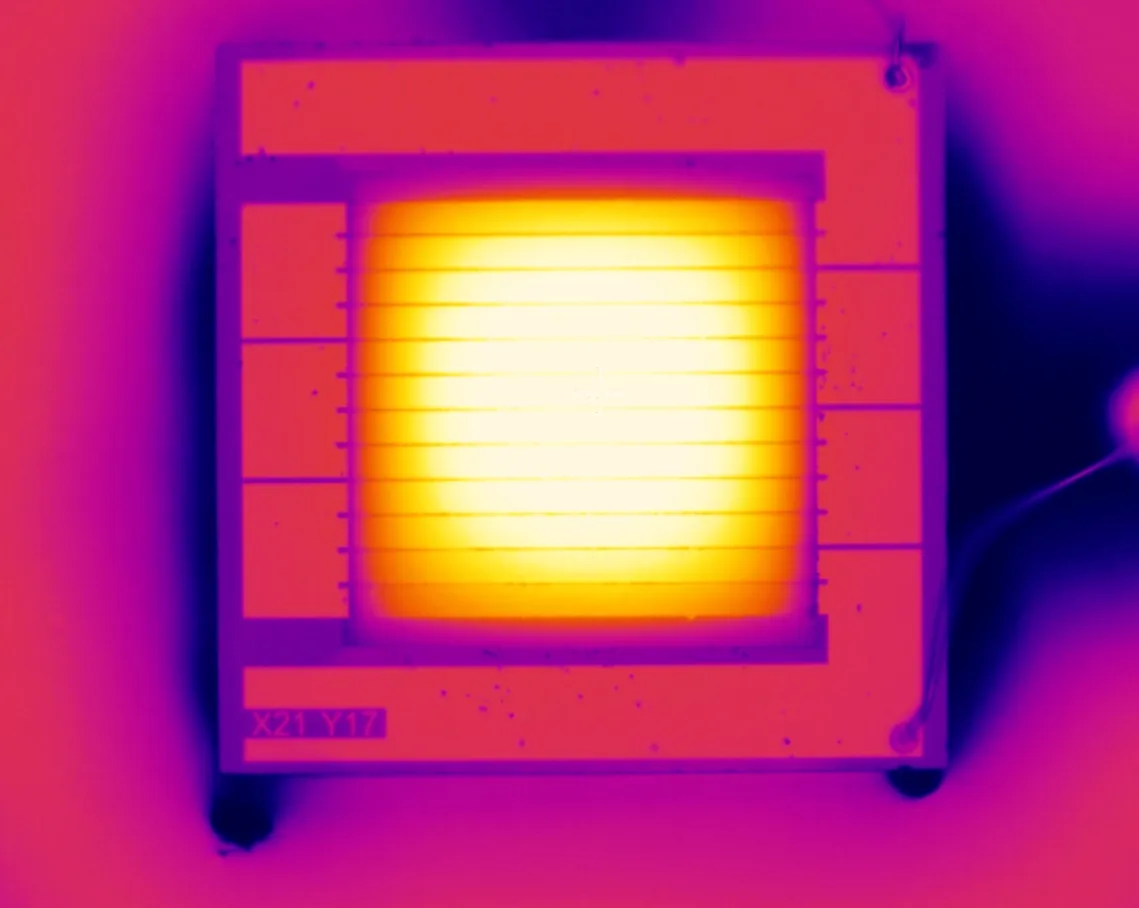
- Analysis of small chip-level components down to 8 μm
- Spectral range: 8 µm to 14 µm
- High pixel resolution of 640 x 480
- Frame rate: 32 Hz, up to 125 Hz of sub-images
- With a temperature resolution (NETD) of 80 mK
- Exchangeable, focusable optics for the most flexible use of the camera
- Microscope stand included for hands-free simultaneous operation/testing
$17,450.00
excl. sales taxes, custom tariffs and shipping
Product Description
The PI 640i infrared microscope kit with 2X magnification offers a solution tailored for engineers requiring precise temperature data for small electronic devices or Micro-Electro-Mechanical Systems (MEMS). This kit enables users to visualize thermal variations and conduct measurements on minute targets, a capability reliant on detector resolution. The system’s optics focus infrared heat energy from the device onto the IR camera’s detector elements, ensuring accurate and detailed thermal analysis of small components.
Engineers often encounter discrepancies between temperature measurements obtained using contact thermocouples and those from a properly equipped infrared camera, particularly when dealing with small targets. This disparity commonly arises due to the thermal bridge effect of the thermocouple connection, which conducts heat and affects measurement accuracy. In such cases, non-contact infrared cameras tend to yield more accurate results, as they avoid the heat conduction issues associated with contact methods.
Like microscopes functioning within the visible spectrum, selecting the appropriate optic involves a trade-off between the total observable field of view and the smallest target requiring observation and measurement. The highest-performing PI 640i microscope objective can detect temperature changes on targets as small as 8 µm within a field of view of 5.4 mm x 4.0 mm (.21 in x .16 in). Integrating a high-resolution IR camera with German-designed infrared microscope objectives and a precision mounting stage facilitates precise working distance adjustment, ensuring accurate and detailed thermal analysis of tiny components.
IR camera manufacturers often highlight a single pixel size or IFOV (Instantaneous Field of View) to showcase a camera’s ability to resolve small targets. However, it’s essential to recognize that accurate temperature measurement with an infrared camera necessitates multiple pixels. Cameras with smaller detector pitches require as many as 7 x 7 pixels to deliver temperature measurements within the camera’s specified accuracy. The MFOV (Measurement Field of View) specification plays a pivotal role in ensuring temperature measurements are correct.
In addition to low thermal noise, the optimal pixel pitch size of 17 µm for long-wavelength infrared radiation allows for a small Measurement Field of View (MFOV) of just 4 x 4 pixels. Using superior quality and larger optics ensures high image quality, minimizing distortion and ensuring uniform attenuation across the entire image. Various interchangeable lens optics are available to properly frame and maximize pixel count on the target to be measured. The infrared camera supports a frame rate of 32 Hz in standard mode or 125 Hz in high-speed subframe mode, enabling the monitoring of fast manufacturing processes.
The PI 640i is compatible with Optris PIX Connect software, which users can download for free and receive updates at no cost. This software package includes features such as hot spot and cold spot location detection, histograms, temperature profiling, image subtraction, and other thermal image processing tools. For researchers and process engineers, the PC-based PIX Connect platform offers robust thermal image processing capabilities, allowing users to extract and document fully calibrated temperature measurements from any pixel in the scene.
Time-versus-temperature data can be extracted from live thermal video feeds and recorded thermal video files containing stored temperature data. Engineers can utilize the data collection capabilities to extract the highest, lowest, and average temperatures from areas of any size or shape and receive complex alarm signals. Furthermore, the system supports replaying stored thermal video frame by frame, enabling engineers to capture and store radiometric images and trigger snapshots during temperature changes. This functionality ensures comprehensive monitoring and detailed analysis of thermal events over time.
Many engineers gather data from multiple locations on electronic devices over extended periods using the Temperature/Time feature, which logs data at user-specified intervals and stores it in .csv files. Some engineers prefer obtaining full images and utilizing calibrated sequence files or calibrated .tiff images, which can be captured at user-specified intervals. The Snapshot sequence storage routine also facilitates CSV file storage of the complete temperature matrix at user-specified intervals, providing a comprehensive record of temperature data for detailed analysis and reporting.
Specification
| MODEL | PI 640i LT 10°x 8° MO2X |
| DETECTOR | |
| Optical resolution | Full resolution: 640 x 480 pixels Linescan: 640 x 120 pixels |
| Pixel pitch | 17 µm |
| Detector | Uncooled bolometer |
| Spectral Range | LT: 8 µm – 14 µm |
| Optical Filter | Optional: CO2 10.6 µm |
| Frame rate | 32 Hz at 640 x 480 pixels 125 Hz at 640 x 120 pixels |
| OPTICAL | |
| Field of View | 10°x 8° |
| Focal length [mm] | 60 mm |
| F Number | 1.3 |
| Optical Resolution | 440:1 |
| Minimum Distance to Target | 15 mm (0.59 in) |
| Interchangeable optics | Yes |
| MEASUREMENT | |
| Object Measurement Range | -20 °C … 100 °C (-4 °F … 212 °F) 0 °C … 250 °C (32 °F … 482 °F) 150 °C … 900 °C (302 °F … 1652 °F) |
| Accuracy *1) | ±3.6 °F or ±2 %, whichever is greater |
| Thermal Sensitivity (NETD) *2) | 80mK |
| Smallest detectable Spot Size IFOV: 1 pixel | 8 µm |
| Smallest measurable Spot Size MFOV | 32 µm |
| Measurement Field of View (MFOV) | 4 x 4 pixels |
| Warm-up time | 10 min |
| Emissivity /Transmissivity/ Reflectivity | adjustable: 0.100…1.100 |
| INTERFACES | |
| Interface | USB optional: USB GigE (PoE) interface |
| Supported Protocols | USB 2.0 |
| Compatible Software | PIXConnect, ConnectSDK, EasyAPI, ExpertAPI |
| ANALOG INPUT/OUTPUT | |
| Direct output/input | 1x analog output (0/4-20 mA) 1x input (analog or digital); optically isolated |
| Optional Industrial Process interface (PIF) | 2x 0 – 10 V input, digital input (max. 24 V), 3x 0/4 – 20 mA outputs, 3x relay (0 – 30 V/ 400 mA), fail-safe relay |
| Cable length | USB: 3.3 ft (standard), 9.8 ft, 16.4 ft, 32.8 ft, 65.6 ft |
| IMAGE PROCESSING | |
| Configuration | via PIXConnect |
| Operation | computer-enabled |
| Capabilities | Measure Areas of Interest, Linescanner, EventGrabber, Merger, Alarming, Comparison Functions, Temperature-Time Diagrams, Temperature Profiles, Recording & Playing, Triggering … |
| GENERAL | |
| Size | 2.05 in x 2.32 in x 5.47 in |
| Housing Material | Aluminium housing |
| Weight | 14.46 oz |
| Tripod | 1/4-20 UNC |
| Focus | Manual |
| Country of Origin | Germany |
| ENVIRONMENTAL & CERTIFICATIONS | |
| Operating Temperature Range | 32 °F to 122 °F |
| Storage Temperature Range | -40 °F to 158 °F |
| Relative humidity | 20 – 80 %, non-condensing |
| Protection Class | IP67, NEMA-4 |
| EMC | 2014/30/EU |
| Shock | IEC 60068-2-27 (25 G and 50 G) |
| Vibration | IEC 60068-2-6 (sinus shaped) IEC 60068-2-64 (broadband noise) |
| Standards | CE, UKCA, RoHS |
| POWER | |
| Power Supply | USB |
| Power Consumption | max. 2.5 W |
| ACCESSORY | |
| Microscope stand | Included |
| ESD pad | Included |
| Dimensions | 16.14 in x 9.06 in x 16.54 in |
| Part number | OPTPI64ILTMO2XT050 |
| Additional Remarks | 1) Accuracy statement effective from 302 °F |
Areas of Application
The optris Microscope optics are ideally suited to thermally analyze entire circuit boards, and detailed macro shots of individual components can be reliably measured. The high-quality thermal and geometric detail resolution of the infrared cameras allows for effective and precise functional testing of electronic products. With the MO2X microscope optics with 2x magnification, the PI 640i infrared camera from Optris is now able to capture infrared images of even complex structures. For an exact temperature measurement, 4 x 4 pixels are required (MFOV), so that objects with a size of only 34 µm (MO44) can now be measured. This means that even tiny structures can be analyzed at chip level. The thermal resolution of 80 mK is a very good value for this optic. The focus of the new optics makes it possible to work at a distance of 15 mm (.59 in) from the object being measured. As the optics on the PI series infrared cameras can be easily exchanged, the system can be used flexibly for various measurement tasks. Together with the supplied high-quality microscope stand with fine adjustment, microelectronic assemblies can be inspected very easily.
Software
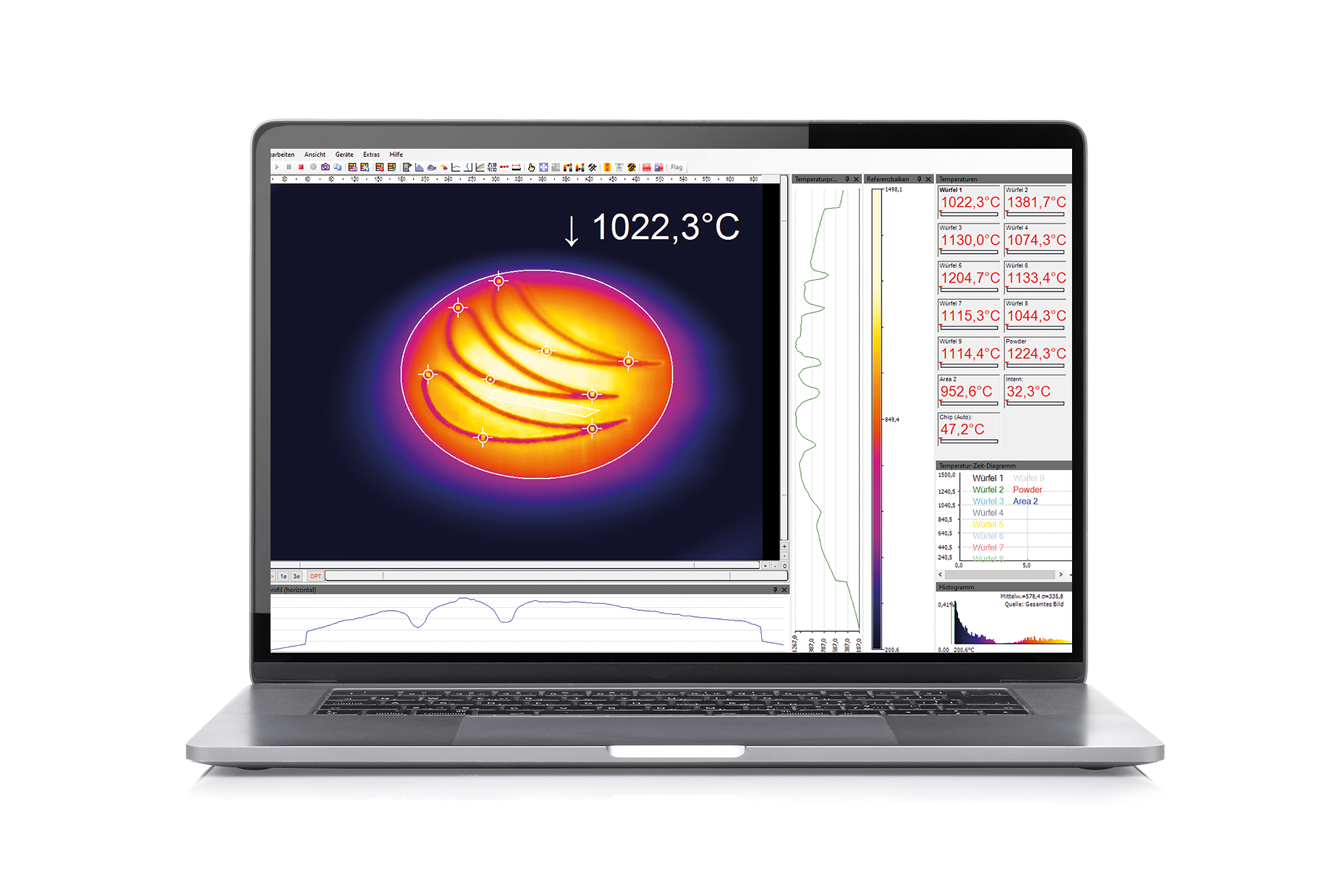 Thermography software optris PIX Connect is included and license-free.All infrared cameras are delivered with the thermography software optris PIX Connect, developed specifically for the extensive documentation and analysis of thermal images. The Windows-based PIX Connect software enables users to tailor the infrared cameras to meet specific requirements. It analyses live and recorded temperature data and triggers alarm signals for process integration.The key to leveraging the Optris infrared camera is a correct configuration. This includes detailed device-specific configurations such as frame rate, measurement range adjustments, external communication settings, and USB/Ethernet configurations. Moreover, PIX Connect facilitates firmware updates and the download of configuration files over the Internet.
PIX Connect
Thermography software optris PIX Connect is included and license-free.All infrared cameras are delivered with the thermography software optris PIX Connect, developed specifically for the extensive documentation and analysis of thermal images. The Windows-based PIX Connect software enables users to tailor the infrared cameras to meet specific requirements. It analyses live and recorded temperature data and triggers alarm signals for process integration.The key to leveraging the Optris infrared camera is a correct configuration. This includes detailed device-specific configurations such as frame rate, measurement range adjustments, external communication settings, and USB/Ethernet configurations. Moreover, PIX Connect facilitates firmware updates and the download of configuration files over the Internet.
PIX Connect
 Optris offers several different SDKs for our Xi and PI thermal imaging cameras. Depending on the operating platform, the infrared camera, the coding language, and the hardware platform, different software interfaces can be utilized:
SDK
Optris offers several different SDKs for our Xi and PI thermal imaging cameras. Depending on the operating platform, the infrared camera, the coding language, and the hardware platform, different software interfaces can be utilized:
SDK
 The Optris IRmobile allows users to set up and commission an Optris infrared pyrometer or infrared camera with an Android smartphone or tablet. This tool becomes handy for commissioning and aligning the infrared camera’s field of view or adjusting the configuration. The app analyzes the connected infrared camera’s live infrared image stream with auto hot and cold spot detection. For pyrometers, a temperature-time diagram or the video signal is displayed. This app works on most Android devices running 5.0+ with a USB port supporting USB-OTG (On The Go).
Google Play
The Optris IRmobile allows users to set up and commission an Optris infrared pyrometer or infrared camera with an Android smartphone or tablet. This tool becomes handy for commissioning and aligning the infrared camera’s field of view or adjusting the configuration. The app analyzes the connected infrared camera’s live infrared image stream with auto hot and cold spot detection. For pyrometers, a temperature-time diagram or the video signal is displayed. This app works on most Android devices running 5.0+ with a USB port supporting USB-OTG (On The Go).
Google Play
FAQs
Can I switch between MO2X and MO44 optics?
Yes. Optics can be changed in the field and deliver calibrated temperature measurements, provided both optics are calibrated with the specific PI 640i they are mated with. For correct calibration, make sure to select the optic attached to the camera from the pull-down optics box in the Device tab of the Configuration menu. All optics that have been calibrated with your serial number camera will be visible in this box if the PC hosting PIX Connect software is online.
Can I use non-microscopic field-of-view optics for larger targets such as printed circuit boards?
Yes. Four additional optics are available for the PI 640i and can be calibrated for use with the camera. This dramatically extends the PI 640i’s application potential, enabling thermal imaging and temperature measurement of full-size printed circuit boards or the products that host them. As with microscope optics, make sure to select the correct calibration file when switching optics.
I have my microscope optics. Can I use these?
Microscope optics developed with visible light cameras will not transmit infrared radiation emitted in the spectral region where the PI 640i is responsive and cannot be used with an infrared camera. Infrared optics not calibrated with the PI 640i could potentially deliver magnified thermal images but will not deliver calibrated temperature measurements.
Why do I need a microscope stage?
Macro focus can be performed using the knurled ring on the outside of the microscope objective but minute adjustments in working distance can dramatically improve image clarity and temperature measurement accuracy. Each microscope package’s stages facilitate this minute working distance adjustment. If the image is not in optimal focus, the temperature measurements will not be accurate.
Can I measure the temperature of the leads connected to my small electronic devices?
Small leads can be seen with powerful infrared microscope optics but are most often made of low-emissivity metals that reflect heat energy. Leads need to be coated with carbon black or flat black paint to be accurately measured with an infrared camera. The same is true for a component (can) made from metal. If a metal lead cannot be treated with a high emissivity coating, the high emissivity connection point of the lead to a device can often serve as an indication that the lead in question is running hotter than desired.
Can I see through the layers on a printed circuit board?
FR-4 and Teflon (PTFE) are common materials used as substrate layers in printing circuit boards. They are not transmissive in the infrared region so you cannot see through them with an IR camera. However, heat from a specific region may conduct up through the various printed circuit board layers to the top board, presenting any conducted heat to an infrared camera targeted at that region on the board surface. The camera settings may need to be optimized to enhance sensitivity so that small shorts from inner layers can be seen. Copper foil inserted in between PCB layers can mute or entirely prevent the flow of heat from the inner layers to the top surface of the board.
Can an infrared camera validate chip and substrate temperatures during PCB manufacturing?
Any infrared measurement requires a clear line of sight between the camera optics and the surface to be measured. Infrared temperature measurements in a reflow oven would be impossible without an access port and mounting and camera cooling provisions. Although there is no system actively marketed now with this capability there is one forced-convection SMT reflow system in development using Optris IR cameras in line scan mode to measure temperatures and create full infrared images through small slits in the oven in four locations.
Scope of Supply
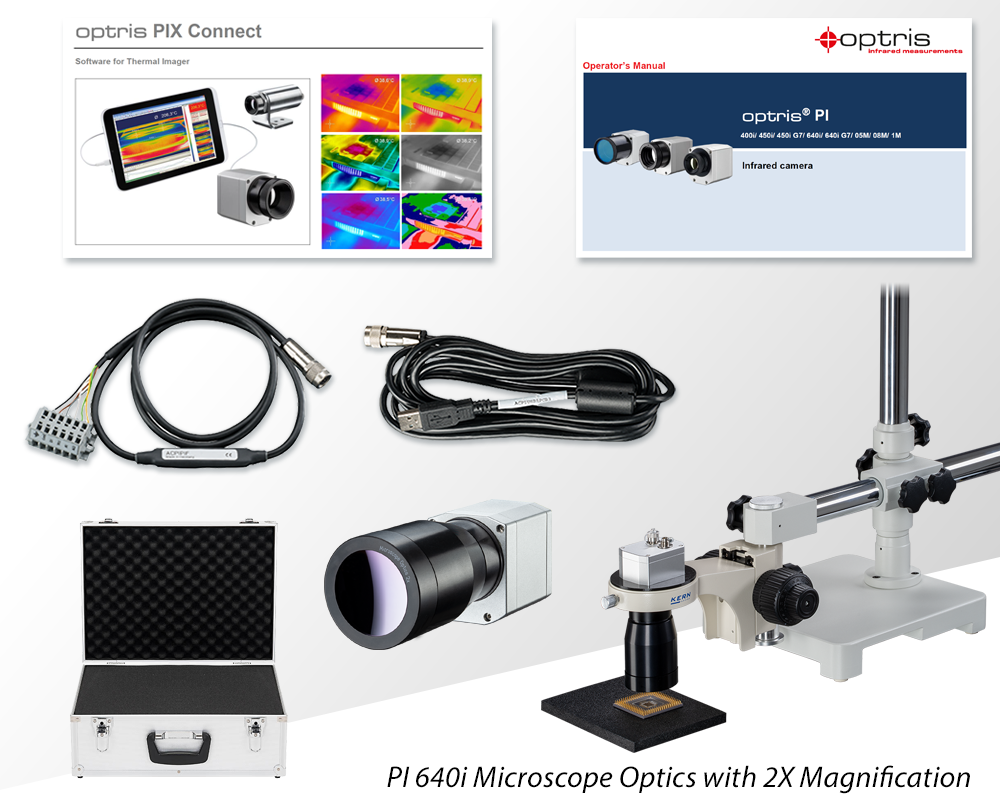
- Infrared Camera PI 640i with Microscope optics 2X
- USB cable (1m / 3.28 ft)
- Cable for output/input (1 m / 3.28 ft) incl. terminal block
- Rugged outdoor transport case (IP67)
- Microscope stand
- Base plate with ESD pad
- Software package optris PIX Connect
- Quick Start Guide
Related Products



Talk to us about your IR Temperature Measurement Requirements
Our Infrared Temperature Measurement experts can help you find the right Optris product for your application.
