


PI 640i Microscope Accessory Kit
.
-
- Analysis of small chip-level components down to 28 μm
- Spectral range: 8 to 14 µm
- For PI 640i infrared camera
- Exchangeable, focusable optics
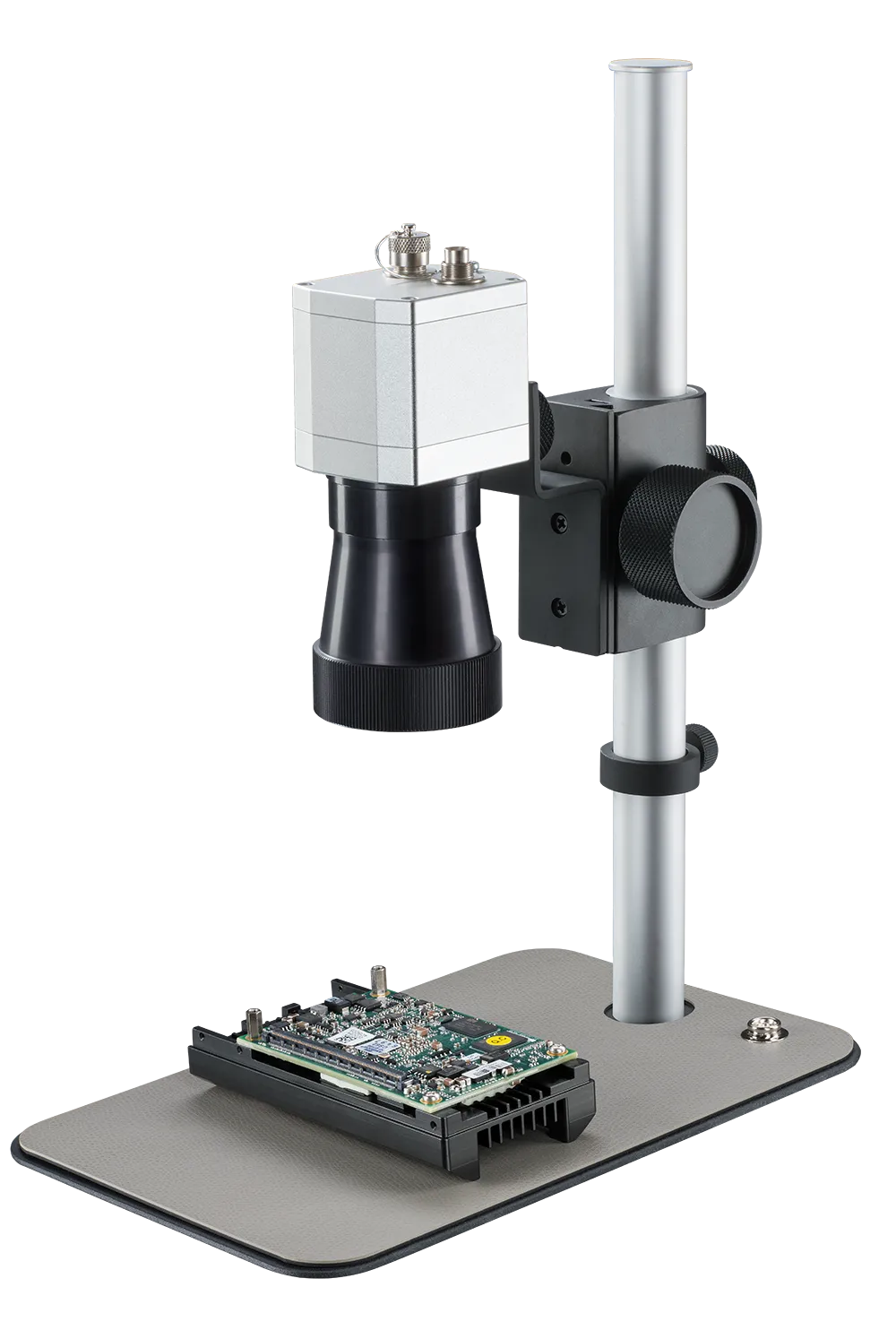
- Microscope stand included for hands-free simultaneous operation/testing
$3,060.00
excl. sales taxes, custom tariffs and shipping
Product Description
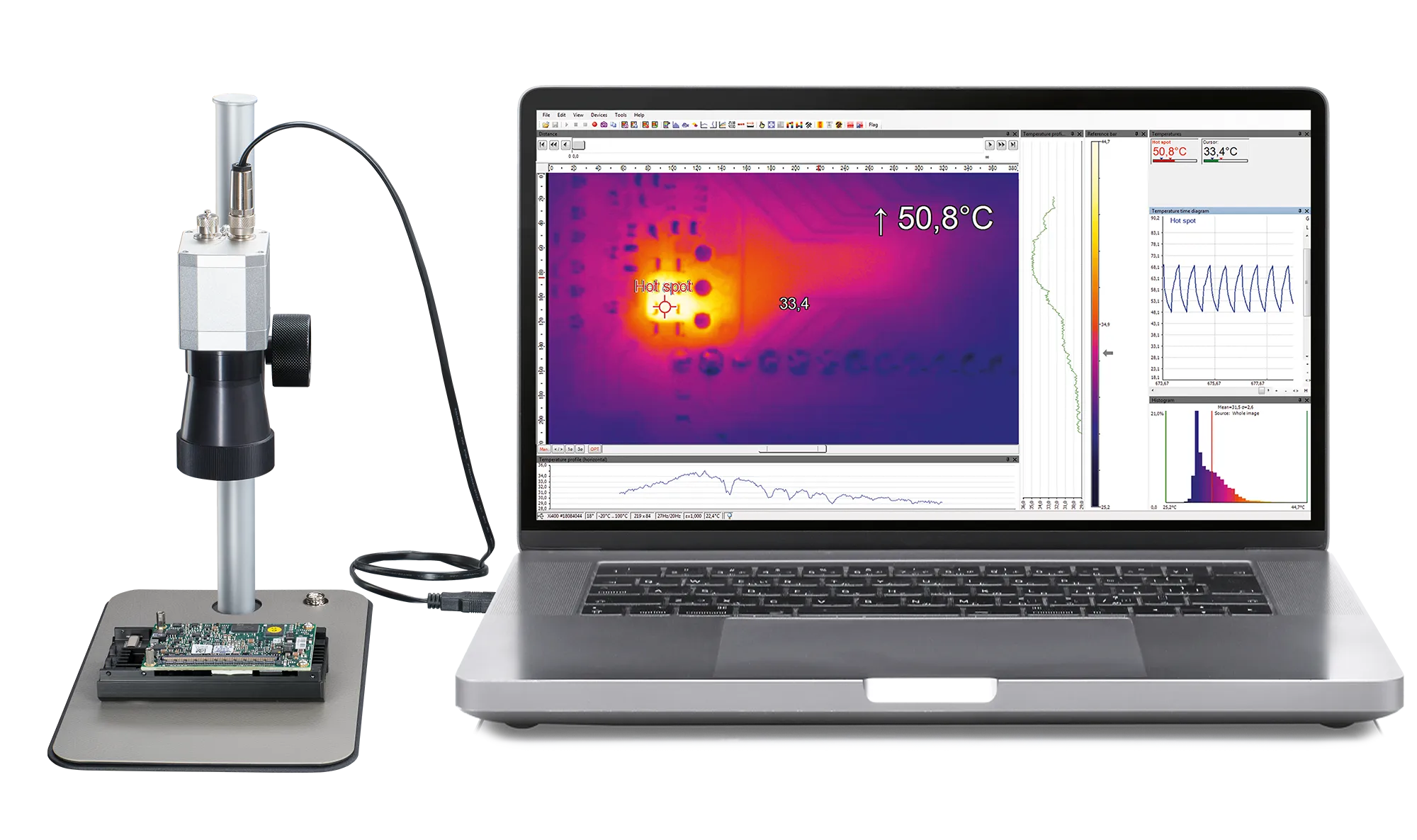
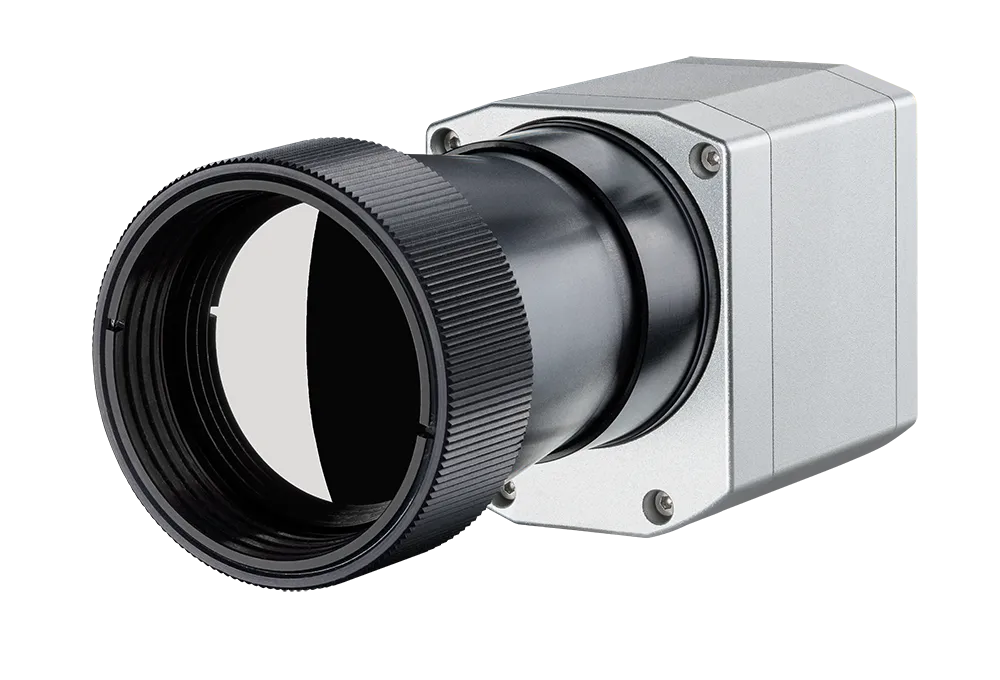
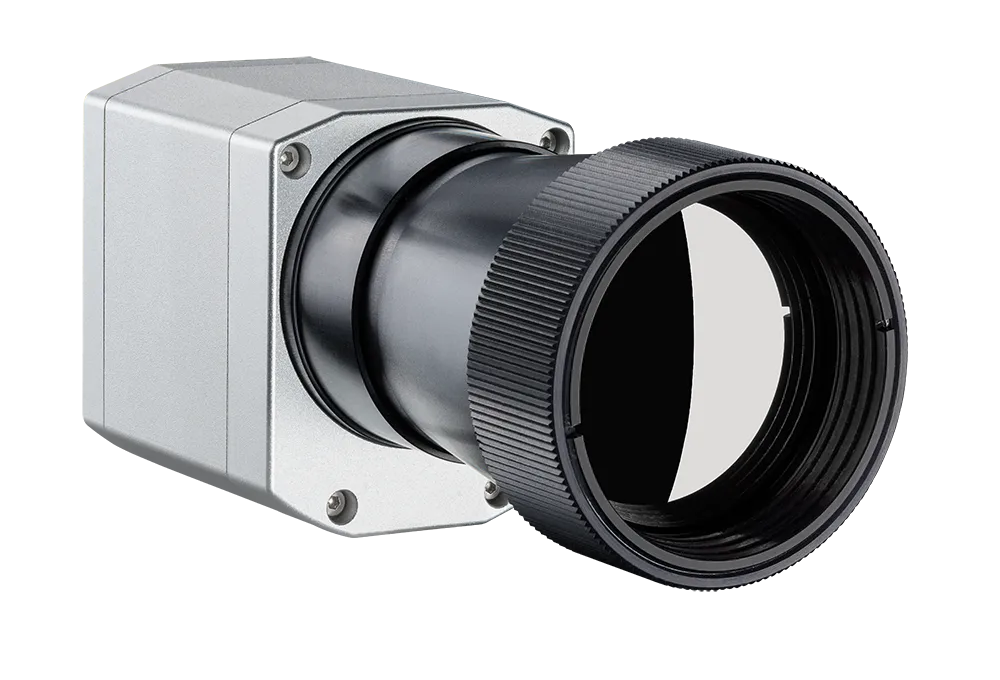
The Optris Microscope optics is an accessory for customers with the PI 640i infrared camera and another interchangeable optic. This microscope optic enhances the PI 640i’s capability to thermally analyze entire circuit boards and detailed macro shots of individual components. Its high-quality thermal and geometric resolution ensures effective and precise functional testing of electronic products.
Specification
General Specifications
- Operating temperature range: 0…50 C
- Storage temperature range: -40…70 C
- Relative humidity: 20 – 80 %, non-condensing
- Dimensions: 300 x 220 x 150 mm
Optical Specifications
- Field of view: 12 x 9
- Focal length: 44 mm
- F Number: 1.1
- Optical Resolution: 940:1
- Minimum Distance to target: 80 – 100 mm
- Interchangeable optics: Yes
Measurement Specifications
- Object Measurement Range: -20…100 C, 0…250 C, 150…900 C
- Accuracy: ±2 C or ±2 %, whichever is greater
- Thermal Sensitivity (NETD): 80mK
- Smallest detectable Spot Size IFOV (1 pixel): 28 µm
- Smallest measurable Spot Size MFOV: 85 µm
- Measurement Field of View (MFOV): 3×3 pixels
Downloads
DATASHEET
PDF - 526.58 KB
PI 640i Microscope Optics Datasheet
Complete the form to download the file
MANUAL
PDF - 4.4 MB
PIX Connect Manual
Complete the form to download the file
FAQs
Can I use non-microscopic field-of-view optics for larger targets such as printed circuit boards?
Yes. Four additional optics are available for the PI 640i and can be calibrated for use with the camera. This dramatically extends the PI 640i’s application potential, enabling thermal imaging and temperature measurement of full-size printed circuit boards or the products that host them. As with microscope optics, make sure to select the correct calibration file when switching optics.
Why do I need a microscope stage?
Macro focus can be performed using the knurled ring outside the microscope objective, but minute adjustments in working distance can dramatically improve image clarity and temperature measurement accuracy. Each microscope package’s stages facilitate this minute working distance adjustment. If the image is not in optimal focus, the temperature measurements will not be accurate.
Can I measure the temperature of the leads connected to my small electronic devices?
Small leads can be seen with powerful infrared microscope optics but are most often made of low-emissivity metals that reflect heat energy. Leads need to be coated with carbon black or flat black paint to be accurately measured with an infrared camera. The same is true for a component (can) made from metal. If a metal lead cannot be treated with a high emissivity coating, the high emissivity connection point of the lead to a device can often serve as an indication that the lead in question is running hotter than desired.
Can I see through the layers on a printed circuit board?
FR-4 and Teflon (PTFE) are common materials used as substrate layers in printing circuit boards. They are not transmissive in the infrared region, so you cannot see them with an IR camera. However, heat from a specific region may be conducted through the various printed circuit board layers to the top board, presenting any conducted heat to an infrared camera targeted at that region on the board surface. The camera settings may need to be optimized to enhance sensitivity so that small shorts from inner layers can be seen. Copper foil inserted in between PCB layers can mute or entirely prevent the flow of heat from the inner layers to the top surface of the board.
Can an infrared camera validate chip and substrate temperatures during PCB manufacturing?
Any infrared measurement requires a clear line of sight between the camera optics and the surface to be measured. Infrared temperature measurements in a reflow oven would be impossible without an access port and mounting and camera cooling provisions. Although there is no system actively marketed now with this capability, there is one forced-convection SMT reflow system in development using Optris IR cameras in line scan mode to measure temperatures and create full infrared images through small slits in the oven in four locations.
Can I add the microscope optic to my infrared camera immediately?
The camera must be sent back for calibration if the Microscope Accessory Kit is ordered subsequently.
Scope of Supply
- Microscope optics
- USB cable (1m)
- Cable for output/input (1 m) incl. terminal block
- Rugged outdoor transport case (IP67)
- Microscope stand
- Base plate with ESD pad
- Software package optris PIX Connect
- Quick Start Guide

Talk to us about your IR Temperature Measurement Requirements
Our Infrared Temperature Measurement experts can help you find the right Optris product for your application.
