


Filament Production for Fused Deposition Modeling 3D Printers
Optimizing Filament Compounding with Precise Temperature Management
Challenge
Maintaining consistent filament diameter and mechanical properties is difficult due to temperature fluctuations during extrusion, which can cause incomplete plasticization or thermal degradation of the thermoplastic material.
Solution
Infrared temperature measurement enables real-time, non-contact monitoring of the extrusion process, allowing timely adjustments to ensure uniform melting, bonding, and solidification throughout filament production.
Benefits
- Ensures stable filament diameter for reliable 3D printing performance
- Reduces risk of extruder blockages and material degradation
- Minimizes production waste by quickly correcting temperature deviations
- Improves tensile strength and surface quality of the filament
- Enables continuous, automated control for consistent, high-quality output
Control Temperature to Achieve Consistent Filament Properties in Compounding Process
3D printing filament is the essential thermoplastic feedstock for fused deposition modeling (FDM) 3D printers. As the industry has grown, the variety of available filaments has expanded to meet diverse printing needs.
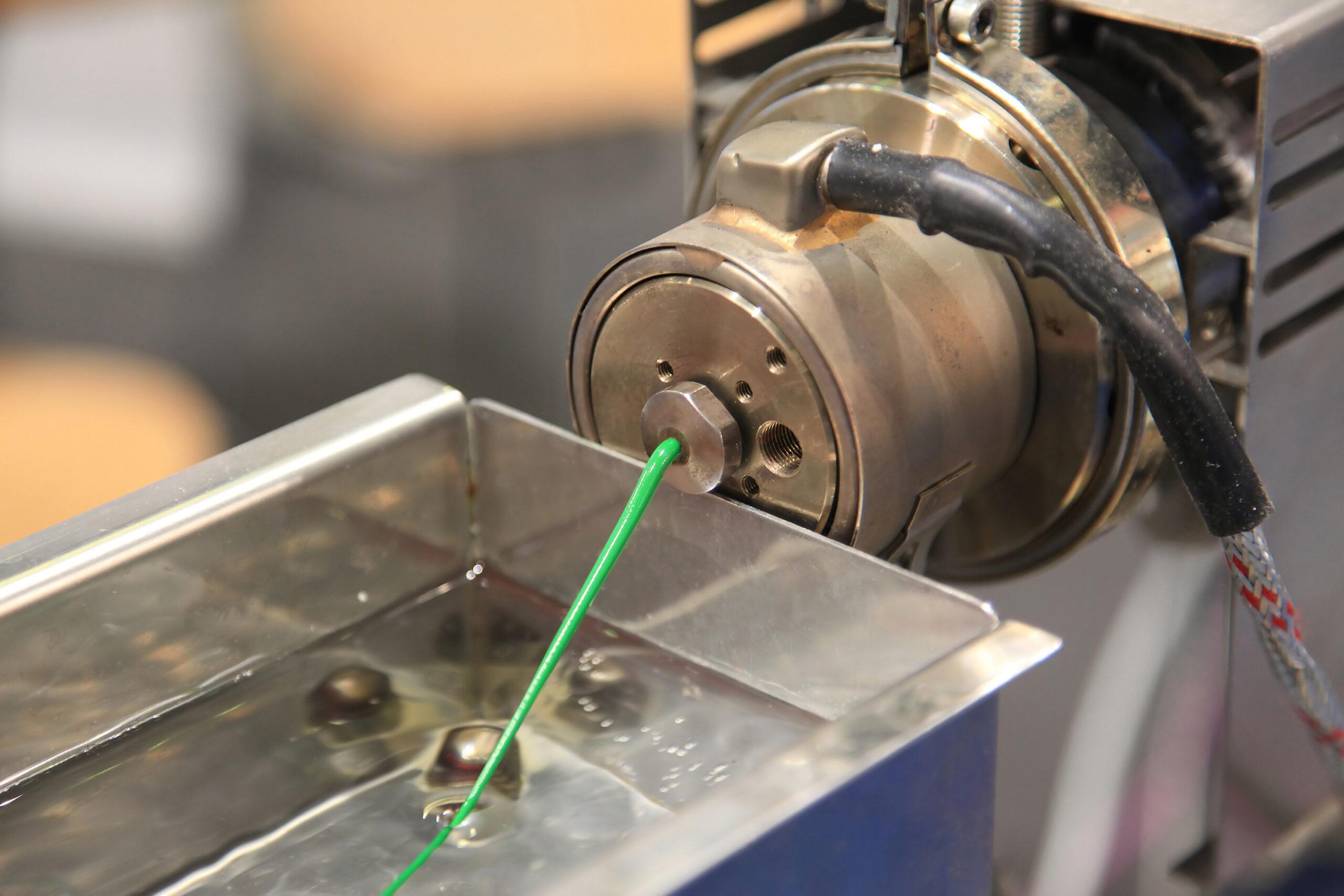
Filament production involves heating, extruding, and cooling plastic to transform raw nurdles into finished filament. Unlike in 3D printing, where material is pushed through a nozzle, filament production pulls the material through the nozzle, with the pulling speed and force defining the diameter.
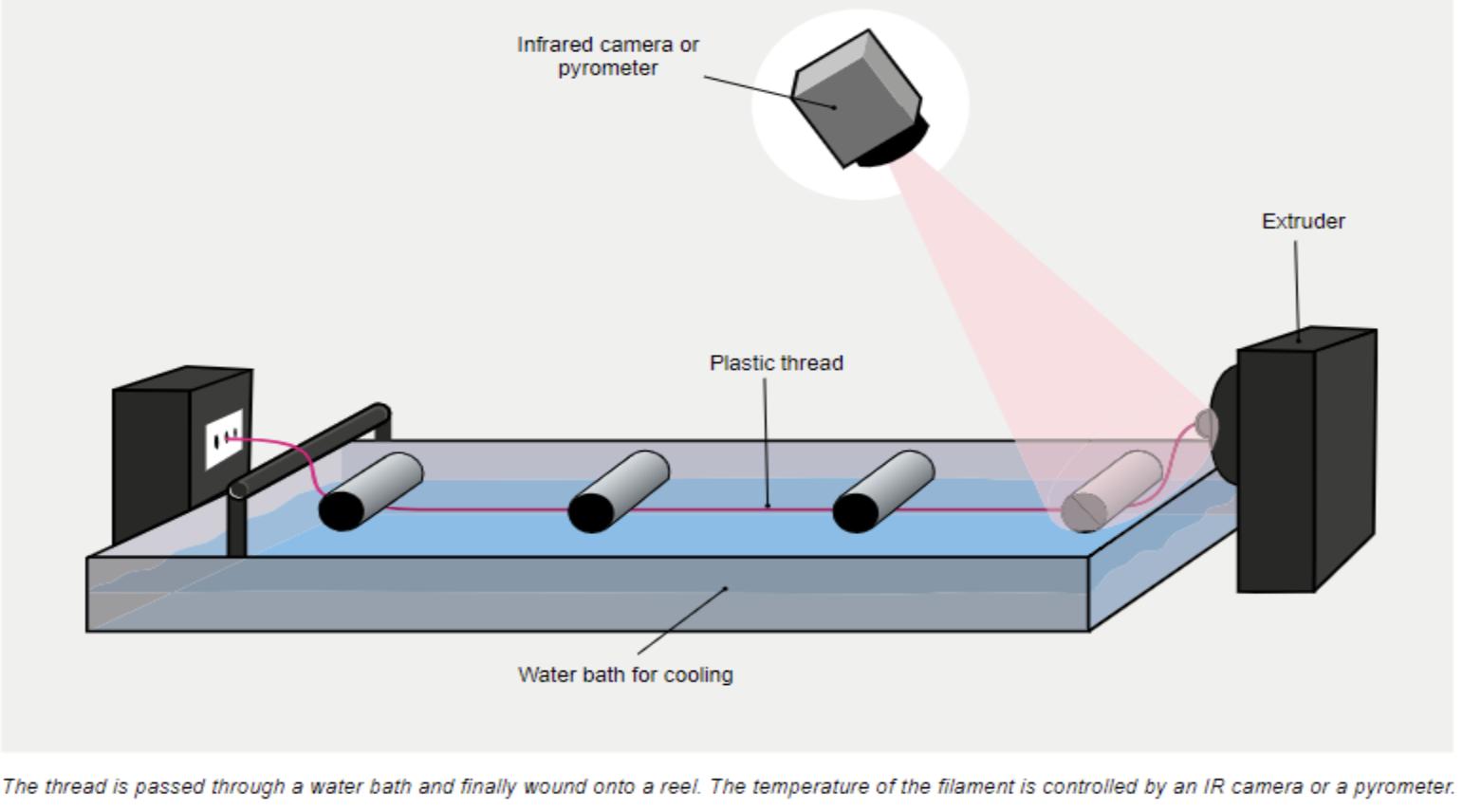
The process begins by feeding plastic pellets into a filament extruder’s heating chamber, where they melt and bond into a consistent strand. This filament exits the heating chamber and enters a warm water chamber to achieve a rounded shape, then moves to a cool water chamber to solidify. The pulling speed determines the filament’s diameter: slower speeds yield larger diameters, while faster speeds produce smaller ones.
Known as “compounding,” this process starts with raw plastic resin pellets, which can be mixed with additives to achieve desired properties. The pellets, dried to reduce water content, are then heated and extruded into filament form, passing through warm and cool water tanks before being wound onto a spool.
Different filaments require specific printing temperatures: PLA prints at 180-230°C, ABS at 210-250°C with a 50-100°C bed, PETG at 220-235°C, Nylon at 220-260°C with a 50-100°C bed, and flexible TPE and TPU at 225-235°C with a 40°C bed.
Temperature is a critical factor in filament production for several reasons. It directly affects the extrusion process of the thermoplastic material, influencing the diameter, surface roughness, and tensile strength of the filament. Proper extrusion temperature ensures that the thermoplastic melts uniformly, allowing it to flow smoothly through the nozzle and form a consistent filament. If the temperature is too low, the material may not melt properly, leading to incomplete plasticization and weak filaments. Conversely, if the temperature is too high, it can cause degradation of the material, compromising its mechanical properties. Additionally, the uniformity of the filament’s diameter is essential for reliable 3D printing, as variations can lead to printing errors and defects in the final product. By maintaining the optimal temperature during filament production, manufacturers can achieve high-quality filaments with the desired mechanical properties, ensuring consistent performance in 3D printing applications.
Preventing Extruder Blockages with Real-Time Temperature Adjustments through Infrared Temperature Measurement
Temperature plays a critical role in filament production for 3D printing, particularly for materials like polylactic acid (PLA). The extrusion process requires precise temperature control to ensure the filament has the correct diameter, surface roughness, and mechanical properties. If the temperature is too low, the material may not fully melt, leading to incomplete plasticization and resulting in filaments that are inconsistent in diameter and have poor mechanical strength. Conversely, if the temperature is too high, it can cause thermal degradation of the polymer, negatively impacting the filament’s quality and durability.
Using infrared (IR) temperature measurement in filament production offers significant benefits. IR measurement provides non-contact, real-time monitoring of the extrusion temperature, ensuring consistent and precise control. This capability is particularly beneficial in achieving consistent filament diameter and mechanical properties, which are crucial for high-quality 3D printing. Accurate temperature control helps in maintaining the ideal extrusion temperature, essential for producing filaments with uniform diameter and optimal tensile strength. Additionally, IR temperature measurement can detect temperature variations quickly, allowing for immediate adjustments and reducing the risk of producing defective filaments. This leads to higher quality filaments, improved printability, and overall better performance of the 3D printed object.
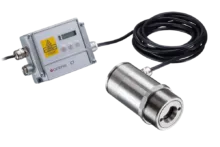
Optris pyrometers are exceptionally easy to integrate into filament production systems, offering seamless compatibility with existing processes. Their non-contact design allows for straightforward installation at key points along the extrusion line without interfering with the production flow. The pyrometers provide real-time temperature readings with high precision, which can be effortlessly connected to the production system’s control units, enabling automated adjustments to maintain optimal extrusion conditions. Their robust design ensures reliable performance even in demanding industrial environments, and the user-friendly interface simplifies configuration and monitoring. This ease of integration makes Optris pyrometers a valuable addition to any filament production setup.
Recommended Products











Other 3D Printing & Additive Manufacturing Applications


Talk to us about your IR Temperature Measurement Requirements
There are over 300 different pyrometer variants to choose from in the Optris infrared pyrometer portfolio each optimized for material, spot size, distance from the target, and environmental conditions. Fortunately, there is a trained engineer to phone or chat with to guide you through the process of choosing the perfect infrared sensor for your application.
The same support is available for the extensive IR camera product line.
