

Consistent Quality in Industrial Baked Goods Production Processes
Implementing Optris Infrared Solutions for Precise Temperature Control during Baking Process
Challenge
Achieving uniform heat distribution in industrial dough production is difficult, often leading to inconsistent baking, texture variations, or cracked pasta. Manual temperature control increases the risk of overheating or under-drying, compromising product quality, shelf life, and customer satisfaction.
Solution
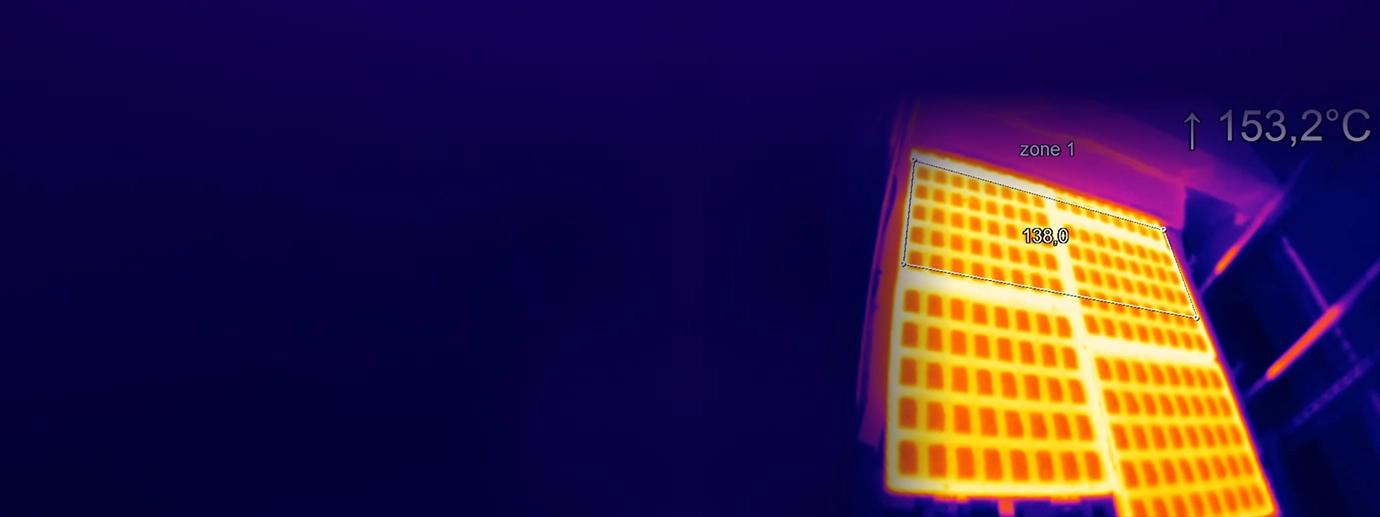
The application of thermal imaging enables real-time, automated monitoring and control of oven temperatures, ensuring even heat distribution. This allows early detection of irregularities in the baking or drying process and enables immediate correction through PLC-driven adjustments, stabilizing the thermal environment across the entire production line.
Benefits
- Ensures consistent dough quality with fewer defects like burns or cracks
- Reduces waste by minimizing product rejects due to uneven heating
- Lowers energy consumption through precise, automated heat regulation
- Streamlines quality control with real-time thermal data across the line
- Simplifies system integration and maintenance within existing production setups
Challenges in Achieving Uniform Heat Distribution in Dough Production
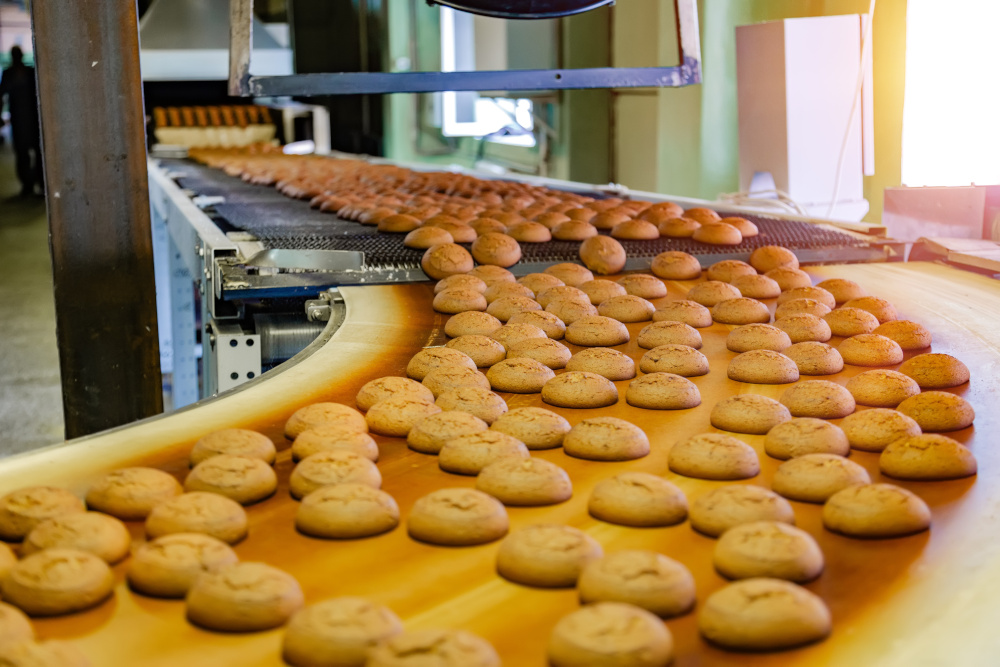
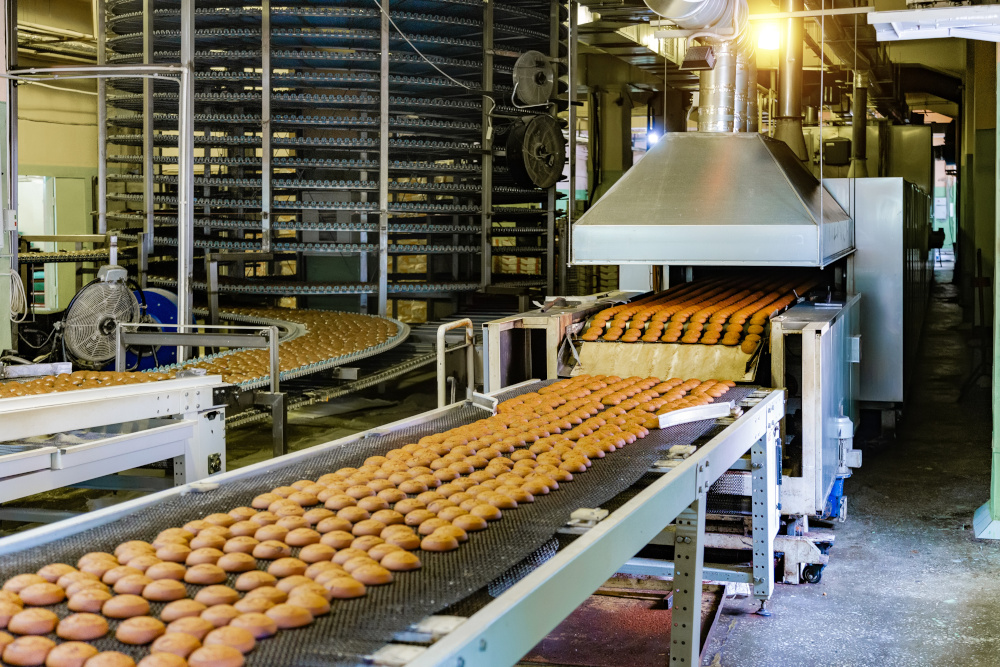
The industrial production of dough for cookies and pasta is a complex process that requires precise control and monitoring to ensure consistent quality and efficiency. After the ingredients are mixed and the dough is kneaded, the crucial baking or drying process takes place in large industrial ovens. This step is of paramount importance as it shapes the final texture, color, and flavor of the product.
The customer from this application aimed to optimize exactly this heating and drying process while simultaneously conducting a quality inspection of the dough as it exits the oven, in order to offer their end customers products of consistently high quality.
A critical factor in the oven process is the even distribution of heat. To ensure a homogeneous product quality, the entire dough must be evenly heated. Uneven heat distribution can lead to undesirable results, such as inconsistent browning or texture variations. This is particularly important in cookie production, where uneven heat can cause burnt edges and a raw interior. In pasta production, uneven drying can lead to cracks or breakages, which can affect the shelf life and cooking quality.
The customer placed significant importance on the automated control of temperature during the heating process in the oven. This approach was intended to significantly reduce, or ideally eliminate, issues such as inadequate moisture control in the oven or overheating caused by incorrect calibration.
Homogeneous Heating Process Thanks to Optris Xi 400 IR Camera
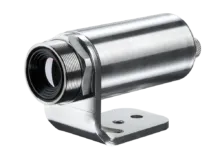
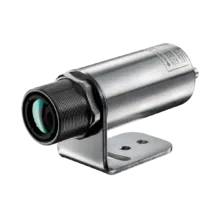
To address the challenges in dough production, the customer implemented the Optris Xi 400 infrared camera, a highly compact and rugged industrial imager that offers precise temperature measurement across the entire production line. The Xi 400 features a high-resolution detector with 382 x 288 pixels, ensuring accurate temperature detection over a wide range from -20 °C to 900 °C. This range is particularly beneficial in monitoring the varying temperatures required during the dough heating and drying processes. The IR camera’s superb distance-to-spot-size ratio of up to 390:1 ensures that even the smallest temperature variations can be detected across the production line, which is critical for maintaining consistent product quality.
The Optris Xi 400 IR camera is seamlessly integrated with the customer’s Programmable Logic Controller (PLC) system via serial communication, allowing the PLC to receive real-time temperature data and make necessary adjustments to the oven’s heat distribution. The camera operates at an 80 Hz frame rate, which is ideal for monitoring the fast thermal processes involved in dough production. This real-time data feed enables the PLC to maintain the desired temperature throughout the baking or drying process, thereby preventing issues such as overheating or uneven cooking. The Xi 400’s motorized focus feature ensures that the camera maintains sharp imaging, even when conditions change, further enhancing its utility in a dynamic production environment.
To further optimize the implementation, the Optris Xi 400 can be equipped with an air purge unit to prevent dust and other contaminants from affecting its performance. This feature, combined with the camera’s robust design (rated IP67), significantly reduces the need for frequent maintenance, ensuring that the system remains reliable and efficient over extended periods of operation.
Operational Efficiency and Cost Savings through Automated Temperature Control
The implementation of the Optris Xi 400 infrared camera has resulted in significant improvements in the dough production process, leading to enhanced product quality and consistency. The camera’s ability to monitor temperatures across the entire production line has allowed the customer to achieve uniform baking and drying, thereby reducing the incidence of defects such as burnt edges or cracked pasta. The Xi 400’s precise temperature measurement capabilities, ensure that each product meets the desired quality standards, resulting in consistently high-quality outputs that satisfy customer expectations.
The infrared camera’s thermal sensitivity of 50 mK ensures that even the smallest temperature differences are detected, which is crucial for identifying and correcting any inconsistencies in the heating process.
One of the key advantages of the Optris Xi 400 solution is its ability to measure the full temperature profile with a single sensor, eliminating the need for multiple pyrometers across different production lines. This not only reduces potential measurement errors but also simplifies the monitoring process, making it easier to ensure that each batch of dough is processed uniformly.
The integration of the Optris Xi 400 with the PLC system has streamlined the temperature control process, allowing for automatic adjustments based on real-time data. This has led to significant operational efficiencies, including reduced energy consumption and minimized waste due to defective products.
Its integration with existing PLC systems further enhances its value by enabling seamless automation and control of the production process.
The infrared camera’s compact size (Ø 36 mm x 100 mm) and lightweight design (approximately 220 g) make it easy to install and integrate into existing production lines, further reducing installation and maintenance costs. The camera’s durability, withstanding ambient temperatures from 0 °C to 50 °C, and its ability to function in challenging industrial environments make it an ideal choice for food manufacturers.
Recommended Products











Other Food Applications





Talk to us about your IR Temperature Measurement Requirements
There are over 300 different pyrometer variants to choose from in the Optris infrared pyrometer portfolio each optimized for material, spot size, distance from the target, and environmental conditions. Fortunately, there is a trained engineer to phone or chat with to guide you through the process of choosing the perfect infrared sensor for your application.
The same support is available for the extensive IR camera product line.
