


Optimized Slag Detection during Metal Pouring Process using Thermography
Minimize Defects and Enhance Efficiency with Real-Time Infrared Slag Detection during Metal Casting
Challenge
Reliable slag detection in metal casting is challenging due to harsh conditions, extreme heat, and environmental contaminants. Undetected slag inclusion leads to structural weaknesses, porosity, reduced quality, increased rework, and scrap. Many conventional detection methods are costly and require significant maintenance, complicating their continuous use in industrial environments.
Solution
Real-time infrared thermography effectively detects slag by observing temperature differences between slag and molten metal, indicating impurities through sudden temperature increases. Positioned safely away from extreme heat, this method enables immediate slag detection, facilitating timely intervention without interrupting production or requiring physical contact with hazardous materials.
Benefits
- Reduces scrap and rework by ensuring early slag removal, improving product reliability.
- Enhances worker safety through non-invasive, remote slag detection without manual inspections.
- Increases casting efficiency by automating slag identification, minimizing downtime and production interruptions.
- Enables continuous quality monitoring in harsh, dusty environments without interference from contaminants.
- Simplifies integration into automated production systems, allowing rapid implementation with minimal disruption.
Ensuring Quality in Metal Casting: Reliable Real-time Early Slag Detection is Required
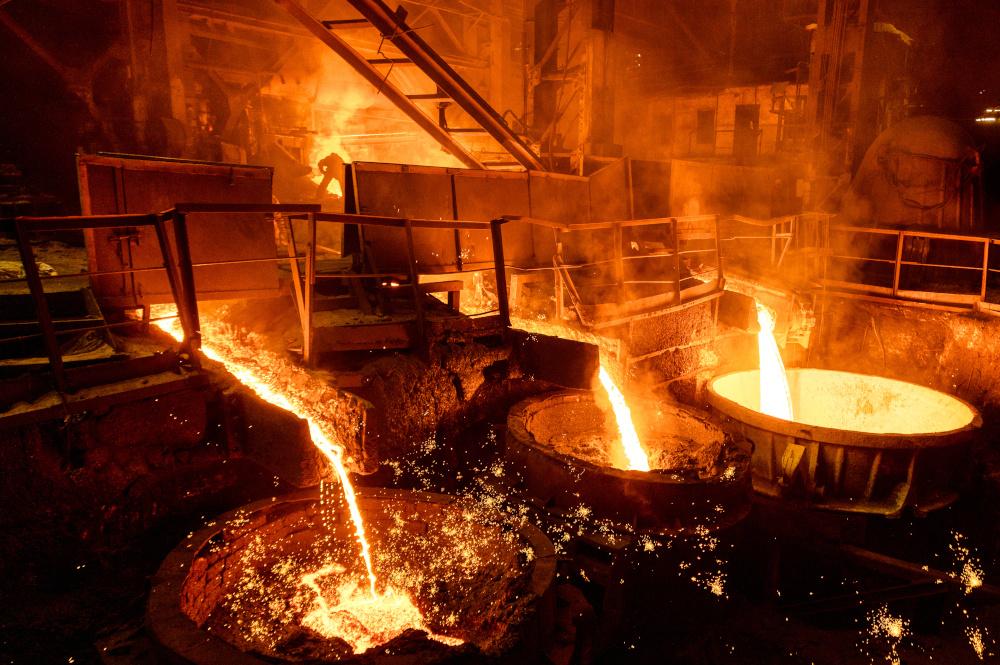
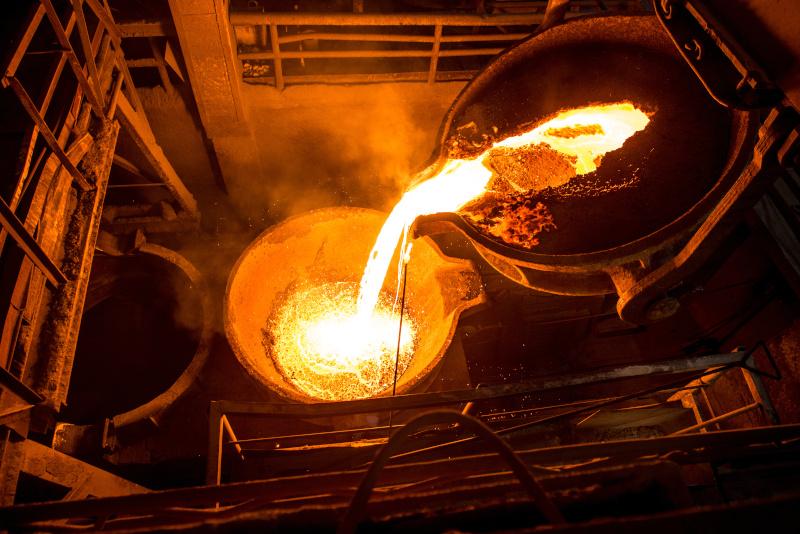
Slag is a by-product of the melting process, composed of oxides and other impurities separated from the molten metal. If not properly removed, slag can be incorporated into the cast metal, leading to defects such as structural weaknesses and porosity, ultimately reducing the final product’s performance. Therefore, reliable and efficient quality control in metal casting is crucial. Detected slag must be removed using methods such as skimming or fluxing agents. Effective slag detection improves yield and reduces maintenance on BOF/EAF vessels by allowing early intervention to separate and extract slag from the molten metal.
Early slag detection and prevention during casting can significantly reduce rework and scrap, ensuring high-quality material standards and operational efficiency. However, recognizing slag is challenging due to the hot and harsh environments in which casting processes occur. Many measuring methods are also extremely expensive, leading to increased maintenance time and additional costs.
Therefore, sensing devices used in slag detection must be highly resistant and particularly protected against heat and contamination. Due to the high temperatures involved, it is important to maintain a safe distance between the object being measured, the casting stream, and the measuring device. Two common methods for observing slag concentration are electromagnetic induction and infrared radiation properties, which provide reliable detection and facilitate timely removal of slag.
Real-Time Slag Detection for High Quality Metal Casting with Optimized Infrared Cameras
Infrared cameras from Optris offer an optimal solution for the challenges of slag detection in metal casting. Thermography enables the immediate, real-time detection of slag.
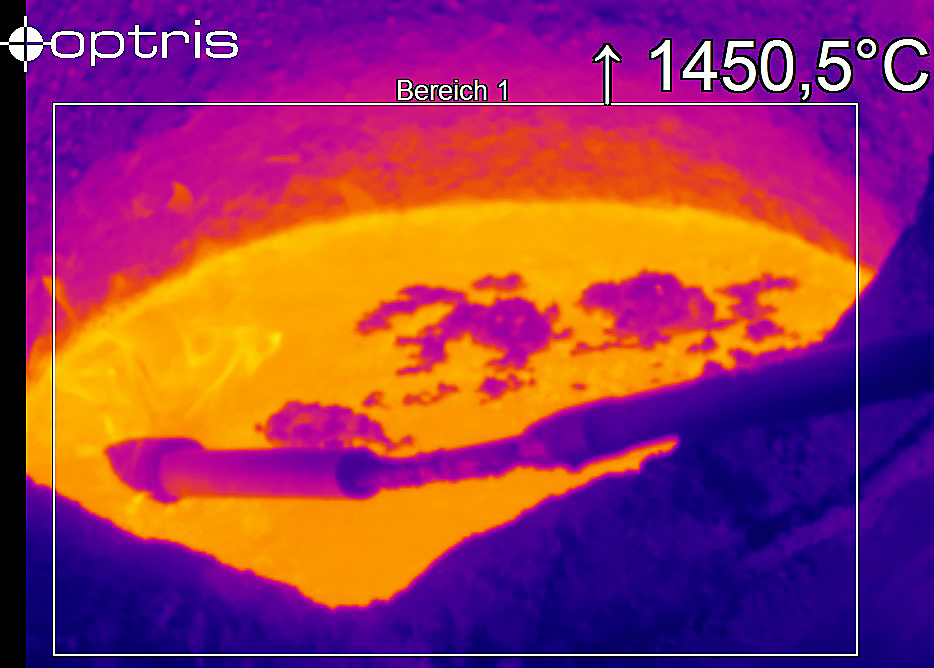
The PI 640i G7, a rugged infrared camera from Optris, features a special filter designed to detect slag. This camera leverages the fact that the emissivity of slag is significantly higher than that of pure metal. By continuously monitoring the temperature differences on the surface of the molten metal, the camera can identify and immediately signal the presence of slag, allowing for its prompt removal before it affects the casting process.
Although the temperatures of slag and molten metal are nearly identical, a temperature jump of more than 200 °C indicates the presence of slag. To facilitate this, the infrared camera is installed and aligned at a safe distance from the casting beam. It is connected to a PC or another local display to monitor the process in real time.
Upon detecting slag through temperature differences, the system can trigger subsequent actions, including halting the process if necessary. These slag detection systems are often integrated with automated pouring and tapping processes, ensuring consistent and high-quality metal output by minimizing slag contamination.
Automating Slag Detection and Control with Optris Infrared Technology in Harsh Environments
Thermography is a non-invasive technique that requires no physical intervention in the casting process, allowing for uninterrupted and efficient slag inspection. This increases overall efficiency and minimizes downtime.
Using infrared cameras eliminates the need for manual inspections, which often require proximity to hot and potentially hazardous metal masses. This enhances worker safety by reducing direct intervention.
The infrared cameras are easy to install thanks to their robust, compact design and a range of accessories, such as the Optris Cooling Jacket Advanced and Laminar Air Purges, making them ideal for harsh industrial environments.
In environments where dust and smoke are prevalent, the PI 640i G7 infrared camera is particularly effective. Its wavelength of 7.9 µm ensures minimal interference from dust and smoke, as these particles have no absorption band at this wavelength.
Optris infrared camera and software solutions are designed for adaptability, allowing seamless integration into existing processes. They can connect directly to PLCs and local displays, ensuring a smooth transition with minimal disruption.
With Optris infrared camera and software solutions, processes can be efficiently automated and controlled. In the event of slag detection, alarms can be triggered, or the entire casting process can be stopped, ensuring maximum efficiency and control.
Recommended Products








Other Metal Applications





Talk to us about your IR Temperature Measurement Requirements
There are over 300 different pyrometer variants to choose from in the Optris infrared pyrometer portfolio each optimized for material, spot size, distance from the target, and environmental conditions. Fortunately, there is a trained engineer to phone or chat with to guide you through the process of choosing the perfect infrared sensor for your application.
The same support is available for the extensive IR camera product line.
