

Improve Die Hammer Forging Process with Infrared Temperature Monitoring
Benefits of Infrared Temperature Measurement in Industrial Metalworking
Challenge
In die hammer forging, maintaining precise temperature control of both workpiece and tools is critical. Inaccurate readings from oxide layers, cooling during forging, and harsh environmental conditions hinder effective manual temperature monitoring and lead to defects, tool damage, and production inefficiencies.
Solution
Infrared pyrometers and SWIR thermal cameras enable continuous, real-time, non-contact temperature monitoring throughout the forging process. They ensure accurate readings despite surface oxidation, smoke, and dust, allowing operators to maintain optimal temperatures and adjust parameters dynamically to avoid defects and downtime.
Benefits
- Enhances product quality by ensuring consistent forging temperatures
- Reduces scrap rates and rework due to fewer temperature-related defects
- Minimizes tool wear and unplanned downtime by preventing overheating
- Improves process efficiency with real-time temperature feedback and control
- Ensures reliable measurements even in dusty, hot, and vibration-prone environments
Temperature Control is Essential for Efficient Die Hammer Forging
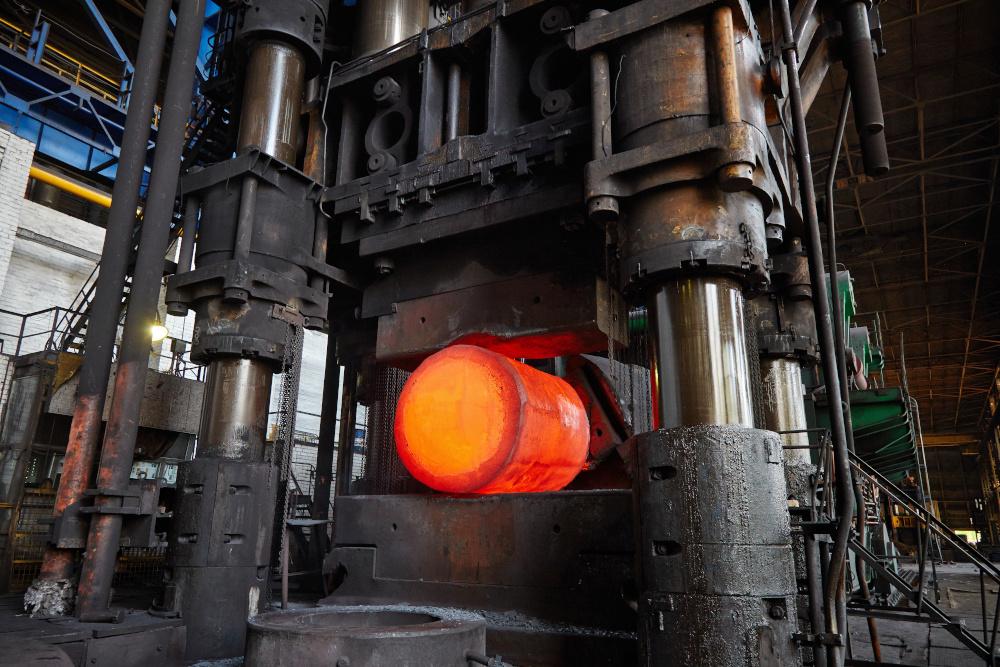
Die hammer forging involves heating metal workpieces to extremely high temperatures before shaping them with mighty hydraulic or counterblow hammers. This method is frequently used to produce components such as railway axles, tractor shafts, and motor drive shafts. Precise temperature control is critical for both the workpiece and the forging tools. Initially, the metal is heated to the desired temperature in a furnace, making it pliable enough to deform without cracking. The hammer used to shape the workpiece must also be pre-heated to prevent compromising the workpiece’s integrity or causing unwanted material reactions.
Incorrect temperatures—whether too high or too low—can significantly affect the quality of the final product. If the temperature is too low, the workpiece may not form correctly, requiring reheating and wasting time and resources. Conversely, continuing the forging process at the wrong temperature can damage the tool, leading to downtime and expensive repairs. Additionally, as the workpiece cools during forging, its surface forms an oxide layer that complicates accurate temperature measurement. These oxide layers obscure the true surface temperature, often leading to incorrect readings that do not reflect the workpiece’s core temperature.
Handheld temperature measurement tools are impractical in the harsh environment of a forging operation, characterized by extreme heat, dust, smoke, and flying particles. Accurate and reliable temperature measurement is essential to maintaining efficiency and quality. Infrared temperature measurement offers a solution by providing continuous, real-time data without direct contact, ensuring that the forging process remains optimized.
Optimizing Die Hammer Forging with Infrared Pyrometers and Thermal Cameras
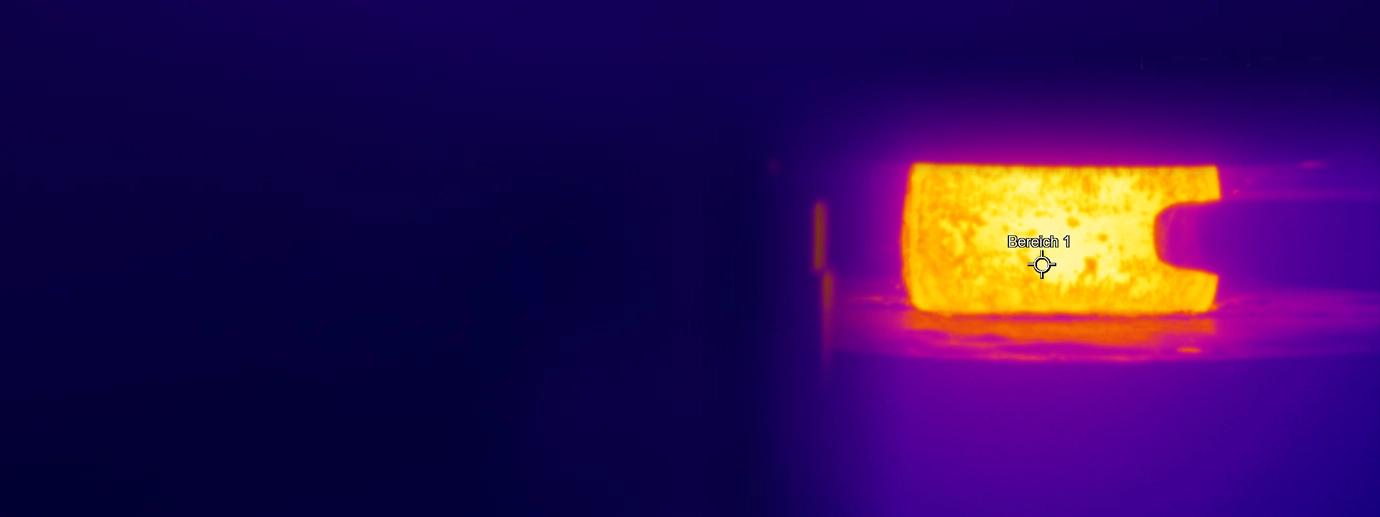
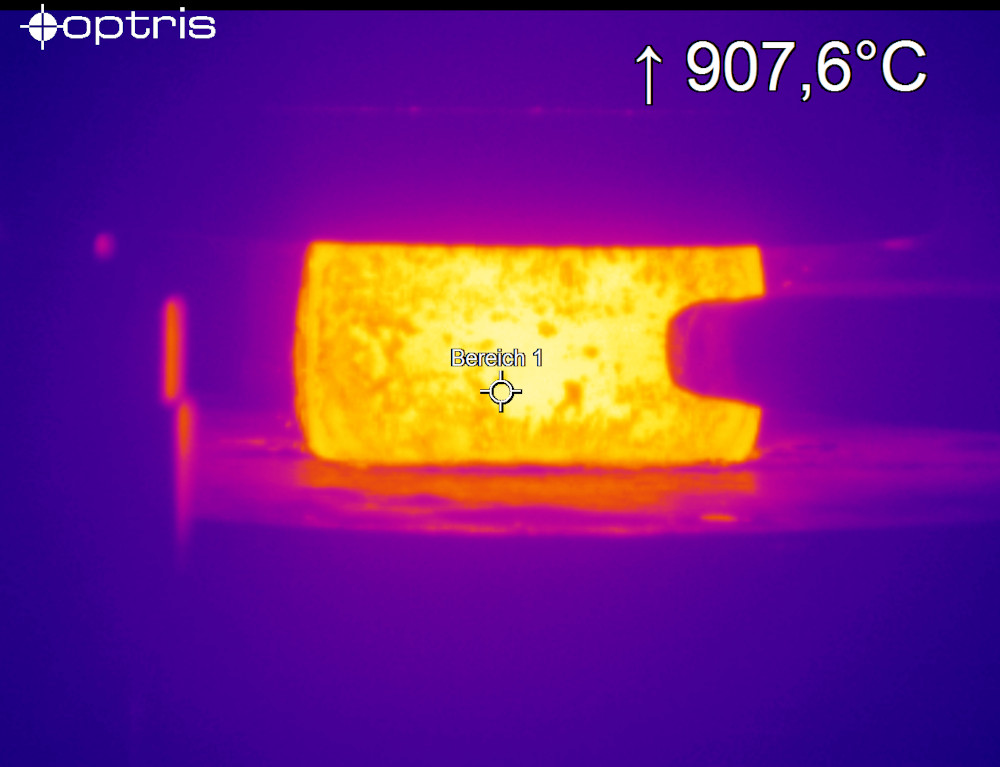
A combination of infrared pyrometers and thermal cameras can be implemented to address the temperature control challenges in die hammer forging. Each device has specific advantages for different aspects of the process. Short-wave infrared (SWIR) cameras, like the Xi 1M and PI 1M, are essential for this process, because they can accurately detect surface temperatures of hot metals due to their ability to measure in the correct wavelength range of 0.85-1.1 µm. This is crucial because the emissivity of metals is highly variable at long wavelengths, leading to inaccurate readings when using long-wave infrared (LWIR) cameras.
For instance, the Xi 1M infrared camera is ideal for continuously monitoring the workpiece’s surface temperature. With a wide measurement range from 450 °C to 1800 °C and a highly dynamic CMOS detector of 396 x 300 pixels, this camera provides precise surface temperature readings and detects hot spots in real time. Its autonomous operation and direct analog output make it a flexible tool for integration into industrial control systems, ensuring the workpiece temperature stays within optimal ranges throughout the forging process. Another key solution is the PI 1M camera, known for its ultra-compact design and high-resolution CMOS detector, capable of delivering up to 764 x 480 pixels at 32 Hz. The PI 1M is beneficial for fast processes, with a frame rate of up to 1 kHz and real-time analog output to precisely monitor fast-changing temperatures in metal surfaces.
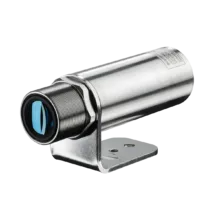
For point-based measurements, the CTratio 1M pyrometer is indispensable. This rugged fiber-optic ratio thermometer can measure temperatures from 450 °C to 3000 °C with a high optical resolution of up to 100:1, making it ideal for monitoring the hammer tool’s temperature. The CTratio 1M’s two-channel mode ensures that the pyrometer can accurately measure the temperature even in harsh environments, where there may be smoke or dust. The CSvision pyrometer is an advanced option for non-contact temperature measurement, featuring a motorized focus and video sighting capability for precise alignment. With its wide temperature range of 550 °C to 3000 °C, this pyrometer excels in the most demanding forging environments, providing real-time feedback that operators can use to optimize the process. Finally, the CT LT pyrometer is used for lower-temperature applications, capable of measuring from -50 °C to 975 °C, and can monitor both the hammer and cooler stages of the process.
These devices are seamlessly integrated into the forging process, with real-time data transmission to the control systems. This allows operators to adjust parameters as needed to ensure efficiency. The devices’ robustness is also critical, as they operate in challenging environments with dust, high heat, and mechanical vibrations. Water-cooled housings and air purging systems are typically used to protect the optics and ensure uninterrupted operation.
Infrared Solutions Improve Product Quality and Reduce Material Waste
Integrating Optris infrared pyrometers and thermal SWIR cameras into the die hammer forging process leads to significant improvements in product quality and operational efficiency. By utilizing tools like the Xi 1M and PI 1M SWIR cameras, metal manufacturers gain the ability to monitor the entire surface of the workpiece with high precision, ensuring that no temperature discrepancies go undetected. This reduces material waste, as fewer workpieces need to be scrapped or reworked due to temperature-related defects. Moreover, the cameras’ high frame rates and real-time data outputs enable immediate adjustments, further streamlining production.
The CTratio 1M pyrometer is particularly beneficial in maintaining the integrity of the forging tools. By accurately monitoring the hammer’s temperature, it acts as a shield, preventing the tool from being exposed to excessive heat, which can cause damage and result in costly repairs or downtime. This pyrometer also excels in environments with dust and smoke, ensuring reliable measurements where other devices might struggle. Similarly, the CSvision pyrometer’s ability to provide accurate temperature data under extreme conditions makes it an invaluable asset for operators looking to maintain precise control over the forging process. The CT LT pyrometer, with its ability to measure lower temperature ranges, adds value in monitoring the cooling process of the workpiece, ensuring it is hardened correctly.
The unique selling points of Optris solutions, such as the CTratio 1M and PI 1M, include their ability to deliver accurate, real-time data even in the most challenging industrial environments. These devices are designed to withstand high temperatures, mechanical vibrations, and dust, ensuring reliable long-term performance. The flexibility of their integration into existing control systems, combined with features like autonomous operation and remote monitoring capabilities, makes them highly attractive to steel and metal forge manufacturers. The result is a more efficient, cost-effective forging process that delivers consistently high-quality metal components with fewer production interruptions and reduced energy consumption. By investing in these infrared solutions, metal smiths benefit from enhanced process control, reduced maintenance costs, and increased production reliability.
Recommended Products












Downloads
Other Metal Applications





Talk to us about your IR Temperature Measurement Requirements
There are over 300 different pyrometer variants to choose from in the Optris infrared pyrometer portfolio each optimized for material, spot size, distance from the target, and environmental conditions. Fortunately, there is a trained engineer to phone or chat with to guide you through the process of choosing the perfect infrared sensor for your application.
The same support is available for the extensive IR camera product line.
