


Thermal Monitoring of Slurry and Electrode Film in Lithium-ion Batteries during Production
In-line Infrared Temperature Monitoring for Electrode Sheet and Slurry in High-Volume Battery Cell Manufacturing
Challenge
Maintaining slurry viscosity during electrode coating is difficult due to strict temperature requirements, low material emissivity, and tight space around the coating nozzle, all of which complicate accurate and consistent in-line temperature monitoring.
Solution
By integrating a short-wavelength infrared sensor capable of accurate low-temperature measurement, continuous in-line monitoring of the foil and slurry near the coating point becomes feasible, even within constrained installation spaces.
Benefits
- Ensures consistent slurry viscosity for optimal coating application.
- Enables stable process conditions during high-speed, high-volume production.
- Improves electrode sheet uniformity and electrical performance.
- Reduces quality variations caused by temperature fluctuations.
- Allows easy integration into compact and obstructed machine layouts.
Temperature’s Influence on Slurry Uniformity and Viscosity in Battery Electrode Coating
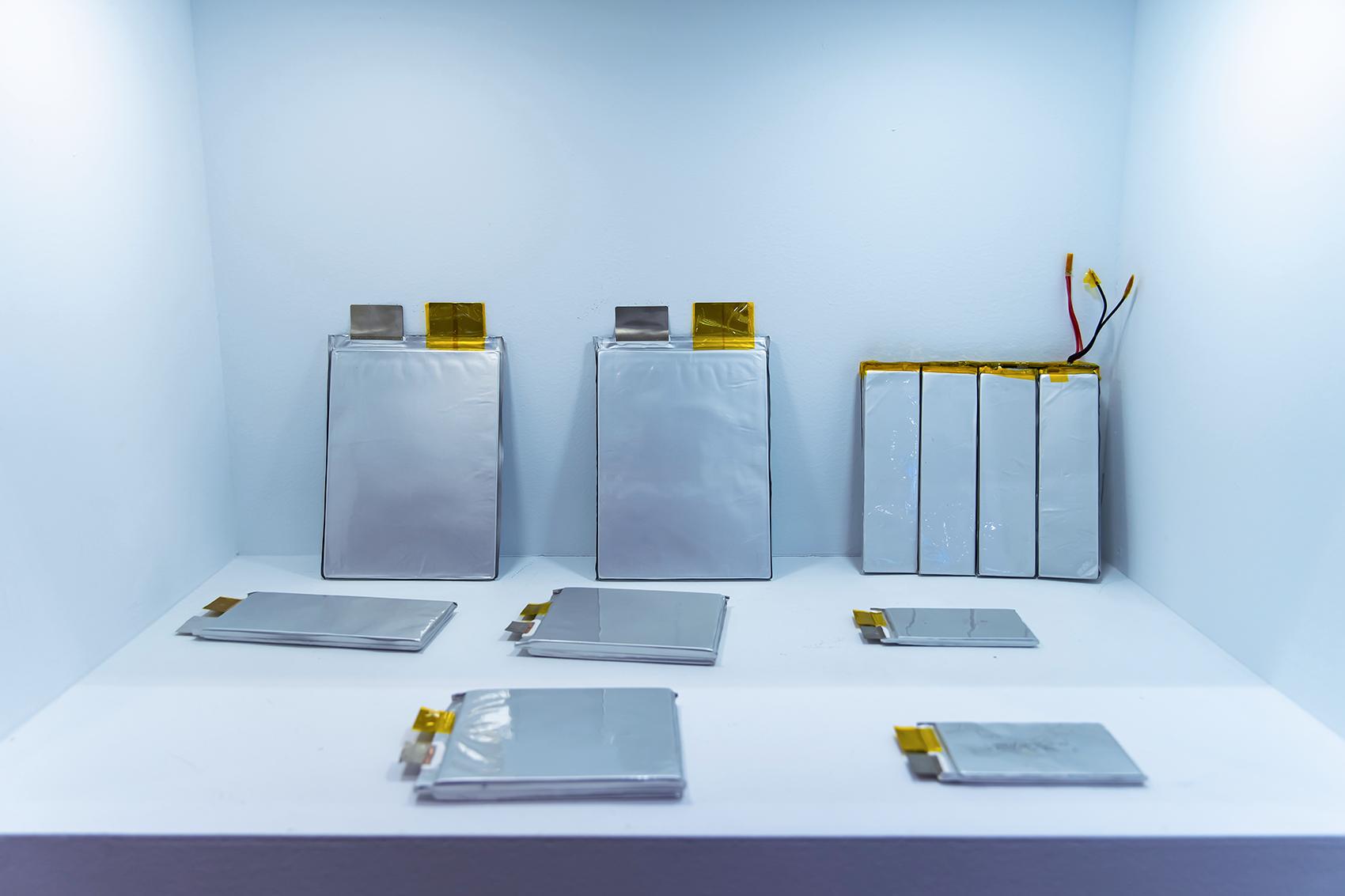
Each battery pack consists of several individual cells. In Li-polymer batteries, pouch cells, also known as coffee bags, are used. Each pouch cell contains multiple pairs of anodes and cathodes separated by a thin polymer film called the separator. The entire pouch is filled with a semi-liquid electrolyte that facilitates ion transport during discharging and recharging. The electrodes are thin films of copper or aluminum coated with active material. These materials are processed into a suspension by mixing them with solvents and binders. This mixture, known as the slurry, is applied to a metallic foil, which acts as a substrate and a conductor.
During the coating process, the slurry must be kept within an optimal temperature range of about 60 °C to 80 °C to ensure the right viscosity for application. Once the slurry is coated onto the metal foil (the current collector) and dried, the resulting layer is called the composite layer. This layer is then pressed with a metal roller to increase its strength, optimize its density, and improve the electrical conductivity and adhesion of the active materials. This process is known as calendering.
After calendering, the coated foils are cut into the desired shapes and punched into electrodes. These electrodes are assembled into a battery cell using a multi-layer winding or stacking process. Finally, the cell is filled with electrolytes and hermetically sealed.
The quality of lithium-ion batteries can be improved by ensuring the uniformity of electrode sheet thickness and by optimizing the electrical properties that change during the drying and pressing processes. To maintain uniformity, the viscosity of the slurry must be optimal, which requires careful temperature monitoring of both the slurry and the film during production.
In-line Infrared Temperature Monitoring for Electrode Sheets in High-Volume Battery Cell Manufacturing
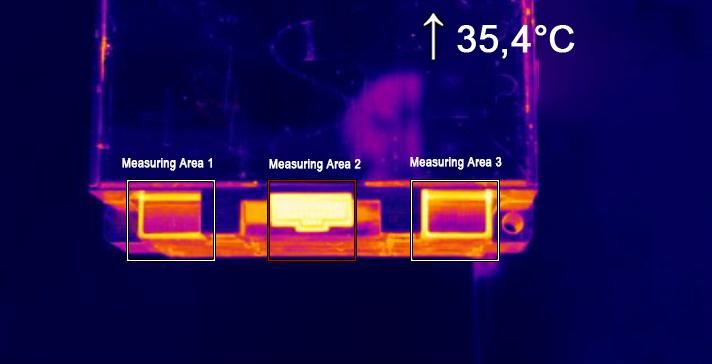
An infrared pyrometer is an ideal tool for monitoring the temperature of foil and slurry in line. However, this application presents challenges, such as dealing with the material’s emissivity, low-temperature range, speed, and narrow space available for the sensing head.
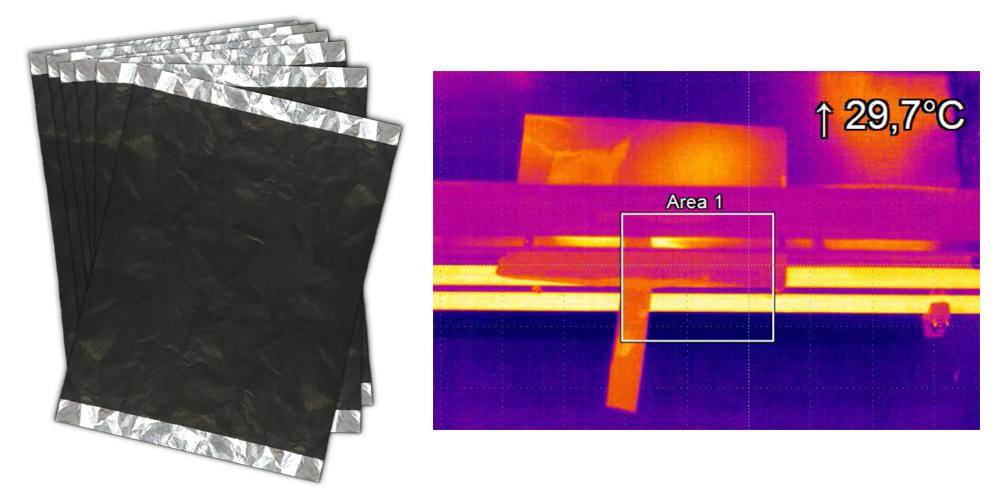
The active material is applied via a nozzle onto an endless metal film. The goal is to measure the temperature of the moving foil near the nozzle at the point of coating. Conventional long-wavelength pyrometers in the 8 µm – 14 µm range struggle with this task due to the thin layer of active material providing low emissivity. Instead, a short-wavelength infrared sensor is better, as it can capture the material’s higher emissivity at lower wavelengths. However, many short-wavelength infrared sensors are designed for higher temperature ranges, making the necessary 60 °C to 80 °C measurement range a noteworthy constraint.
Furthermore, the machine’s setup is very cramped and obstructed, presenting another challenge. The space available for installing an infrared sensing head is limited, as the pyrometer needs to be positioned close to the moving film to obtain accurate readings. This tight installation space necessitates a compact and precise infrared pyrometer to ensure effective temperature monitoring and maintain the quality and consistency of the electrode coating process. This careful monitoring is crucial for achieving the uniformity and viscosity needed for high-quality battery production.
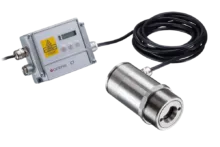
In this application, the Optris CT3ML is the ideal solution for these constraints. The pyrometer continuously provides accurate temperature readings of the film, enabling precise monitoring and maintaining stable process conditions.
Overcoming Emissivity Challenges, Low-Temperature Constraints and Tight Spaces with the Optris CT3ML
Most short-wavelength IR sensors typically operate at high temperatures, often above 250 °C. However, the Optris CT3ML stands out with its capability to operate at 2.3 µm and a temperature range starting at 50 °C. This allows it to meet both crucial requirements: measuring at a short wavelength suitable for critical materials and accurately monitoring low target temperatures below 100 °C.
The Optris CT3ML is not only designed for optimal performance but also with practical considerations in mind. Its compact size, featuring a small sensor head with an M12 thread, ensures easy installation and precise aiming, even in tight and constrained spaces. This is particularly important in industrial environments where space is often at a premium.
Furthermore, the pyrometer supports a fast exposure time of just 1 ms, providing real-time monitoring and rapid adjustments of the manufacturing process. This quick response time is critical for maintaining consistent quality and ensuring the stability of the production conditions.
The combination of these advanced features makes the Optris CT3ML an excellent choice for applications requiring precise temperature control and quick response. Its ability to operate efficiently in a limited installation space while providing accurate temperature readings ensures optimal performance. The Optris CT3ML’s capability to maintain the stringent temperature requirements necessary for high-quality production processes instills confidence in infrared temperature sensing.
Recommended Products










Other Battery Monitoring Applications


Talk to us about your IR Temperature Measurement Requirements
There are over 300 different pyrometer variants to choose from in the Optris infrared pyrometer portfolio each optimized for material, spot size, distance from the target, and environmental conditions. Fortunately, there is a trained engineer to phone or chat with to guide you through the process of choosing the perfect infrared sensor for your application.
The same support is available for the extensive IR camera product line.
