


Optimizing Car Seat Heater Testing Procedures: From Manual to Automated Systems
Identifying and Preventing Faulty Cable Connections in Car Seat Heaters with a Thermal Imaging Camera
Challenge
Manual testing of car seat heaters is time-consuming and unreliable, risking undetected faults in fragile heating wires or cable connections that could lead to overheating or fire hazards.
Solution
The thermal imaging system automates visual and functional testing of seat heaters, enabling rapid verification of heat distribution and safety shutoff mechanisms through real-time temperature monitoring.
Benefits
- Reduces testing time from 15 minutes to 30 seconds
- Enables early detection of cable connection issues and wire damage
- Confirms safety systems function reliably before seats leave the station
- Ensures consistent seat temperature rise across all tested units
- Supports efficient production flow with automated pass/fail signaling
Identifying Faulty Cable Connections Causing Malfunctioning Heating Elements in Car Seats
Heated seats are an excellent addition to any vehicle driven in cool weather or regions with harsh winters. The careful assembly of electronic components and controls during integration is essential to ensure reliable and lasting performance.
Heated seats operate via a heating element, a long strip of material that functions as a resistor. This resistor resists the flow of electricity, converting electrical energy into heat, which then warms the seat. Issues with the heater element are the most common problems with heated car seats. The heating wire is typically small and fragile, making it susceptible to breakage.
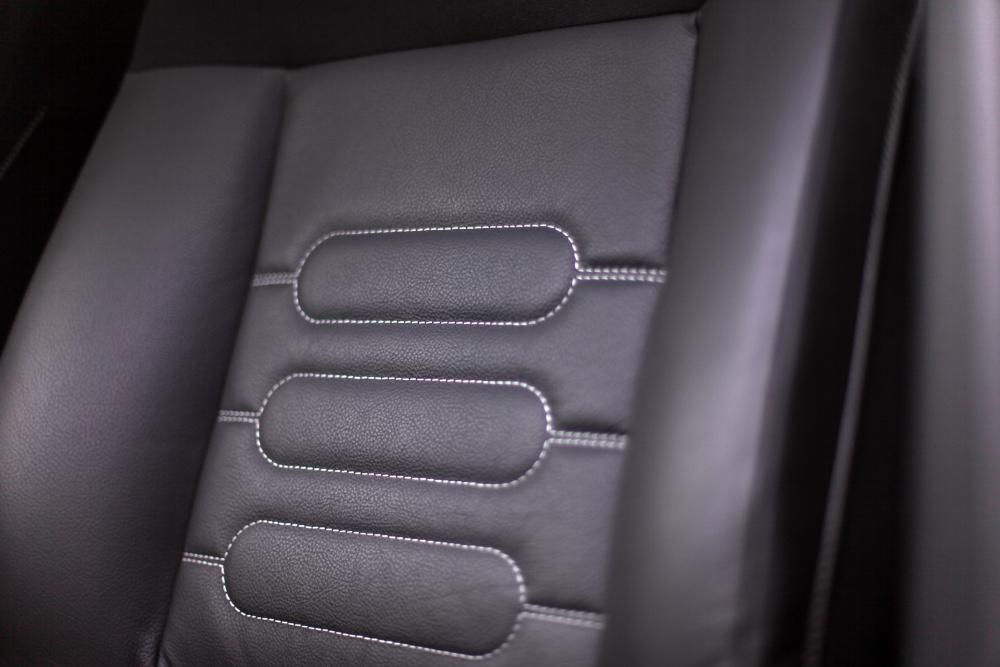
Testing seat heaters is crucial before they are installed in the seats, as faulty cable connections can lead to fires in the worst-case scenario. Manufacturers must ensure the proper installation and functionality of these components.
In this application, a car manufacturer from the automotive industry wants to optimize a testing procedure for car seat heaters. The manufacturer is looking for a temperature measurement system that ensures the heating systems’ functionality and requires the testing process to be carried out quickly and easily. Interestingly, the manufacturer previously conducted this testing process manually. Technicians would check by hand whether the seat elements had reached the desired temperature after 10-15 minutes of heating. The manufacturer prioritizes finding a faster, equally reliable testing method.
Verifying Overheating Protection Mechanisms and Function of Heated Seats in Automotive Manufacturing
The solution to the manufacturer’s challenges is the integration of an Optris PI 640i infrared thermal imaging camera. This infrared camera, with VGA resolution (640 x 480 pixels) and an outstanding thermal sensitivity of 40 mK, is ideal for detecting even the slightest thermal differences with high accuracy and interfacing seamlessly with image processing software.
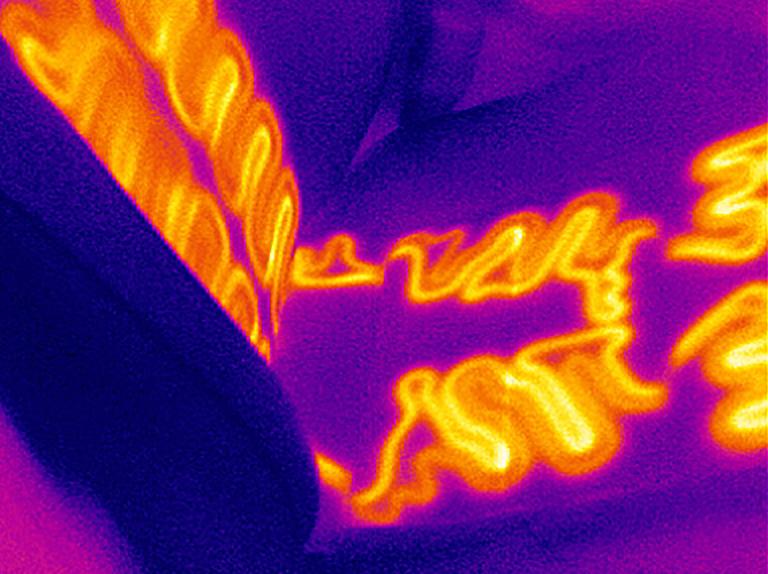
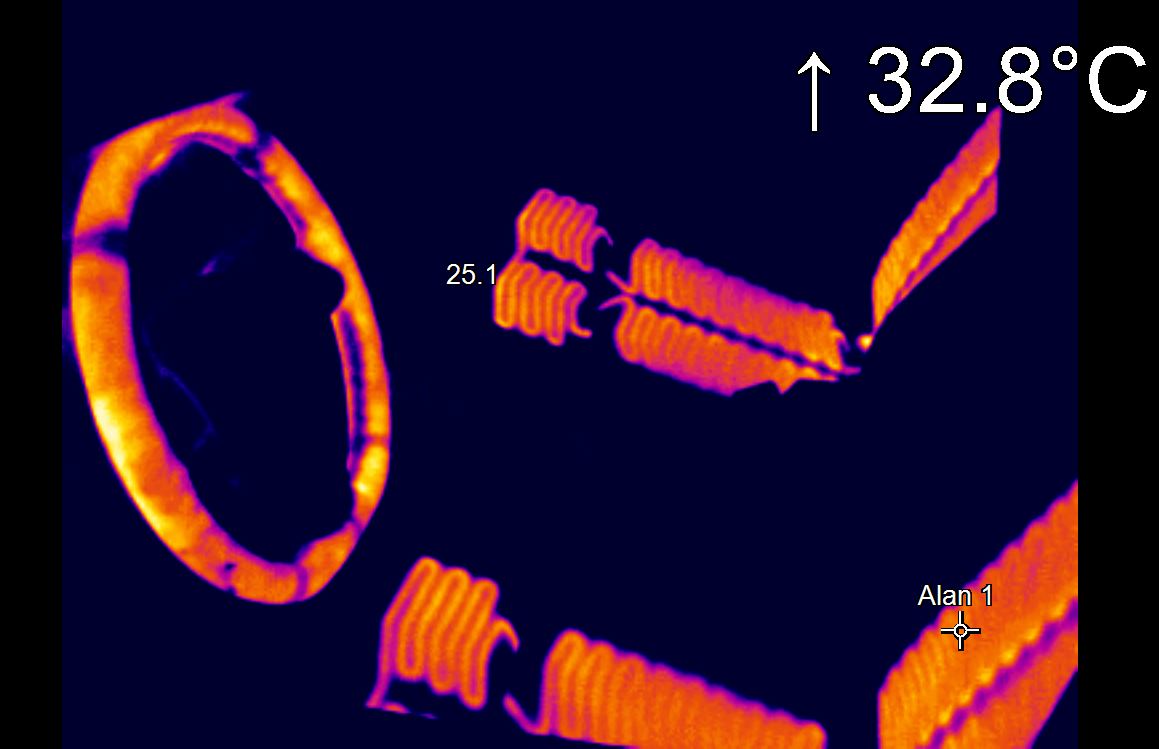
Temperature control using the PI 640i involves two main steps: visual inspection and functional testing of the heating mats installed in the seats. These mats consist of special heating wires, often made of metallic copper, which are evenly distributed to ensure consistent heat dissipation. During the visual inspection, technicians check that the wires are properly installed and have no visible damage or defects, with particular attention to the connections in the copper cables, connection sockets, and plugs.
Following the visual check, a function test is performed. The seats are connected to a power source, and the heaters are activated. The temperature is measured continuously over a set period, with the infrared camera recording the temperature distribution on the seat surface and backrest. The primary goal of this test is to verify that the seat temperatures rise within a specified short period.
An essential aspect of the test process is checking the safety systems. Modern seat heaters have thermostats and overheating protection mechanisms that automatically switch off the heating if a certain temperature is exceeded to prevent fire risks. During the test, specific attempts are made to trigger these protection systems to verify their effectiveness.
The PI 640i can be installed at any distance within the system and deliver necessary signals to various peripherals. Suppose a certain temperature threshold on the seat surface is exceeded (e.g., 35°C). In that case, an analog signal can be sent from the camera to an alarm LED, alerting the responsible specialist at the certification station in the vehicle manufacturing facility.
If all values are within the correct range, a signal can indicate that the car is ready to be released from the current station and moved to the next production stage. This automation has significantly reduced the manufacturer’s production time, as the test only takes 30 seconds.
Capturing Dynamic Thermal Processes due to the High Frame Rate Radiometric Imaging
The PI 640i offers significant advantages in many thermal-relevant production processes. Especially due to its high thermal sensitivity the seat temperature changes can be detected in a short time. This led to an increasing time savement in the production line and was a big win for the customer.
Another advantage of the PI 640i is its ability to capture radiometric video at a frame rate of 32 Hz and even 125 Hz in subframe mode. This high frame rate makes it possible to accurately monitor and analyze rapid temperature changes and dynamic processes in 3D printing.
The infrared camera is equipped with interchangeable lenses that cover different fields of view (15°, 33°, 60° and 90°). This provides flexibility in adapting to different printer sizes and applications by offering the ability to select the focus and field of view according to specific requirements.
The PI 640i is also robust and designed for use in industrial environments. It has an IP67 rating, which protects it against dust and water and can withstand temperatures from 0 °C to 50 °C during operation (with separate accessories, the camera’s robustness can be increased even further). This ensures its reliability and durability even under demanding conditions.
Integration into existing systems is facilitated by various interfaces and a comprehensive software package. The camera can be connected via USB 2.0 or, optionally, via a Gigabit Ethernet (PoE) interface. The Optris PIX Connect software package supplied enables simple setup and remote monitoring of the camera.
In addition, the camera offers several industrial process interfaces, including analog and digital inputs and outputs as well as relays for alarm and fail-safe functions.
Recommended Products







Other Automotive Applications







Talk to us about your IR Temperature Measurement Requirements
There are over 300 different pyrometer variants to choose from in the Optris infrared pyrometer portfolio each optimized for material, spot size, distance from the target, and environmental conditions. Fortunately, there is a trained engineer to phone or chat with to guide you through the process of choosing the perfect infrared sensor for your application.
The same support is available for the extensive IR camera product line.
