

Mastering Thermoforming Challenges in Automotive Exterior Part Production
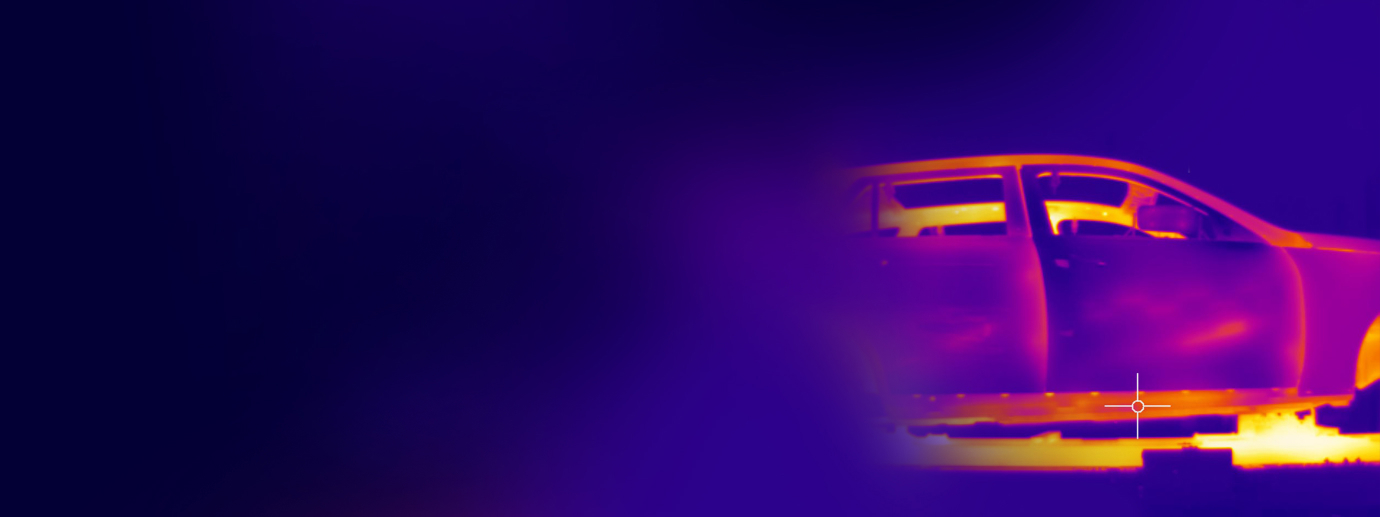
Infrared Cameras Reduce Scrap in the Thermoforming Process
Challenge
In thermoforming automotive exterior parts, maintaining consistent sheet temperatures is critical to prevent defects like burning or folding. Irregular heat distribution and time delays between heating and molding can cause inconsistencies, reduce yield, and jeopardize product quality, especially when forming complex parts and functional features.
Solution
Thermal imaging enables full-surface temperature monitoring of fiber-reinforced sheets during thermoforming. By identifying hot and cold spots in real-time, operators can precisely control radiant heater outputs and optimize timing between heating and molding, ensuring uniform temperature distribution and process stability even under high thermal stress.
Benefits
- Minimizes scrap by preventing overheating and uneven forming of composite sheets
- Achieves stable production cycles with reduced operator intervention
- Enhances part quality through optimized thermal control during forming
- Increases throughput by maintaining short, consistent cycle times
- Boosts customer satisfaction by reliably meeting stringent automotive quality standards
Overcoming Thermoforming Challenges in Automotive Exterior Part Production
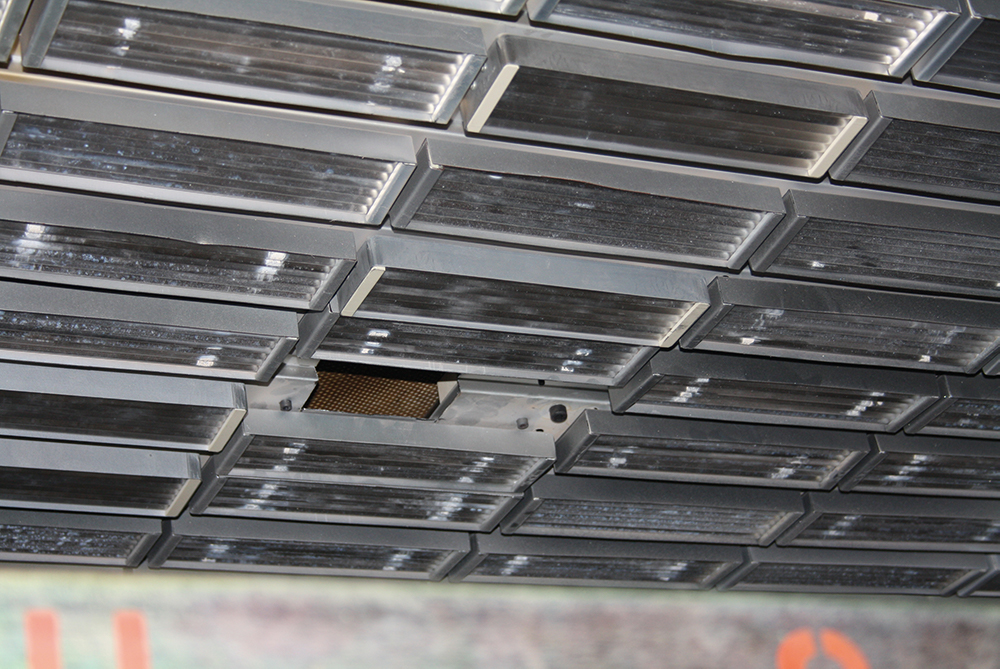
The production of automotive exterior parts through thermoforming involves several intricate challenges, particularly in maintaining consistent temperature profiles across composite fiber sheets, which typically range from 2.3 to 3.5 mm in thickness and are reinforced with glass fibers. Precise heating of these sheets is crucial to avoid defects such as burning or folding during the deep-drawing process. The heating occurs via a combination of low-level and high-level radiant heaters within the thermoforming machine, followed by the pressing and cooling of the sheets in a mold to form the panel parts.
Minimizing the handling time between heating and forming is essential to prevent inconsistencies that could increase scrap and reduce efficiency. The production process also involves the concurrent forming of functional elements, like air inlet nozzles, and subsequent steps such as laser cutting and final shaping before the parts are transferred to the customer for assembly.
Achieving an optimal process that ensures stable production, optimal cycle times, and minimal defects is paramount. During the development phase, challenges like occasional burning of panel parts or the formation of folds due to improper temperature settings were encountered, highlighting the importance of constant temperature monitoring and precise control of the radiant heaters.
To meet these challenges, tasks such as displaying the temperature profile across the plastic sheet, simplifying the regulation of heater temperatures, and maximizing plant utilization are critical. These efforts not only help reduce cycle times and enhance efficiency but also ensure the highest standards of quality, directly impacting customer satisfaction and loyalty. Consistent temperature control throughout the thermoforming process is key to delivering high-quality automotive exterior parts that meet the stringent demands of the industry, ultimately safeguarding the company’s reputation and securing customer trust.
Optimizing Temperature Control in Automotive Parts Thermoforming Production through Infrared Technology
The Gubesch Group, a full-service provider of innovative thermoforming and injection molding technologies, enhances the production of automotive exterior parts through the strategic use of the Optris PI Series infrared camera.
Initially, attempts to monitor temperatures using pyrometers on each side proved inadequate due to significant temperature variations across the material. Even the option of installing multiple pyrometers in a line was insufficient, as the achievable resolution remained too low.
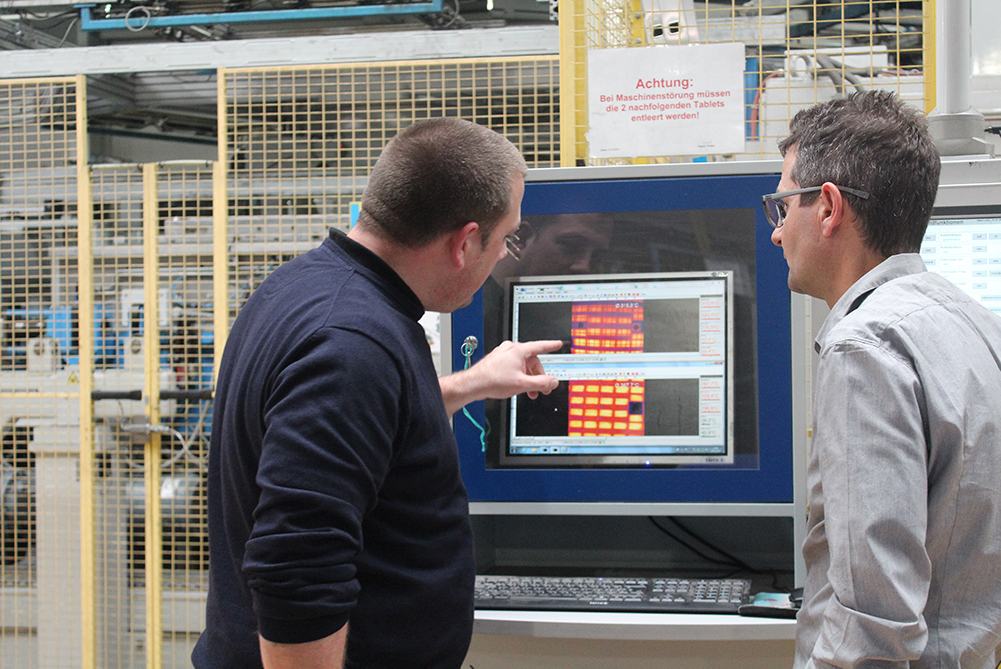
The Optris PI infrared camera offered the ideal solution. With its wide-area temperature measurement capability, it accurately captures individual temperature variations, including hot and cold spots, and provides comprehensive temperature profiles across the entire composite fiber sheet. To optimize performance, a thermal imaging camera with a 64° wide-angle lens was installed in both the top and bottom heating sections of the starter field. Given the proximity to the heating system, where ambient temperatures can reach up to 315 °C, the cameras were housed in water-cooled enclosures with additional decoupled plates to maintain a stable ambient temperature of 35 to 40 °C. This setup ensures that the camera’s internal temperature remains below its maximum operating limit of 50 °C, which is continuously monitored by the Optris PIX Connect software.
The Optris PIX Connect software plays a crucial role in temperature evaluation. It provides users with comprehensive IR camera software that not only analyzes and documents temperatures but also automatically controls processes. The software supports video and snapshot recordings at up to 80 Hz and offers a high level of customization to meet specific customer needs.
To facilitate ease of operation, alarms appear in a pop-up window with recommended actions for the plant operator, ensuring prompt and accurate responses. The cameras connect to the computer via a USB interface, and the Process Interface (PIF) on the camera allows for external trigger signals to be sent, enabling automatic snapshots triggered by voltage signals from the machine control system. These snapshots are stored in a display history, forming an integral part of the process documentation.
The Strategic Use of Infrared Camera in Thermoforming Maximizes Yield and Quality
The application of the Optris PI thermal imaging camera at the Gubesch Group has brought significant advantages, primarily through the optimization of production processes via reliable temperature monitoring and precise control of the radiant heaters. This advanced temperature regulation enables the achievement of optimal cycle times of 90 seconds at maximum heating power, significantly boosting yield and productivity. By maintaining a consistent temperature profile, the amount of scrap produced has been substantially reduced.
For the Gubesch Group, the most significant benefit lies in ensuring the highest quality standards. The precise heating temperature regulation meets the stringent demands of customers, fostering customer loyalty and driving increased order volumes. Selecting the Optris PI was a natural choice for the Gubesch Group, given their positive experience with pyrometers for folding units in bending processes. The reliability of Optris devices, coupled with the extensive range of IR measurement tools, accessories, and software options, proved invaluable for the new series production.
Optris not only provides robust thermal imaging solutions for industrial applications, including IP67-rated cameras with industrial plugs, but also essential components like cooling housings and seamless integration into existing plant systems via USB interfaces. The license-free, comprehensive camera software for thermal image analysis, along with free access to software interfaces for data transmission, further solidified the decision to choose the Optris PI thermal imaging camera for this application.
Recommended Products








Other Automotive Applications




Talk to us about your IR Temperature Measurement Requirements
There are over 300 different pyrometer variants to choose from in the Optris infrared pyrometer portfolio each optimized for material, spot size, distance from the target, and environmental conditions. Fortunately, there is a trained engineer to phone or chat with to guide you through the process of choosing the perfect infrared sensor for your application.
The same support is available for the extensive IR camera product line.
