


IR Cameras & Pyrometers for Battery Monitoring
Real-Time Temperature Monitoring in Battery Manufacturing
How IR Temperature Measurement Enhances Battery Monitoring
Infrared (IR) temperature measurement plays a crucial role in effective battery monitoring, ensuring safety and performance across various applications. In the battery industry, precise temperature control is vital, especially during battery electrode coating and battery sealing processes. Accurate IR temperature measurement helps maintain optimal conditions during these critical stages, preventing defects and ensuring high-quality battery production.
Thermal battery State of Charge (SOC) is another key area where IR technology is indispensable. By providing real-time monitoring of temperature variations, IR sensors enable accurate assessment of the battery’s thermal state, which is directly related to its SOC. This capability helps in optimizing battery performance, extending its lifespan, and avoiding thermal runaway situations that can lead to catastrophic failures.
Furthermore, battery monitoring with IR cameras and pyrometers allows for early detection of overheating or thermal anomalies. This proactive approach minimizes the risk of thermal issues and ensures that batteries operate within safe temperature ranges. By integrating IR technology, manufacturers can enhance the reliability and safety of battery systems, reduce maintenance costs, and improve overall efficiency in battery management. Overall, IR temperature measurement is essential for maintaining high standards in battery quality and performance.

Battery Monitoring Applications



Challenges of IR Temperature Measurement in Battery Production & Monitoring
IR temperature measurement in battery production is challenged by varying emissivity values of different materials, such as electrode coatings and sealing compounds. Emissivity impacts infrared radiation emission, affecting accuracy. If IR sensors are not calibrated for specific emissivity settings, temperature readings can be incorrect, leading to production defects and compromised battery performance.
Managing thermal gradients during processes like electrode coating and sealing is difficult. Uneven temperature distribution can create hot or cold spots, which IR sensors might struggle to detect in large or complex setups. This can lead to inconsistent battery quality and performance issues.
Environmental factors such as high humidity, dust, and contaminants can affect IR measurement accuracy. These elements can scatter or absorb infrared radiation, distorting data. Maintaining clean sensor lenses and optimal sensor placement is challenging but essential for reliable temperature monitoring.
IR sensors may face difficulties in accurately measuring temperatures through certain materials or obstructions. In battery production, components such as protective casings or internal layers can obstruct the IR sensor’s view, making it challenging to obtain precise temperature readings. This limitation can hinder effective monitoring of critical production stages, such as the curing or sealing processes, where temperature control is crucial for ensuring the quality and performance of the final battery product.
Benefits of IR Non-Contact Temperature Measurement in Battery Production
IR non-contact temperature measurement offers substantial benefits for enhancing quality in the battery production industry. Real-time monitoring of temperature during critical processes, such as battery electrode coating and sealing, ensures that production conditions remain within optimal ranges. This capability allows for immediate adjustments to be made if temperature deviations occur, helping to prevent defects and maintain high-quality standards.
By accurately assessing thermal battery State of Charge (SOC), IR technology aids in monitoring the battery’s thermal performance. This precise measurement supports better control over the battery’s thermal management, improving its overall efficiency and lifespan. Early detection of thermal anomalies allows for proactive interventions, reducing the risk of thermal runaway and ensuring the safety of the final battery products.
Furthermore, integrating IR sensors into battery monitoring systems enhances quality assurance throughout the production process. Consistent temperature readings ensure that each battery cell meets the required specifications, leading to improved product reliability and performance. This proactive approach reduces the likelihood of costly recalls and increases customer satisfaction with high-quality, reliable batteries.


Applications and Efficiency Gains from IR Temperature Measurement
The application of IR non-contact temperature measurement in battery production offers notable efficiency gains. During the battery electrode coating process, IR sensors provide crucial data on temperature uniformity, ensuring that coatings are applied evenly and effectively. This precision prevents issues such as uneven coating thickness or poor adhesion, which can compromise battery performance.
In the battery sealing stage, IR technology monitors temperature closely to ensure proper curing and bonding. Accurate temperature control is essential to prevent sealing defects and ensure the integrity of the battery casing. IR sensors help maintain optimal conditions, improving the durability and reliability of the final product.
Additionally, real-time thermal data from IR cameras and pyrometers enable better process control and optimization. By analyzing temperature trends, manufacturers can identify potential issues early and adjust processes accordingly. This approach enhances overall production efficiency, reduces waste, and leads to a higher yield of quality battery cells. Integrating IR technology into battery production not only improves safety and quality but also contributes to long-term operational efficiency and cost savings.
What Is the Right Solution for My Needs?
Click here to find the product that suits your demands.

Talk to us about your IR Temperature Measurement Requirements
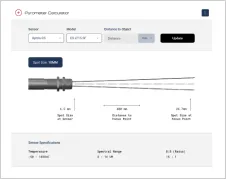
There are over 300 different pyrometer variants to choose from in the Optris infrared pyrometer portfolio each optimized for material, spot size, distance from the target, and environmental conditions. Fortunately, there is a trained engineer to phone or chat with to guide you through the process of choosing the perfect infrared sensor for your application.
The same support is available for the extensive IR camera product line.
