


Preventing Fire Hazards and Early Detection of Thermal Runaway in Lithium-Ion Batteries
Mitigating Risks in Energy Storage with Advanced Infrared Detection Systems
Challenge
Lithium-ion batteries pose a high fire risk due to thermal runaway, especially in high-density storage and manufacturing settings. Traditional fire detection methods are reactive, detecting hazards only after decomposition starts, making early intervention difficult and increasing the risk of catastrophic failure.
Solution
Infrared camera systems enable continuous, non-contact thermal monitoring to detect overheating in battery cells before thermal runaway occurs. By identifying slow temperature rises early, facilities can intervene preventively—cooling or isolating affected cells—to avoid fires and improve overall battery handling safety.
Benefits
- Enables early intervention before batteries reach critical thermal runaway stages
- Reduces risk of fire during storage, production, and recycling processes
- Allows safe monitoring in high-voltage environments without physical contact
- Enhances facility safety with automatic hotspot detection and alarm systems
- Minimizes costly downtime and resource losses from undetected battery failures
Preventing Fire Hazards and Early Detection of Thermal Runaway of Lithium-Ion Battery
Climate change due to greenhouse gas emissions is a global concern. Technological advancements have paved the way for cleaner renewable energy conversion processes with increased efficiencies. However, renewable sources’ key challenge is their intermittency, which necessitates effective energy storage systems to ensure reliability. In this global shift towards cleaner energy, the role of electrochemical systems, particularly Lithium-Ion (Li-ion) batteries, is crucial. These batteries are instrumental in reducing transport and power emissions, forming the backbone for decarbonization and electrification of the transport, heating, and industrial sectors. As engineers and professionals, you are part of this significant change.
As battery costs fall and energy density improves, numerous applications emerge, showcasing the potential of Li-ion batteries. These batteries are widely used due to their high energy and power density, low self-discharge rate, and extended lifecycle. Common compositions include LiMn2O4 (LMO), LiCoO2 (LCO), and LiFePO4 (LFP). The future is bright with the versatility of Li-ion batteries in various applications.
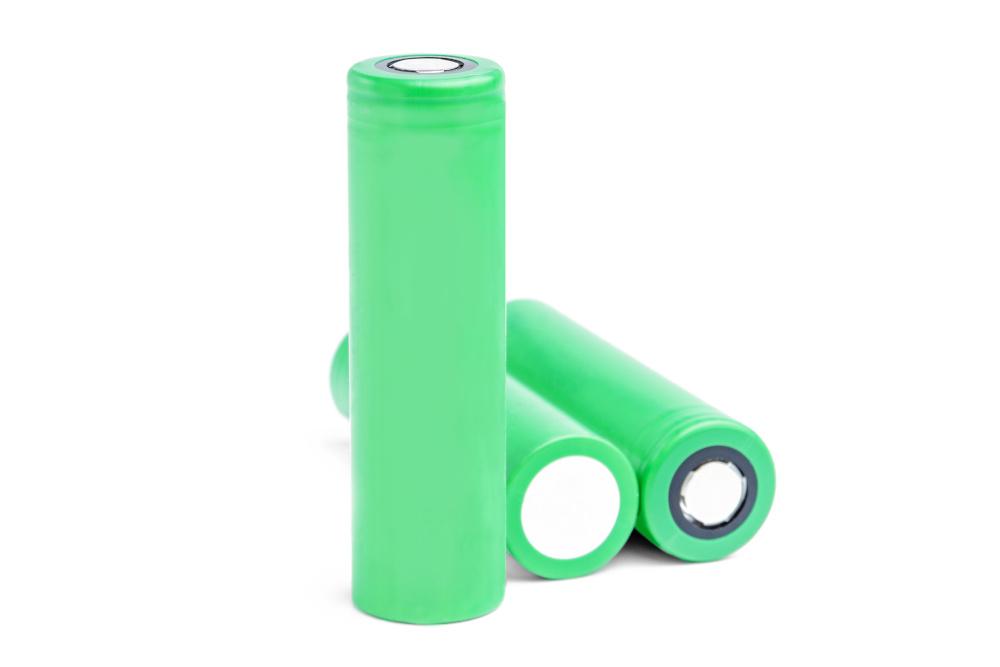
The battery energy density refers to the amount of energy a battery contains compared to its weight or size, often called specific energy density (weight) and volumetric energy density (size). High energy density is beneficial for applications requiring compact but powerful batteries. However, packing more energy into a battery also increases the risk of thermal runaway, a key factor for high fire risk due to lithium’s reactive and heat-sensitive nature. The electrolytes in Li-ion batteries are highly volatile and can lead to combustion, presenting a fire hazard. Batteries are still at risk despite built-in safety features, especially during manufacturing, storage, or recycling. Battery thermal runaway is becoming a significant liability for companies handling battery products, with increased fire incidents in storage, charging, and recycling centers.
Thermal runaway occurs in energy-dense batteries due to manufacturing defects or external misuse, such as overcharging, overheating, puncturing, or crushing. When a battery reaches a critical temperature, a chain reaction ensues, leading to a fire. This phenomenon involves chain exothermic reactions within the battery, causing a sharp rise in internal temperature, destabilizing and degrading the battery’s inner structures. Internal causes of spontaneous ignition include coating defects at the electrode surface, contamination particles, and poor welds, leading to electrical shorts and heat generation. External causes include electrical abuse from overcharging, mechanical abuse via crushing or puncture, and thermal abuse from high-temperature environments. These abuses are interconnected; for instance, a puncture (mechanical abuse) can cause a short circuit (electrical abuse), creating heat and triggering a thermal runaway.
Various fire detection systems and sensors are available today for early warning and facility monitoring. These systems measure smoke aspiration, density, and heat from erupted fires. However, these systems only detect fires once a battery has already decomposed, not before a fire threat arises. Additionally, optimal sensor placement is crucial for fire detection in outdoor or high-airflow environments; suboptimal smoke detector placement might fail to detect fires completely. Therefore, the most effective approach is to respond preventively by identifying and removing defective battery cells before a fire occurs. The defective battery can be cooled early in such scenarios, preventing thermal runaway. Additionally, isolating dangerous batteries from other flammable ones will limit the severity of damage. Preventive measures and continuous monitoring are crucial to minimizing the risk.


Infrared Cameras Prevent Battery Fires: The Key to Early Thermal Runaway Detection
Thermal runaway doesn’t happen all at once but in several stages. The first stage is the onset of overheating. This rapid increase in temperature triggers a cascade of chemical reactions and an increase in heat generation. This uncontrolled exothermic reaction begins at around 70 °C to 100 °C. If not extinguished, the solid electrolyte interface decomposes, causing more heat to build up and more side reactions, which can potentially melt the separator. As the heating continues and the rate of temperature rise increases, the rapid thermal runaway phase is entered. Thermal runaway is a self-heating rate of at least 10 °C per minute. As it accelerates, thermal runaway leads to uncontrollable temperatures and toxic gas generation. The cell may burst, catch fire, or explode in a catastrophic event, with temperatures reaching 100 °C to 200 °C or higher.
When it comes to volume-orientated battery cell manufacturing, especially in the absence of a battery management system, the use of traditional contact temperature sensors is not feasible. The grouping and packing of battery cells into high-voltage battery packs create a high-voltage environment, posing safety challenges for temperature measurement. Conventional methods such as thermocouples, RTDs, and NTCs, while using isolated electronics and insulated cables, require the expertise of electricians and can interfere with HV objects. The presence of thick insulation further complicates multi-channel applications in confined spaces, underscoring the need for alternative solutions.
Infrared camera systems are the first to alert before a fire develops, detecting heat generated by batteries early in the fire development process. Thermal cameras can detect a fire before smoke particles or flames form. To measure the slow ramp-up of temperature over time in the first phase, accurate temperature-calibrated thermal cameras are necessary, rather than simple infrared surveillance cameras. Otherwise, the slow temperature ramp-up before catastrophic thermal runaway cannot be resolved precisely, leading to false warnings.
Additionally, batteries are often packaged, making the cells not directly visible, which dampens the temperature differences between healthy and faulty batteries. Determining those temperature differences precisely is critical to preventing catastrophic failures. The robust design of Optris infrared thermal measurement cameras ensures durability and ease of installation, with an IP67 rating that protects against dust and water, making them suitable for challenging industrial environments. Infrared cameras with wide-angle lenses observe a wide field of view. Due to the small MFOV, resulting from superior optics quality and detector pitch, the temperature information of hotspots can be resolved correctly.
Automatic Hotspot Detection: The Key to Preventing Battery Fires with Xi Series Infrared Cameras
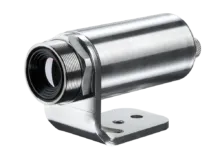
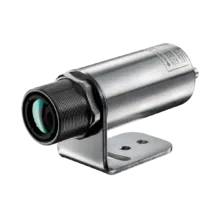
Infrared cameras from the Xi series, such as the standalone Xi 410 thermal camera, offer automatic hotspot detection with alarm output, ensuring an immediate response to potential issues without additional software. The Hot Spot Finder function provides early detection of hotspots to prevent the risk of fires or explosions, thereby avoiding associated health hazards, costly downtime, and resource losses. These thermal detection systems can be integrated into facility monitoring automation controls and extinguishing systems to enhance fire detection response time and improve fire safety.
The Xi series infrared cameras stand out for their direct Ethernet connection, allowing easy integration into existing network infrastructures. The availability of various optics further enhances their adaptability to different monitoring requirements. The self-monitoring system with a fail-safe signal ensures reliable operation. The thermal imaging system also supports the simultaneous display of multiple cameras on one software screen, enabling comprehensive monitoring of large areas or multiple battery units. As for regular battery cell monitoring, the infrared cameras usually operate in an LT wavelength range of 8 µm – 14 µm.
It’s important to note that infrared fire prevention systems, such as the Xi series, are meant to supplement existing detection and response protocols. Instead, they serve as a robust early warning system, detecting areas in the facility where ignition may occur. Preventive fire detection measures, including infrared cameras, are crucial for mitigating thermal runaway risks. The most effective approach is to identify overheating defective battery cells before a fire occurs. Early cooling of defective batteries and separating them from flammable ones can limit damage severity. Continuous monitoring and implementing smart fire detection systems, like the Xi series, are essential for fire safety and prevention.
The thermal imaging systems are suitable for various stages such as storage, disposal, commissioning, production, transport, and firefighting measures.
Recommended Products







Other Battery Monitoring Applications



Talk to us about your IR Temperature Measurement Requirements
There are over 300 different pyrometer variants to choose from in the Optris infrared pyrometer portfolio each optimized for material, spot size, distance from the target, and environmental conditions. Fortunately, there is a trained engineer to phone or chat with to guide you through the process of choosing the perfect infrared sensor for your application.
The same support is available for the extensive IR camera product line.
