


Thermal Management in Reflow Soldering for High-Volume PCB Assembly
Maintain consistent temperature profiles with automated real-time adjustments in high-volume SMT production
Challenge
Maintaining uniform temperature across PCBs during reflow soldering is difficult due to varying component sizes and materials. Sensitive components are prone to thermal stress, and traditional temperature monitoring methods do not provide direct, real-time data on individual board conditions during continuous high-volume production.
Solution
Infrared sensors monitor the bottom side of each PCB during its passage through the oven, enabling real-time comparison of relative temperatures and automatic adjustment of heating zones without interrupting production or relying on test boards.
Benefits
- Improves solder joint quality by continuously tracking actual PCB temperatures.
- Reduces production interruptions by eliminating the need for frequent test board profiling.
- Enables automatic oven adjustment to minimize temperature deviations proactively.
- Maintains stable product flow by regulating heat without changing conveyor speed.
- Provides traceable temperature logs for process optimization and quality assurance.
Optimizing Reflow Soldering for High-Volume PCB Assembly
The reflow soldering process is essential for assembling electronic components onto printed circuit boards (PCBs), especially for soldering surface-mount technology (SMT) components. This method uses long industrial convection ovens to form reliable solder joints by heating the components, PCB, and solder paste and melting the solder without overheating.
In high-volume commercial use, reflow ovens are long tunnels with conveyor belts that move PCBs through multiple, individually heated zones, each temperature-controlled. Technicians adjust conveyor speed and zone temperatures to achieve a specific time and temperature profile.
The process starts with the preheat stage, where the PCB assembly enters the oven at ambient temperature. Heat is gradually introduced, bringing it to 100-125°C to avoid thermal shock and ensure even heat distribution. During preheat, solvents in the solder paste evaporate, and some flux components begin to activate.
Next is the soak stage, where the temperature is increased to 150-170°C, stabilizing the temperature across the PCB and reducing thermal gradients. During this phase, the rosin in the paste melts, and the solder particles start to coalesce. A consistent soak temperature for less than one minute ensures uniform heating and prevents thermal damage.
The reflow stage follows, with the temperature raised above the solder’s melting point, typically around 200°C. The solder reaches a full liquid state, forming reliable joints between the component leads and the PCB pads. Dwell time, the period the solder remains liquid is carefully controlled to avoid damaging components.
The cooldown stage solidifies the molten solder, forming strong joints. The assembly cools as it exits the oven, aided by ambient air or cooling mechanisms. Controlled cooling prevents thermal shock and ensures reliable solder joints.
Achieving uniform temperature distribution across the PCB is a major challenge, as component size, mass, and material variations can lead to uneven heating. This issue is compounded in larger, densely packed PCBs. Additionally, certain components, like ceramic capacitors and ball grid arrays, are sensitive to thermal stress and require careful control of heating and cooling rates to maintain reliability.
Temperature control in a reflow oven typically involves a closed-loop system with strategically placed thermocouples and a controller. In some configurations, the thermocouples are positioned near the heat emitters, while in others, suspended thermocouples monitor the air temperature in specific regions of the oven. However, neither approach directly measures the temperature of the PCB assembly. In a high-volume SMT process, frequently passing an instrumented board through the oven to verify the temperature profile could be more practical.


Ensuring Consistent PCB Quality with Automated Temperature Regulation
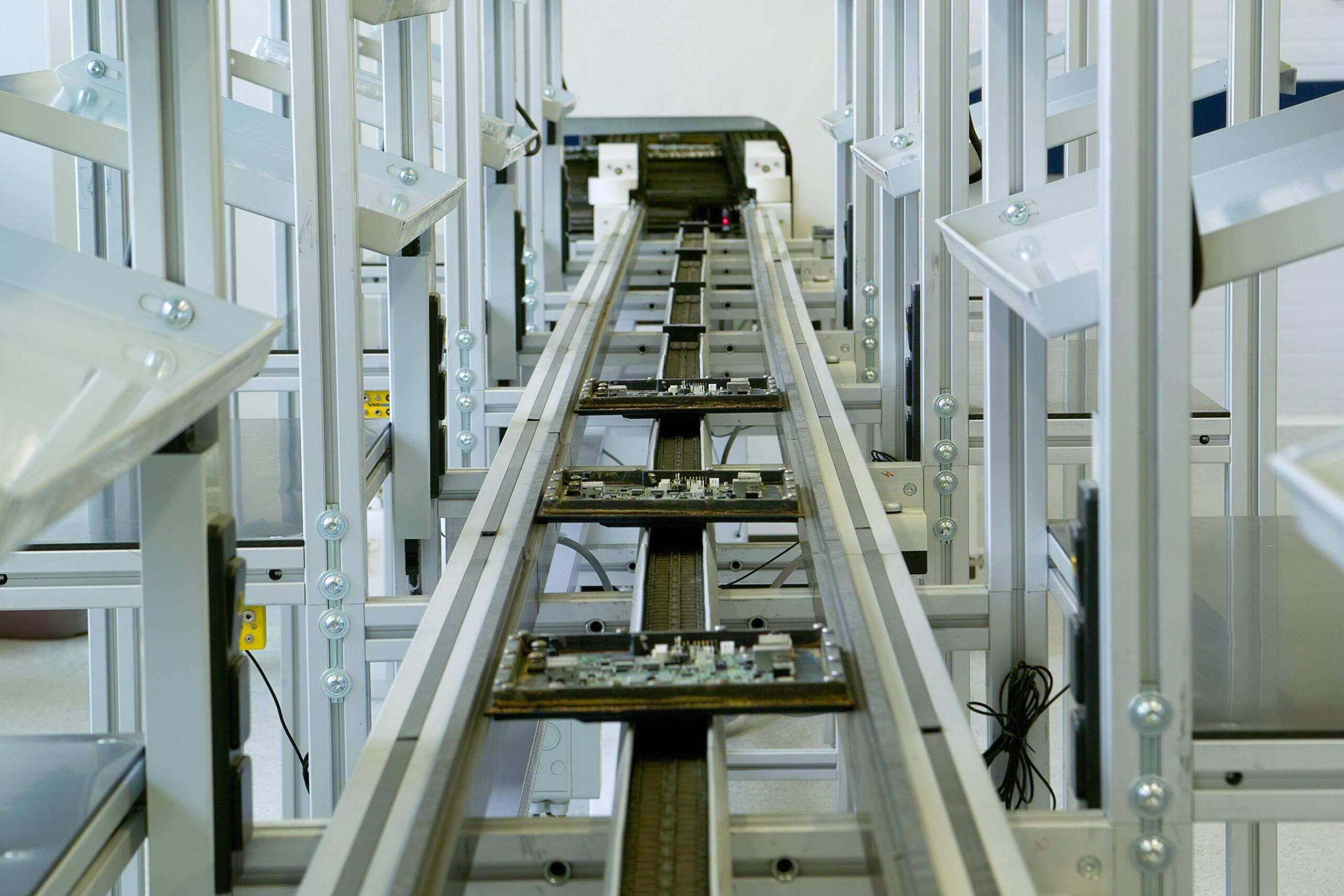
In a high-volume SMT process, frequently passing an instrumented board through an oven to ensure the profile remains on track is impractical. A more practical solution is to use a non-contact temperature-sensing method to continuously monitor work-in-progress without disrupting product flow.
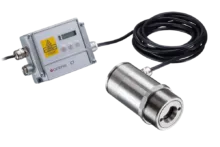
An infrared pyrometer CT hot is located at two points within the oven: one past the preheat zone and another past the last heater in the reflow zone. A cooling medium is not required since the CT hot are mounted below the track of the edge conveyor, looking up at the bottom side of the assembly and due to the high temperature rating of the sensing heads. As the assembly passes over the infrared sensor, it takes a measurement of the board. An average of the measurement is then used as the temperature for that complete board. As the infrare sensor always tracks the same path of a particular board, the relative temperature of each board is compared to other boards, with the readings logged to a history file that can be recorded and accessed.
Three user-set warning levels correspond to PCB temperature deviations above or below the set value. The heat emitters corresponding in the oven are automatically regulated by the system with considers the pyrometer readings. If temperature deviations are detected, the oven is adjusted before the deviation becomes significant enough to affect the process. By regulating the heater rather than other variables such as conveyor speed, product flow to and from other machines is not disturbed.
Optimizing Quality and Streamlining Assembly with Individual PCB Temperature Monitoring
Using infrared pyrometers from Optris in the reflow soldering process for high-volume SMT production offers several benefits. These pyrometers provide precise, non-contact temperature measurements, ensuring accurate monitoring of PCB temperatures without physically interfering with the process. This accuracy helps maintain consistent soldering quality across multiple boards, reducing the risk of defects caused by improper heating.
Integrating Optris pyrometers into the oven’s control system allows for real-time adjustments based on temperature readings. This automatic regulation of heat emitters helps maintain the desired temperature profile, preventing thermal deviations that could affect the soldering process. By focusing on regulating the heaters instead of other variables like conveyor speed, the system ensures smooth product flow and minimizes disruptions.
Additionally, the process is not interrupted to process test samples or use an expensive reflow tracker system more often than necessary. Optris pyrometers offer data logging capabilities, enabling the recording and analysis of temperature profiles over time for each PCB produced. This historical data can be invaluable for identifying trends, optimizing process parameters, and ensuring consistent quality control.
Optris pyrometers are capable of measuring high temperatures, which is crucial for reflow soldering where peak temperatures often exceed 200°C. Their two-piece design allows the sensing head to operate in temperatures up to 250°C while measuring targets at lower temperatures, ensuring reliable performance in demanding environments.
Recommended Products






Other Electronics Applications



Talk to us about your IR Temperature Measurement Requirements
There are over 300 different pyrometer variants to choose from in the Optris infrared pyrometer portfolio each optimized for material, spot size, distance from the target, and environmental conditions. Fortunately, there is a trained engineer to phone or chat with to guide you through the process of choosing the perfect infrared sensor for your application.
The same support is available for the extensive IR camera product line.
