

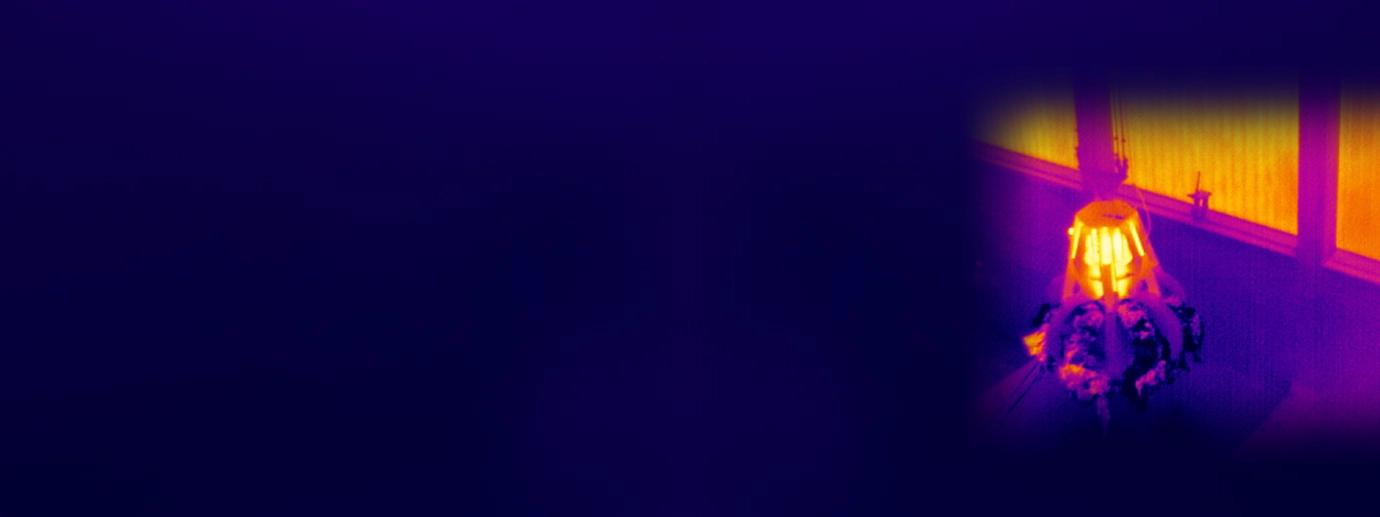
Infrared Temperature Measurement for Fire Protection in Waste Recycling
Fire Prevention in Waste Bunkers: Identify Burning Garbage Early with Advanced Infrared Technology and Customized Software
Challenge
Garbage bunkers are prone to spontaneous fires due to combustible waste and confined conditions, making early detection vital to avoid facility damage, toxic smoke, and costly water-based firefighting efforts.
Solution
A thermal monitoring system continuously scans bunker surfaces for early temperature rise, enabling swift identification of ignition risks and allowing timely localized interventions before fires escalate.
Benefits
- Prevents large-scale fires through early thermal anomaly detection
- Enables targeted response, reducing unnecessary water usage
- Minimizes facility downtime and operational disruption
- Enhances worker safety by avoiding toxic smoke exposure
- Reduces environmental impact of contaminated extinguishing water
Critical Fire Protection in Waste Recycling: Early Detection and Rapid Response
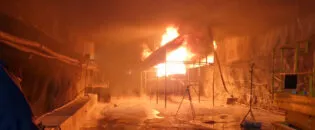
Garbage bunkers house large quantities of combustible materials, including paper, plastics, and organic waste, which can spontaneously ignite under certain conditions. The confined nature of these spaces, combined with the diverse and often unpredictable composition of the waste, makes them particularly vulnerable to rapid fire spread. Fires in garbage bunkers can cause significant damage to facilities, disrupt operations, and pose severe safety risks to workers. The dense smoke and toxic fumes are generated by burning waste materials. Early detection is required for swift intervention, which is essential to prevent small ignition points from developing into full-blown fires.
If a full-blown fire needs to be distinguished, the whole bunker will need to be flooded. The immense amount of water gets polluted and can not be treated like normal wastewater. This ultimately leads to financial losses not because the waste has burned down, but because the extinguishing water must be disposed of properly. Speed is crucial in fire prevention. Early fire detection of a developing fire significantly increases the chances of minimizing damage through rapid intervention. The intervention in waste bunkers is simple by either removing hot prone to fire waste from the bunker or only use extinguisher locally before a fire can spread.
IRIS’s Early Fire Detection to Find Igniting Garbage with IR cameras
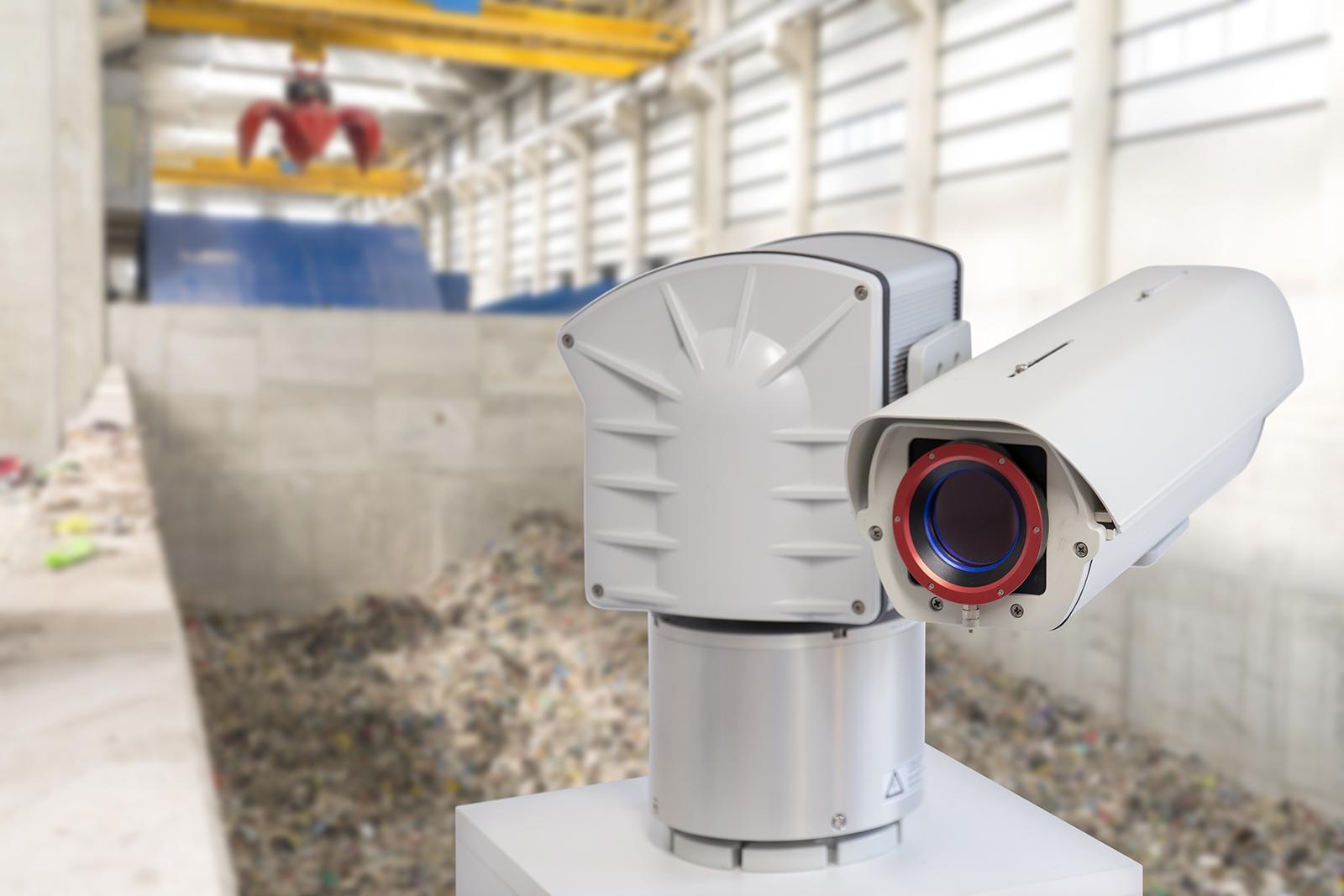
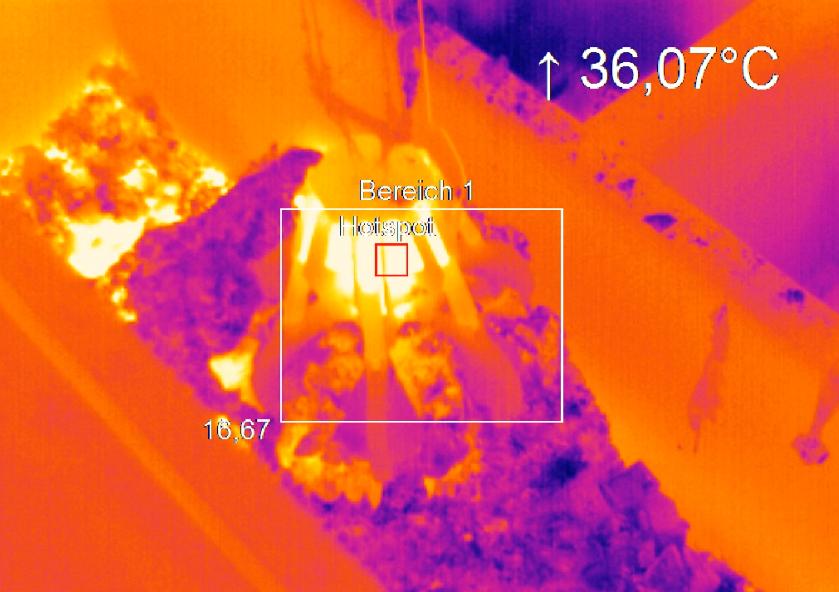
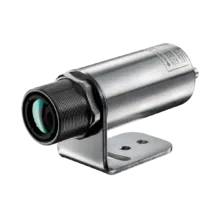
IRIS GmbH has developed a specialized and successful system for early fire detection using advanced infrared measurement technology. This system employs an infrared camera from Optris, allowing for detecting potential fires before they ignite by monitoring rising temperatures. The IRIScan FS system leverages this approach, utilizing an industrial infrared camera with a proven track record from Optris.
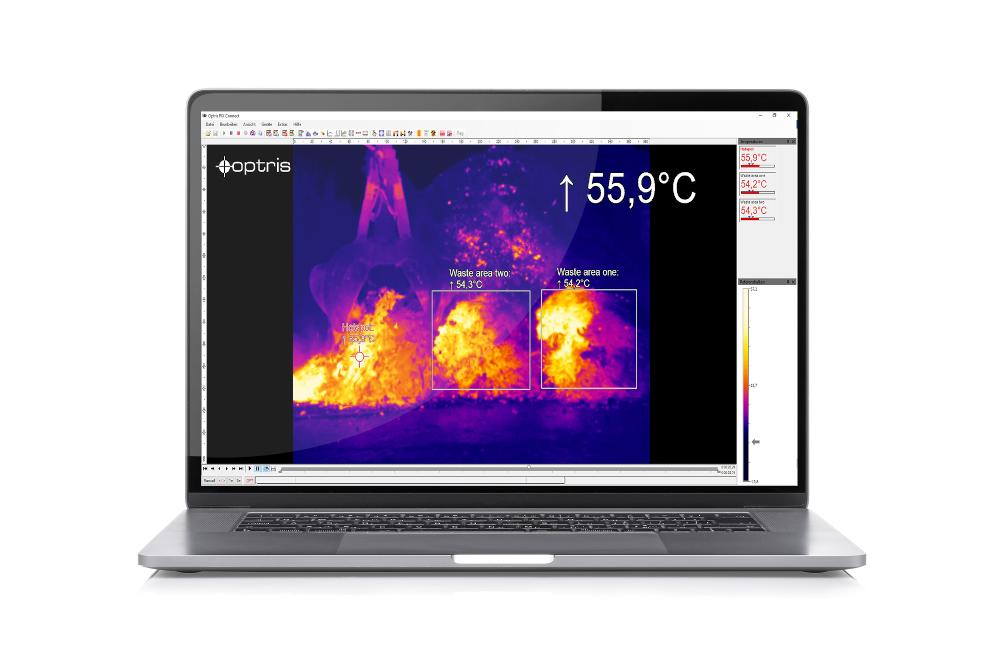
The system includes IRISvisual software, specifically designed to evaluate captured thermal images and localize thermal hazards in real-time. It determines the highest temperature in every part of the image, triggering an alarm or warning if the temperature exceeds a predefined threshold. The system features multi-stage adjustable warning and alarm thresholds, with initial warnings possible at temperatures as low as 70° or 80° C. This enables operators to quickly identify the location on the infrared image, often preventing fires well in advance. Suitable for various sectors where traditional fire detection methods are impractical, the system is unaffected by large amounts of ambient dust or smoke. Using air purge collars in harsh environments ensures the infrared camera’s optical components remain clean.
IRISvisual software controls all system functions, offering flexible alarm levels that are adaptable to any application requirements. The initial temperature threshold provides an early warning, with optional additional thresholds that can trigger urgent alarms to the fire service. When a critical temperature threshold is exceeded, the software delivers visual and acoustic signals to the computer operator while recording current infrared videos or images. The system can be customized to meet specific customer requirements, allowing alarm and status information to be displayed in control rooms, in situ, or sent via network, email, or even SMS.
The system’s software is continuously being improved, with the latest version integrating object detection. This upgrade addresses common false alarms caused by hotter parts of vehicles, such as a forklift truck’s exhaust. The object detection feature can now identify the forklift truck, preventing unnecessary alarm triggers.
At the heart of the IRIScan FS system, Optris provides a comprehensive range of infrared cameras and accessories designed to adapt flexibly to each customer’s specific needs. This adaptability allows for selecting the optimal resolution and appropriate lens based on system requirements. In challenging environments, the infrared camera’s optical components are kept clean and functional using air purge collars, ensuring reliable performance and longevity even in harsh conditions. Optris’ solutions are engineered to deliver precise and efficient fire detection, significantly enhancing safety and protection in waste recycling facilities.
Accuracy, NETD, and MFOV in Infrared Cameras for Early Fire Detection
Temperature measurement accuracy and low Noise Equivalent Temperature Difference (NETD) are crucial for early fire detection. Accurate temperature measurement ensures that even the slightest increase in temperature can be detected, providing an early warning before a fire fully ignites. Low NETD, which indicates the thermal sensitivity of an infrared camera, allows for the detection of minimal temperature variations. This high sensitivity is essential in identifying hot spots that could signal the onset of a fire.
In addition, the Measurement Field of View (MFOV) is critical for early fire detection applications using infrared cameras. MFOV describes the smallest detail that the infrared camera can accurately measure at a given distance. This spatial resolution is vital in identifying precise temperature variations across a scene. Understanding MFOV is essential because, as the distance from the target increases, the camera’s ability to accurately measure the temperature decreases. A small MFOV of the infrared camera ensures that even the tiniest hot spots are detected early, providing crucial data to prevent fires before they spread.
The IRIS software is built on the sophisticated Software Development Kit (SDK) from Optris, which provides a robust foundation for advanced infrared measurement and analysis. The SDK enables seamless integration with a wide range of infrared cameras, ensuring precise temperature measurement and real-time data processing. With the temperature data provided, the system can perform complex thermal analysis, implement advanced object detection algorithms, and provide reliable fire detection even in challenging environments. The continuous enhancements and adaptability of the Optris SDK ensure that the software remains at the forefront of infrared technology.
Recommended Products






Other Fire Detection & Safety Applications



Talk to us about your IR Temperature Measurement Requirements
There are over 300 different pyrometer variants to choose from in the Optris infrared pyrometer portfolio each optimized for material, spot size, distance from the target, and environmental conditions. Fortunately, there is a trained engineer to phone or chat with to guide you through the process of choosing the perfect infrared sensor for your application.
The same support is available for the extensive IR camera product line.
