


Integrating Infrared Cameras for Fire-Safe Paper Production Processes
Detecting Thermal Hotspots in Real-Time for Early Fire Prevention in Industrial Paper Processing
Challenge
Monitoring temperature in confined, dust-prone areas of paper processing machines is difficult, making it hard to detect dangerous heat buildup before combustion starts. Reliance on smoke detectors alone leads to late warnings, resulting in halted production, machinery damage, and increased safety risks.
Solution
Real-time thermal imaging detects rising temperatures early, even in concealed areas beneath conveyor belts. Continuous monitoring of heat accumulation allows operators to act before ignition, preventing fires without interrupting production and ensuring process safety in high-risk zones.
Benefits
- Early detection of fire risks before smoke or combustion occurs
- Minimizes unplanned downtime due to fire-related machine stoppages
- Protects machinery from heat damage, extending equipment lifespan
- Enables safe operation without needing constant manual inspection
- Ensures consistent process flow by preventing fire-triggered disruptions
Fire Risks in Industrial Paper Processing
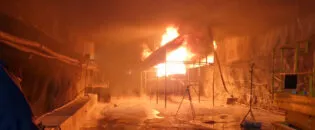
The industrial paper processing sector, especially during stages like cutting, drying, and gluing, faces significant fire risks. In cardboard manufacturing, where different shapes, sizes, and thicknesses are cut, the process involves substantial heat and the accumulation of paper scraps. This buildup, combined with the confined spaces within machines, creates an ideal environment for fires to start. The key challenge arises from the difficulty in monitoring temperature in these enclosed spaces, where heat can accumulate quickly without immediate visual detection. The machinery, conveyor belts, and cutting knives create friction, and in such enclosed areas, the temperature can rise rapidly to dangerous levels, risking ignition. In this application, fire detection was only possible when the smoke became visible and almost too late. This haltered the machinery, delayed production times, and increased the damage and risk of machinery.
In industrial paper processing, relying solely on smoke detectors for fire detection would be insufficient and dangerously late. Smoke detectors are designed to activate only after combustion has already begun, meaning a fire would already be in progress before the alarm sounds. In paper processing, especially during the cutting and transporting phases, the heat buildup from friction and the accumulation of flammable material can lead to fires in confined spaces, such as beneath conveyor belts, without immediate visible signs of smoke. By the time smoke is detected, the fire could already have caused significant damage
The motivation for using temperature measurement technology is clear. With the ability to monitor temperature increases in real-time, particularly in high-risk areas such as beneath conveyor belts, fires can be detected and prevented before they start. Monitoring hot spots in closed areas allows operators to take preemptive actions. Monitoring hot spots in closed areas allows operators to take preemptive actions while the machinery continues running.


Real-Time Thermal Imaging for Paper Process Monitoring prevents Fires with Pre-Alarm Functions
The key challenge in this application is the closed nature of the machinery, where rising temperatures can quickly go unnoticed until it’s too late. An infrared camera for real-time temperature monitoring offers a much earlier warning by detecting hotspots long before smoke is produced. The Optris Xi400 continuously scans for abnormal temperature increases, allowing operators to intervene and stop the process before combustion occurs, effectively preventing a fire from starting. In contrast, a smoke detector would only alert after the fire has already escalated, making infrared temperature measurement the preferred choice for early fire detection in paper processing environments.
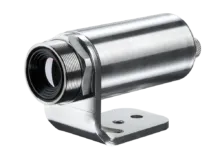
The Optris Xi400 infrared camera was chosen for its compact size and high-resolution thermal imaging capabilities, making it ideal for confined spaces within industrial paper processing machinery. Installed under the conveyor belt where paper scraps accumulate, the camera continuously monitors temperature, allowing operators to detect any hot spots before they escalate into fires. The infrared camera’s connection to a PC running Optris PIX Connect software enables real-time monitoring of the process, with pre-defined alarms set to trigger when temperatures rise above a safe threshold.
The spectral range selected for fire detection in the paper processing application at WestRock is 8 to 14 micrometers, typical for long-wave infrared (LWIR) cameras, including the Optris Xi400. This range is ideal for applications involving low to moderate temperatures, such as the monitoring of paper and cardboard. The LWIR range is particularly suited for non-reflective materials like paper, which emit thermal radiation efficiently without reflecting ambient heat or light sources, such as overhead lamps or nearby machinery. Paper is relatively easy to measure using infrared technology because it has low reflectivity and high emissivity, typically between 0.9 and 0.95. High emissivity means that paper emits most of the infrared radiation it absorbs, allowing infrared cameras to capture an accurate temperature reading of the material without interference from reflections.
The thermal camera’s laminar air purge system ensures that dust, a common issue in paper processing, does not obstruct the lens, ensuring accurate temperature measurements. Unlike traditional methods, which required visual confirmation of smoke, this system allows for the detection of temperature increases in real-time, well before fire ignites. The setup is straightforward, requiring only a single infrared camera connected via USB to the monitoring PC without the need for additional cooling or complex installation procedures.
Why WestRock Chose Optris for Industrial Fire Detection
Implementing the Optris Xi400 infrared camera at WestRock has proven highly effective in preventing fires. The system detected a temperature rise in a critical area, allowing maintenance staff to intervene before the situation escalated. This preemptive detection has improved safety and minimized downtime, ensuring that the paper processing machines continue to run without extended halts due to fire-related incidents.
Optris’ solution, with its easy installation, reliability, and compact design, made it the preferred choice for WestRock. The ability to monitor hot spots in real-time and trigger pre-alarms before fire ignition has allowed the company to prevent potential fires, thus protecting valuable machinery and maintaining operational efficiency. The solution’s effectiveness has led WestRock to expand its use of Optris cameras to other machines, further ensuring safety across their production lines.
Optris’ strong technical support, facilitated through their distributor Contemp, played a crucial role in WestRock’s decision to continue using Optris products. The trust built during the installation and testing phases, along with features like real-time monitoring, high-resolution imaging, and an intuitive interface, make Optris a reliable partner in ensuring the highest standards of fire prevention in industrial environments.
Recommended Products






Other Fire Detection & Safety Applications



Talk to us about your IR Temperature Measurement Requirements
There are over 300 different pyrometer variants to choose from in the Optris infrared pyrometer portfolio each optimized for material, spot size, distance from the target, and environmental conditions. Fortunately, there is a trained engineer to phone or chat with to guide you through the process of choosing the perfect infrared sensor for your application.
The same support is available for the extensive IR camera product line.
