


Optimizing Temperature Control in Forging for Railcar Wheels
Overcoming Dust and Combustion Challenges in Temperature Measurement during Forging and Machining of Railcar Wheels
Challenge
Accurate temperature measurement during railcar wheel forging faces issues due to combustion byproducts and dust attenuating infrared signals. Precise temperature control (800–1300 °C) is essential before punching to avoid wheel damage, yet traditional contact methods fail due to harsh environmental conditions and small measurement targets positioned several meters away.
Solution
Ratio pyrometers with integrated visible targeting are chosen over IR cameras, effectively overcoming signal attenuation from environmental contaminants like dust and combustion products. This approach ensures consistent temperature measurements on stationary wheel cores, matching historical data reliability, and integrates smoothly into existing PLC monitoring systems.
Benefits
- Ensures precise wheel temperatures, preventing structural damage and maintaining safety standards.
- Minimizes measurement deviations despite harsh environmental conditions like dust and combustion byproducts.
- Enhances measurement consistency, reducing defects and improving overall product quality control.
- Simplifies real-time monitoring through seamless integration into existing automation and control systems.
- Eliminates limitations of traditional contact measurement, improving reliability in challenging industrial environments.
Optimizing Railcar Wheel Production: Overcoming Measurement Challenges with Infrared Technology
The production of railcar wheels, used in both railcars and locomotives, is a complex and multi-step process. It begins with the selection of high-strength steel, specially designed to withstand the rigorous demands of railroad operation. This steel is supplied in large blocks or blanks and cut to the required size.
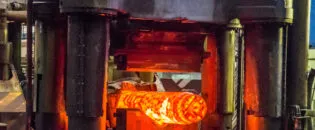
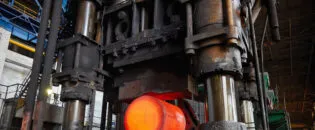
The cut steel blanks are then shaped into the rough form of the wheel using a forging press. Following the forging process, the wheel undergoes various machining operations, including turning, milling, and drilling, to achieve its final shape and meet the required tolerances.
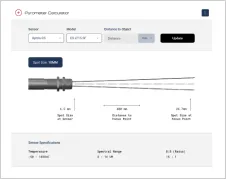
For accurate temperature measurement, the steel alloy must reach temperatures between 800 °C and 1300 °C. The measurement object is positioned approximately 4 meters from the sensor mounting location, with ambient temperatures ranging from 30 °C to 55 °C. One challenge is that combustion products and fine dust in the line of sight can attenuate the infrared signal, potentially impairing measurement accuracy. The target area for measurement has a diameter of approximately one inch.
Each railcar wheel must reach a predefined temperature before the punch-out process, which creates the space for the axle. Punching out at temperatures that are too low or too high can damage the wheel. Traditional contact measurement techniques have not proven effective in this context.

Choosing Ratio Pyrometers Over IR Cameras for Accurate Wheel Temperature Measurement
The customer evaluated a short-wave infrared camera as a potential replacement for older pyrometer products but ultimately determined that a ratio pyrometer with a visible channel would be a better solution.
The tested IR camera validated the measurement location on the wheel core, which was held stationary when the temperature measurement was needed. The CSVision ratio pyrometer, equipped with a built-in video channel, allowed precise targeting of the measurement spot. A crucial factor in selecting the ratio infrared thermometer was its ability to minimize measurement errors caused by significant signal attenuation due to dust and combustion products in the optical path. Ratio temperature measurement ensures more consistent results despite these interferences.
Additionally, the temperature measurements from the ratio pyrometer closely matched historical data obtained from older short-wave infrared sensors using the same ratio technology, ideal for high-temperature, low-emissivity metal targets. The CSVision also offered a more affordable air purging accessory, which was important for the application.
Given the high ambient temperatures (up to 55 °C), a rugged infrared sensor was preferred to withstand the harsh environment. The simple 4 to 20 mA signal output was compatible with the customer’s PLC input requirements, further supporting the decision to choose the CSVision ratio pyrometer.
Reduction of Measurement Deviations Caused by Environmental Factors with Optris Ratio Pyrometers
Using Optris solutions for railcar wheel temperature monitoring offers several benefits. Precise and reliable measurements ensure the wheels reach the optimal temperature before the punch-out process, reducing the risk of damage and maintaining wheel integrity.
The use of non-contact infrared technologies addresses the limitations of contact measurement methods, providing accurate readings even in harsh environments. A key advantage is the reduction in measurement errors caused by environmental factors. The ratio pyrometer’s ability to compensate for signal attenuation ensures consistent and precise readings, even in the presence of dust and combustion products.
Optris ratio pyrometers, like the CSVision R2M, come with advanced features such as built-in video channels for optimal targeting, air purging accessories to maintain sensor cleanliness, and robust designs capable of withstanding high ambient temperatures.
Additionally, the pyrometer’s compatibility with existing PLC systems through its 4 to 20 mA signal output simplifies integration, enabling real-time monitoring and control. These features contribute to consistent and accurate temperature measurements, which are crucial for maintaining production quality and safety standards.

Recommended Products








Downloads
Other Metal Applications





Talk to us about your IR Temperature Measurement Requirements
There are over 300 different pyrometer variants to choose from in the Optris infrared pyrometer portfolio each optimized for material, spot size, distance from the target, and environmental conditions. Fortunately, there is a trained engineer to phone or chat with to guide you through the process of choosing the perfect infrared sensor for your application.
The same support is available for the extensive IR camera product line.
