


Laser Drying Technology Takes Leap Forward
IDEEL Project Demonstrates Scalability for Efficient Battery Cell Production
19th March 2025
More Economic and Climate-Friendly Anode and Cathode Drying
The IDEEL research project, which is supported by the Federal Ministry of Education and Research in the context of the Battery 2020 funding program and focuses on the development of a laser-assisted drying process, was completed at the end of December 2024 after a three-year term. It can make the electrode-drying process, which is extremely important for the production of lithiumion
batteries, much more efficient.
An important component of this research project and its successful completion is Optris GmbH & Co. KG, as well as the infrared thermal imaging cameras of the Xi series developed by the company, especially the Xi 80.
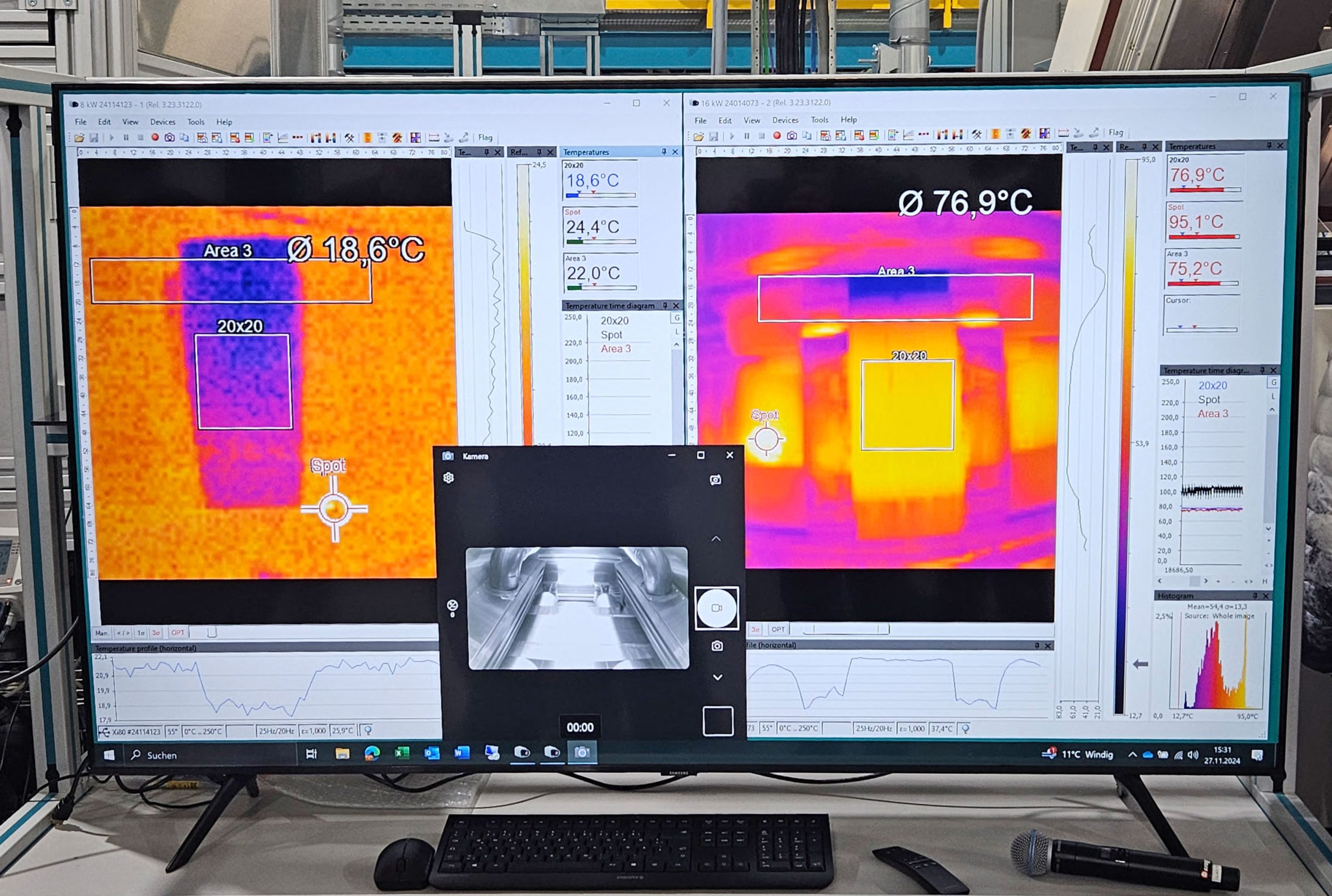
This autonomous optris infrared cameras can be used to ensure that the target temperature is constantly maintained. In addition, the Xi 80 cameras are extremely efficient in the quality control of the electrodes on the drying line, whose temperatures and possible defects in the material are always reliably recorded despite the very high process speed.
Berlin / Mülheim-Kärlich, March 19, 2025
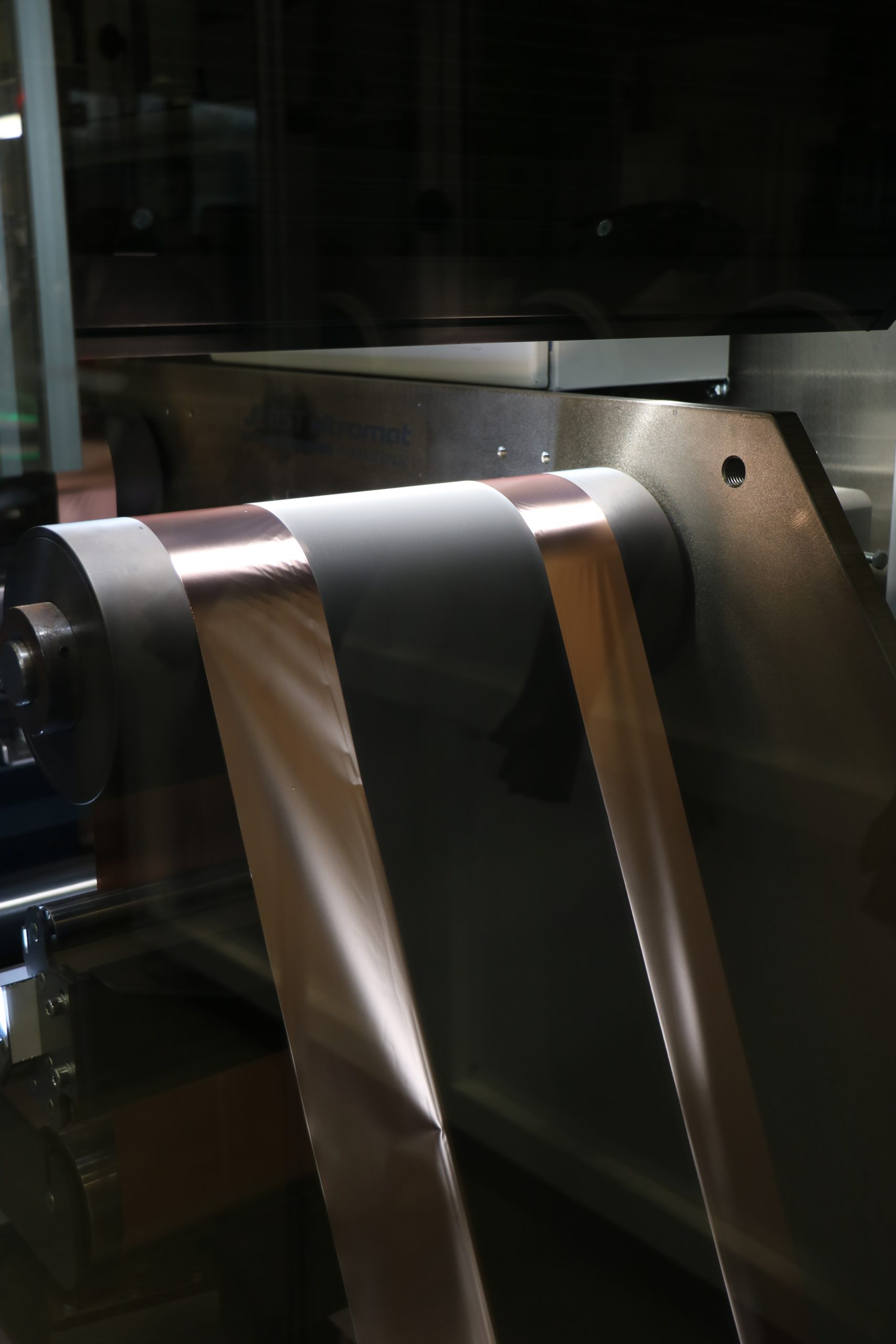
In the industrial production of lithium-ion batteries, electrode drying was previously one of the most critical sub-processes. The high energy and time consumption, as well as the significant space requirements made the drying of the active paste (slurry) applied to a current conductor foil in the roll-to-roll process (R2R) one of the most cost- and CO2-intensive manufacturing steps in the entire battery production process. Against this background, the IDEEL (Implementation of Laser Drying Processes for Economical & Ecological Lithium-Ion Battery Production) research project, which was completed on December 31, 2024 after three years of research, explored alternative drying processes using highly efficient large-area laser irradiation. The project was supported by the German Federal Ministry of Education and Research as part of the Battery 2020 funding program and was coordinated by Laserline GmbH. Additional project partners included the Chair of Production Engineering of E-Mobility Components (PEM) at RWTH Aachen University, Coatema Coating Machinery GmbH, Optris GmbH & Co. KG, the Fraunhofer Institute for Laser Technology (ILT), the Münster Electrochemical Energy Technology (MEET) Battery Research Center at the University of Münster and the Fraunhofer Research Institution for Battery Cell Production FFB.
Development and Optimization of Laser Drying as a Project Focus
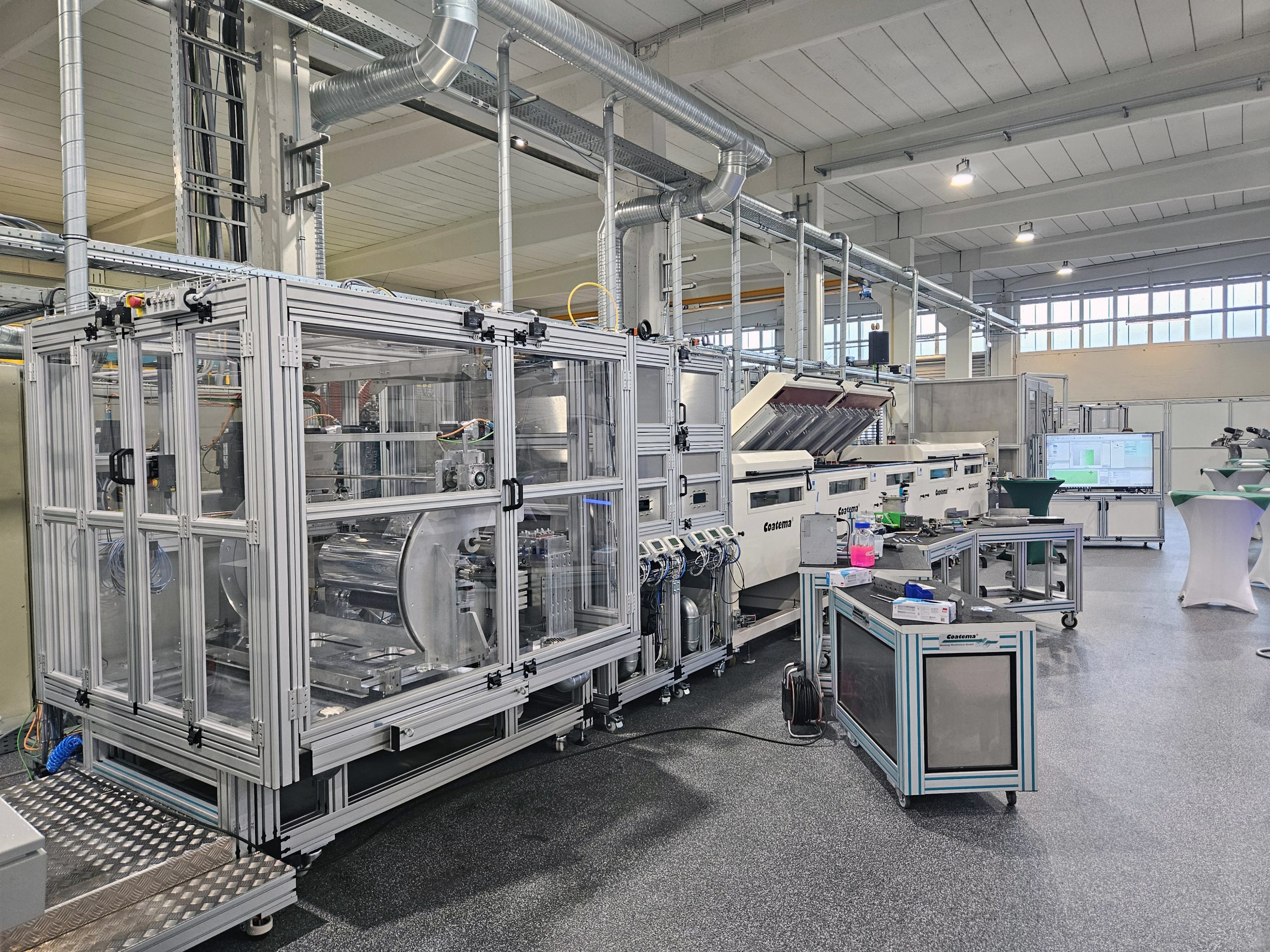
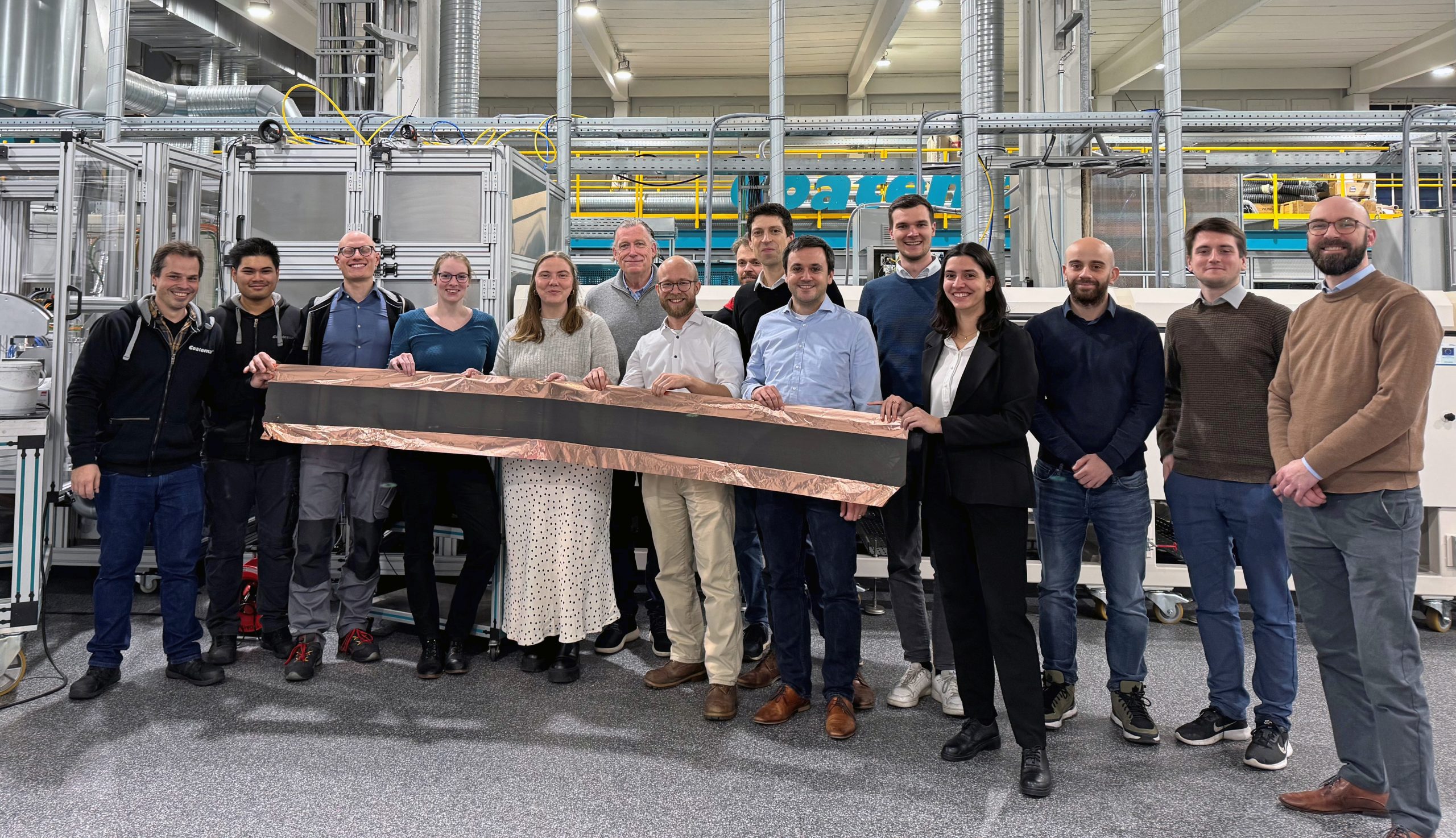
The initial focus of the IDEEL research cooperation was the development and gradual optimization of a suitable laser drying process. To this end, materials for anode and cathode coatings were specifically validated for laser application, and aqueous formulations based on graphite, lithium iron phosphate and silicon graphite were successfully tested (PEM at RWTH Aachen University, MEET Battery Research Center at the University of Münster). A highly efficient diode laser system with a wall plug efficiency of over 50 percent and new processing head with coaxial thermographic coupling and a rectangular laser spot over 0.5 meters wide (Laserline) served as the heat source. To enable contactless, automated process monitoring and control, a highly integrated thermographic camera with industry PC-compatible data output was developed. This system ensures consistent target temperature maintenance even with varying web speeds and coating thicknesses (Optris, Laserline, Fraunhofer ILT). Based on these system components, a modular laser drying unit was developed as a demonstrator, featuring a specialized air management concept and custom dual-chamber wide-slot nozzles for the fast and reliable application of water-based battery pastes (Coatema). Within this demonstrator, the laser-based R2R drying process was upscaled to industrially relevant feed rates while simultaneously determining and validating the optimal process configuration (Fraunhofer ILT, Fraunhofer FFB).
Hybrid Process Enables Industrial Scaling
Since drying requires both heating and mass transport via air extraction, the most technically and economically promising approach was to implement a hybrid configuration with hot air and laser modules. In this R2R process configuration, laser drying enables rapid heating and pre-drying of the slurry, while a downstream convection oven prolongs temperature exposure, ensuring thorough drying of the electrode coating. This approach also allows existing facilities to benefit from the new method by retrofitting laser modules, combining technical optimization with the sustainable use of capital goods. As part of this effort, the project partners developed an innovative hybrid drying system that, for the first time, achieves a web speed of 30 meters per minute and reduces drying times by more than 60%. Additionally, the laser booster at the start of the process cuts the required oven length in half, saving valuable production space and significantly reducing the demand for energy-intensive dry rooms. The operational costs of the drying process decrease by 20 to 30% overall. Furthermore, the reduced oven operation, coupled with the ongoing utilization of a retrofitted system throughout its remaining lifecycle, results in a substantial enhancement of the overall CO₂ footprint. This new approach enables more cost-effective and environmentally friendly processes, which in turn significantly enhances the economic and ecological balance of battery production.
Studies Confirm Equivalent Results with Increased Throughput
Experimental studies conducted by Fraunhofer ILT, PEM of RWTH Aachen University, MEET Battery Research Center, and Fraunhofer FFB demonstrated that the results of hybrid drying are equivalent to those of established convection drying. Despite increased throughput rates, the quality of electrode performance remains at least equivalent in terms of adhesion, residual moisture, electrical conductivity, and electrochemical properties. The industrial relevance of the newly developed process is thus fully validated. The process insights developed within the IDEEL project will consequently be incorporated into the work of Fraunhofer FFB, which is set to become a development center for modern battery cell production in Germany and its European partners.
About Optris GmbH & Co. KG
Optris GmbH & Co. KG was founded in 2003 and has established itself as one of the leading manufacturers of non-contact temperature measurement devices. Its product portfolio consists of both wearable and stationary infrared thermometers and online infrared cameras for thermographic real-time analyses. Optris develops and produces in Germany to ensure the highest standard in quality as a key component of its company policy.
About Laserline
Laserline GmbH, with its headquarters in Mülheim-Kärlich near Koblenz, was founded in 1997. The company is a world leader in the development and manufacture of highly efficient, modular diode laser systems with blue and infrared wavelengths. Laserline high-power diode lasers achieve output powers of up to 60 kW and a wall plug efficiency (WPE) of over 50 percent. Based on decades of experience, Laserline develops customized laser solutions for industrial applications – including high-quality beam shaping optics for the realization of variable spot geometries – and has established itself internationally as a reliable partner. More than 7,500 high-power diode lasers from Laserline are currently in use around the world, demonstrating their performance in a wide variety of processes and applications. The laser technology specialist currently employs around 400 people and has international subsidiaries in the USA, Mexico, Brazil, Japan, China, South Korea, and India as well as representatives in Europe (France, Great Britain, Italy) and in the Asia-Pacific region (Australia, Taiwan, Singapore). Further information on website.
Sign up to the Optris Newsletter
Enter your details below to receive occasional emails with Optris product and company news.
Contact Person


HEAD OF MARKETING
Torsten Czech
E-Mail: pr@optris.de
Tel.: +49 30 500 197-141