


Ambient Derating
Ambient derating describes the phenomenon where the measuring device signal depends to a certain extent on the ambient temperature. This effect has various causes, and its extent depends on the electronics used and the detector technology.
In general, this signal drift as a function of the device temperature can have three causes. Firstly, each electronic component has its own temperature coefficient, which is particularly noticeable at low signal strengths. Device manufacturers can influence this effect by selecting appropriate components. Secondly, spectral filters are often used to precisely define the spectral range. These filters usually consist of many thin layers of different materials to achieve the desired transmission characteristics through constructive and destructive interference. Temperature changes influence this layer system and its transmission properties, particularly affecting temperatures in the center of the measurement range. This effect, however, is relatively small. Thirdly, depending on the technology, the sensitivity of the detector is influenced to varying degrees by the ambient temperature. For example, if the ambient temperature increases from 23 °C to 70 °C, the sensitivity can change from 3% to 50%, depending on the detector material.
Most manufacturers strive to minimize signal drift due to intrinsic temperature changes. In some cases, the detector temperature is stabilized by technical measures, either by heating or cooling to a defined temperature. Alternatively, the detector temperature can be measured, and any signal fluctuations dependent on this can be compensated for by a physical model stored in the device firmware.
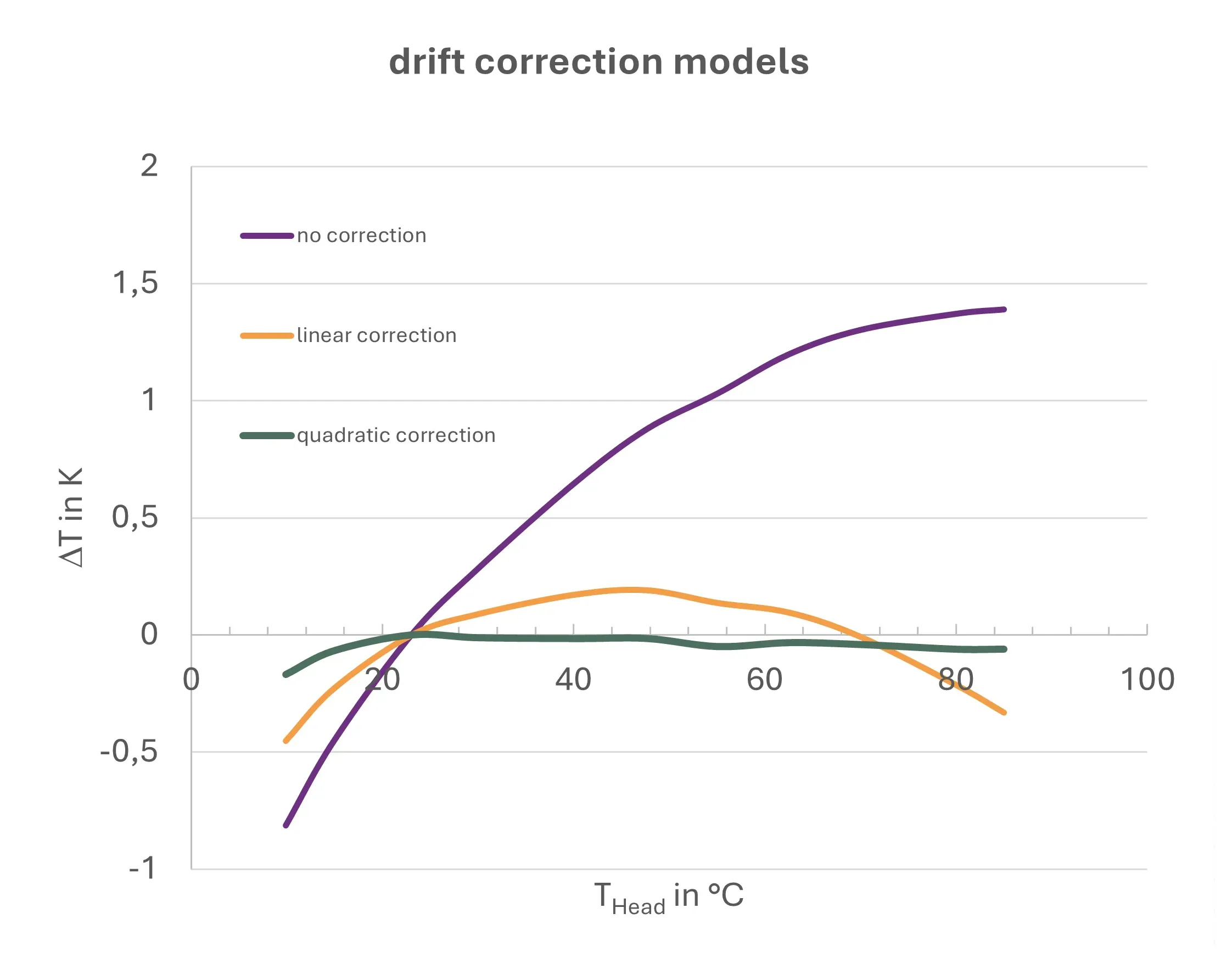
The extent of the remaining ambient derating then depends on the quality of the compensatory model. For example, if a non-linear drift behavior is addressed with a linear correction calculation, the measurement error as a function of the intrinsic temperature can only be minimized in a small ambient temperature interval or exhibit erratic characteristics. The effect described here refers to thermally steady-state systems. Fluctuations in the display due to rapid ambient temperature changes are referred to as thermal shock.
Back to Lexicon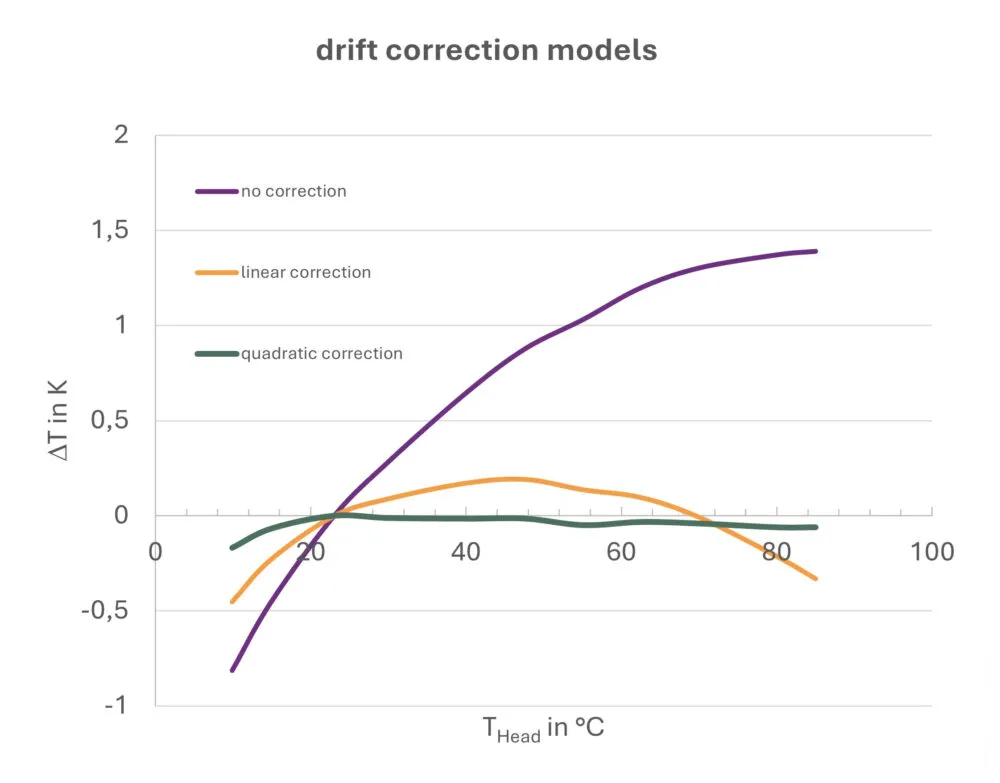
Recommended Products





Talk to us about your IR Temperature Measurement Requirements
Our Infrared Temperature Measurement experts can help you find the right Optris product for your application.
