


Flag
Thermal detectors generate a signal even when not exposed to thermal radiation. This signal is known as the “dark value”. In focal plane array detectors, each pixel has its own dark value, forming a “dark image” or “dark frame”. The dark value is an offset to the signal caused by radiation from the target and must be subtracted to calculate the real signal. The dark frame of the detector depends on the temperature of the focal plane array and is particularly important for bolometers. A change in the temperature of the bolometer chip results in a much larger voltage difference at the output than the same change in the target temperature.
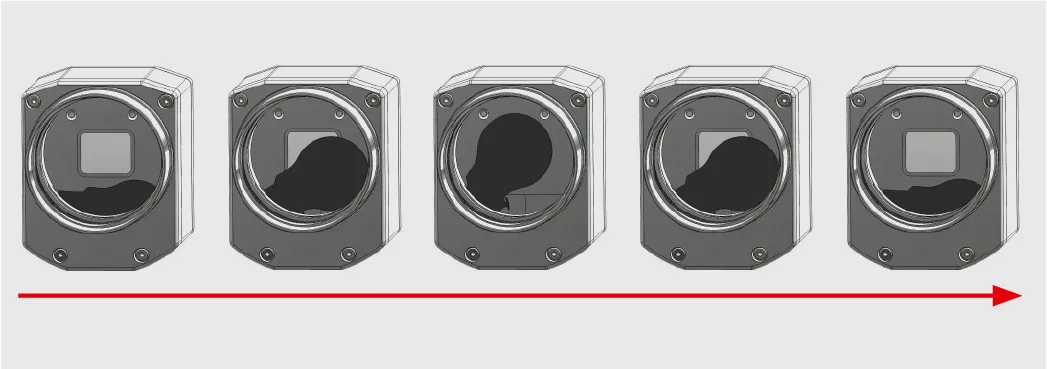
To determine the actual dark frame, an imager uses a flag, also known as a “shutter flag”. This flag is a small plate that can be moved by an electrical drive into the optical path. To ensure the flag acts like a black body, it is blackened on its side facing the detector. To reduce the size of the whole device, a flag could be built from lamellas.
When the flag covers the detector, the signals from all pixels are stored as the current valid dark frame. Upon reopening the flag, these values are subtracted from any succeeding frame. Specifically during the warm-up time, the chip temperature is drifting, causing a significant drift in the calculated target temperature. This must be corrected by periodically cycling the flag.
It’s important to note that a closed shutter flag is an effective protection against high-level radiation that could damage the detector, such as lasers or other focused radiation.
Back to Lexicon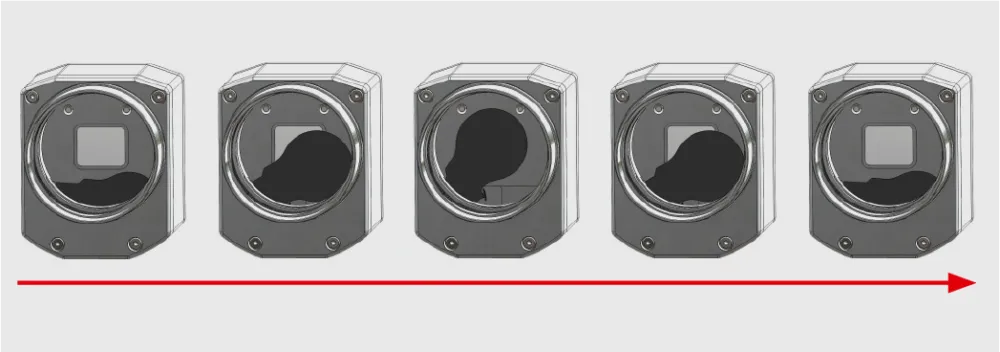

Talk to us about your IR Temperature Measurement Requirements
Our Infrared Temperature Measurement experts can help you find the right Optris product for your application.
