


Linescanner
Infrared line scanners are specialized devices used for non-contact temperature measurement across a wide area. They capture temperature data along a single line and create a two-dimensional temperature map. These scanners are known for their high-speed scanning capabilities, making them suitable for monitoring fast-moving processes or objects.
In manufacturing, infrared line scanners are used to monitor and control temperatures in processes such as steel and glass production, paper and plastic manufacturing. They are also employed in inspecting materials on conveyor belts, monitoring the temperature distribution of kilns and furnaces, and inspecting automotive components during production.
Traditional infrared line scanners have some disadvantages. One significant drawback is their reliance on mechanical components for scanning, which can lead to maintenance issues and potential downtime. They also typically have a narrower field of view compared to modern infrared cameras, making them less compact and more expensive. Additionally, the resolution along the scanning line is generally higher than across the scanning direction, leading to uneven detail in the resulting thermal image.
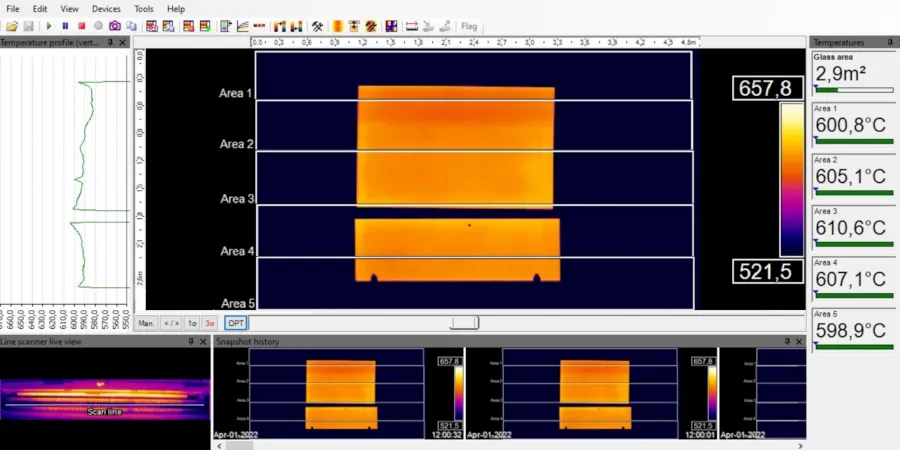
Infrared camera-based line scanners are a sophisticated alternative, providing the same functionality with fewer challenges at a lower cost. Software algorithms map a diagonal line across the focal plane array and sample the temperature data at each frame to produce a new image. Additionally, IR camera-based line scanners cover large areas efficiently with less image distortion and provide better image resolution. They feature a robust construction with fewer mechanical components, which lowers maintenance needs and increases longevity. The more compact size allows for easy installation and integration into various industrial settings.
Back to Lexicon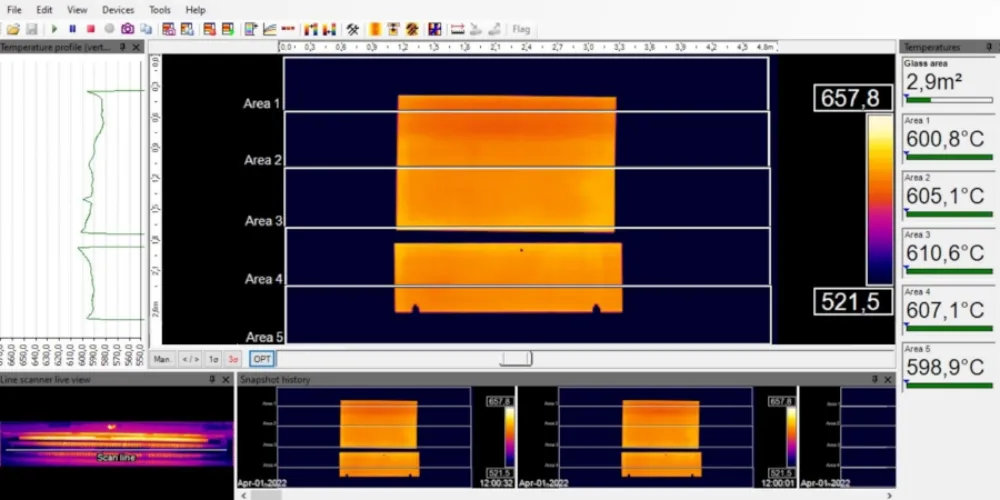

Talk to us about your IR Temperature Measurement Requirements
Our Infrared Temperature Measurement experts can help you find the right Optris product for your application.
