


Pixel Pitch
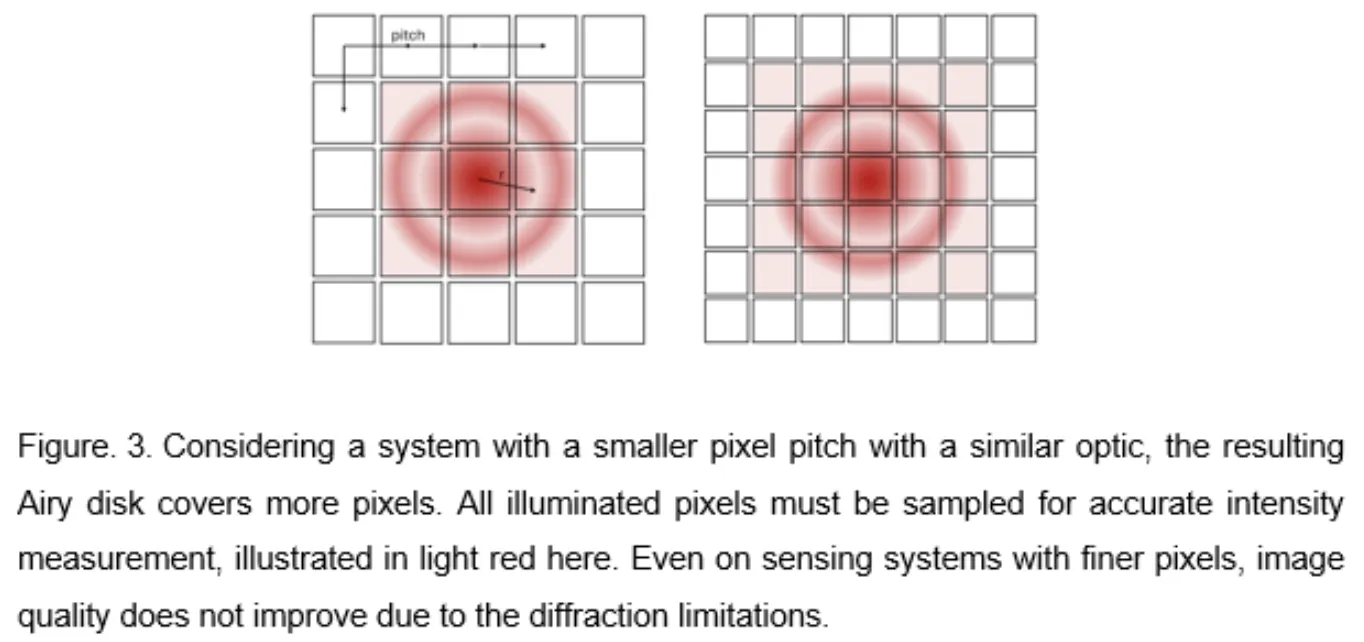
The pixel pitch is a crucial factor in infrared imaging. It refers to the distance between the centers of neighboring pixels in a detector array. It directly affects the resolution, sensitivity, and overall performance of an infrared camera. Smaller pixel pitches allow for higher spatial resolution imaging by packing more pixels into a given area, leading to the capture of more image information and reducing the cost of the infrared imaging system.
However, the trend toward miniaturization presents challenges, such as a reduced effective absorption area for each pixel, which can lower sensitivity. To address these challenges, advancements in materials and multilayer structures are necessary to improve detector performance. Additionally, having a pixel pitch smaller than the infrared wavelength affects the design of the optical system, particularly in terms of diffraction limitations. As pixel sizes approach the wavelength of the detected radiation, diffraction effects become significant, limiting the achievable resolution. Therefore, the design of infrared imaging systems must strike a balance between pixel pitch, sensitivity, and optical constraints to achieve optimal performance.
Back to Lexicon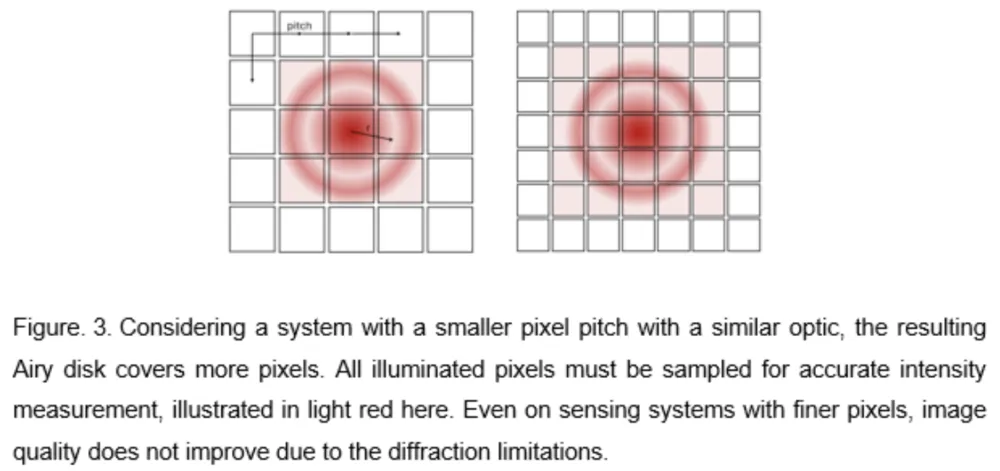

Talk to us about your IR Temperature Measurement Requirements
Our Infrared Temperature Measurement experts can help you find the right Optris product for your application.
