



Stefan-Boltzmann Law
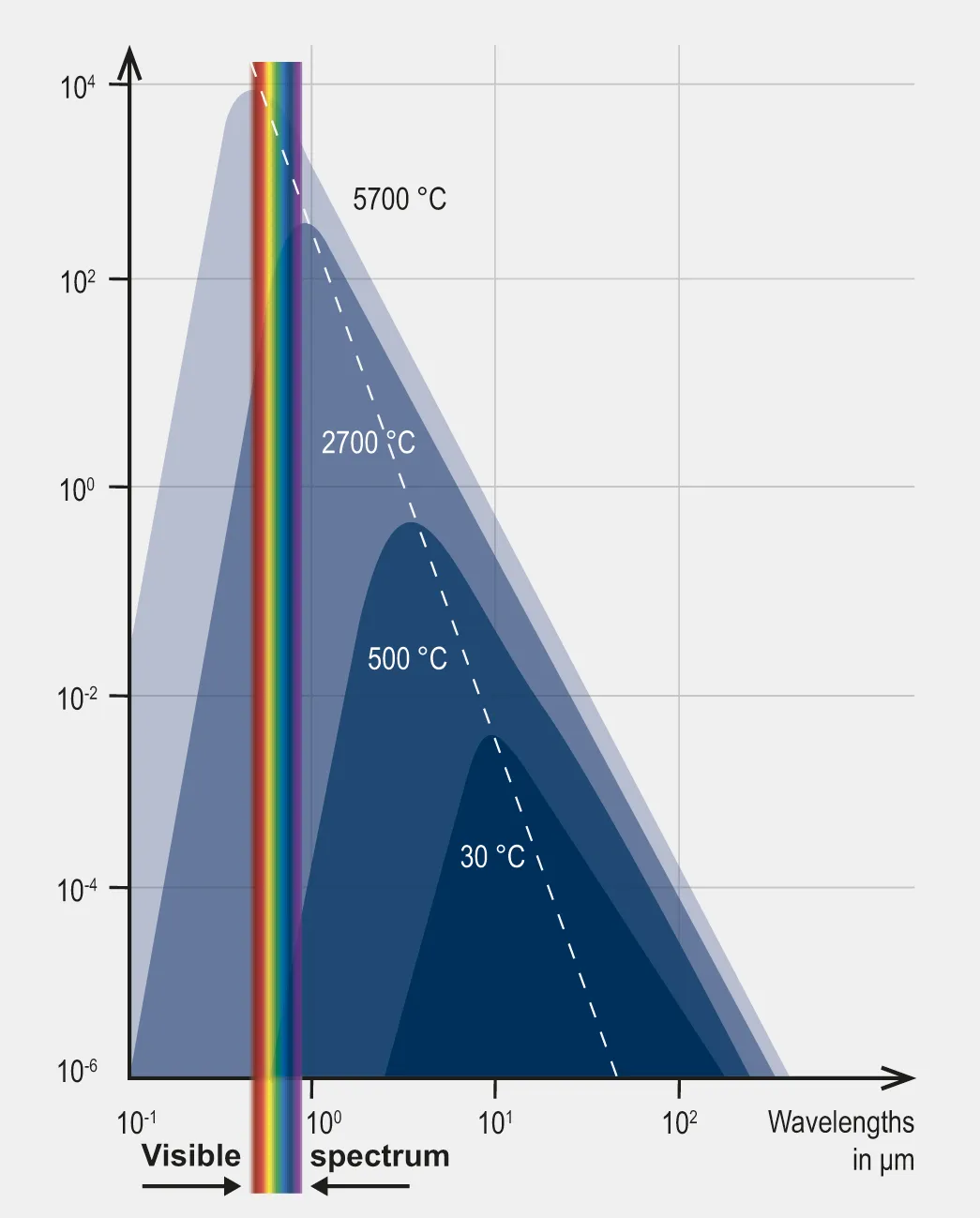
The Stefan-Boltzmann law describes the relationship between the absolute temperature of a black body with surface A and the total radiant power (in W) emitted in all spatial direction.
[math]P = σ ⋅ A ⋅ T^{4}[/math]
with the Stefan-Boltzmann constant:
[math]σ=5,670 374 419… \cdot 10^{-8} \frac{W}{m^{2}K^{4}}[/math]
After it was discovered experimentally by Josef Stefan in 1879, Ludwig Boltzmann was able to derive it from the laws of classical thermodynamics and electrodynamics in 1884. Later, Max Planck was able to derive it by integrating his Planck’s law of radiation over all wavelengths and all spatial directions. This allowed the Stefan-Boltzmann constant to be expressed in terms of other natural constants:
For a gray body, i.e. thermal emitters that have an emissivity of less than 1 compared to the ideal black body, but which is constant for all wavelengths, this law changes to:
Back to Lexicon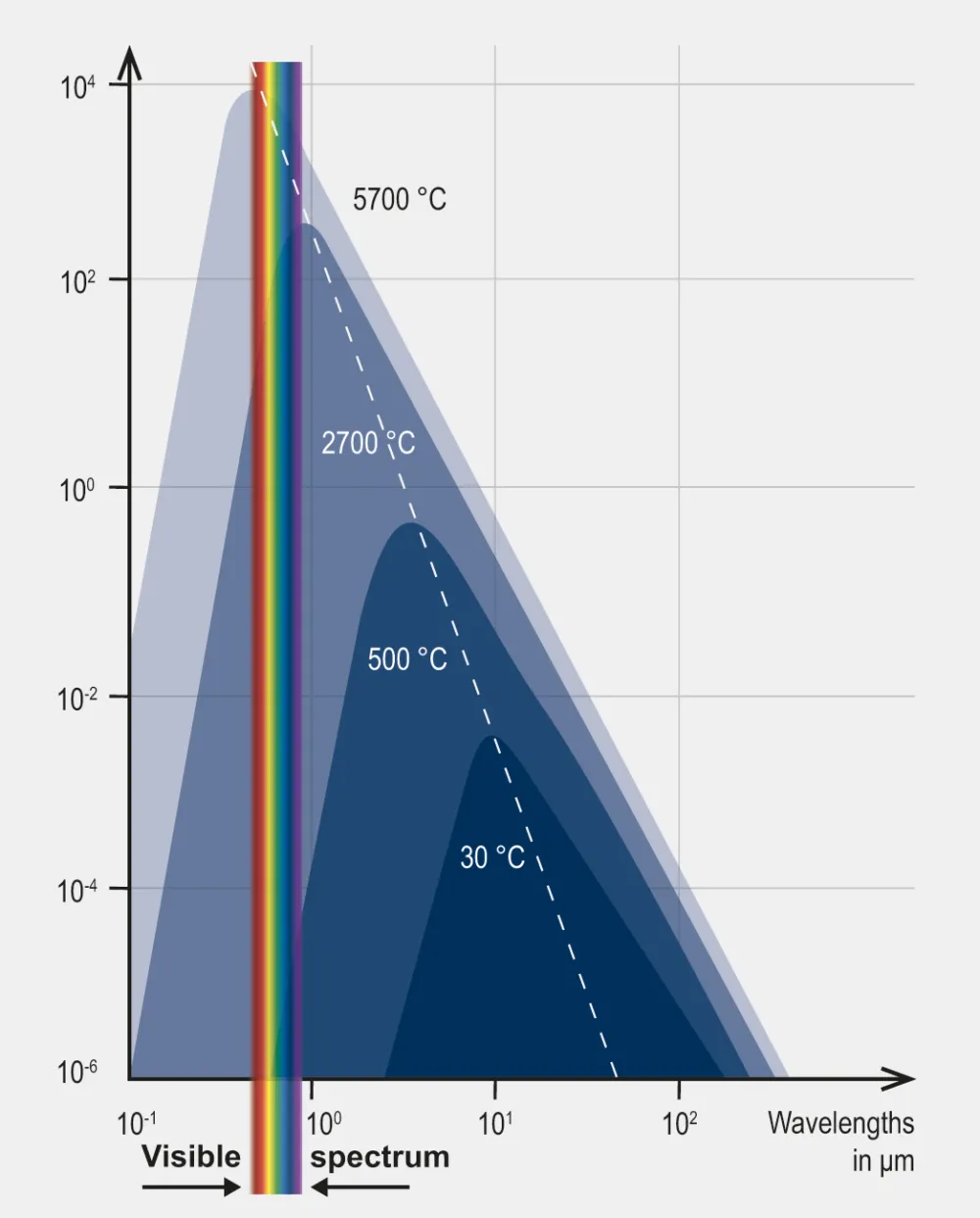
Recommended Products











Talk to us about your IR Temperature Measurement Requirements
Our Infrared Temperature Measurement experts can help you find the right Optris product for your application.
