


Thermal Detector
In addition to quantum detectors, thermal detectors are a second type of infrared detector. They are based on a temperature change of the element through the absorption of electromagnetic radiation. The change in temperature causes a change in a temperature-dependent property of the thermal detector, which is evaluated electrically and is a measure of the absorbed energy. There are different technological implementations of this concept:
When the junction of two different metals is heated, an electrical voltage proportional to the temperature is produced due to the thermoelectric effect. This effect has been utilized for many years for technical contact temperature measurements using thermoelements. If the heating of the junction is caused by the absorption of radiation, then this component is known as a thermopile.
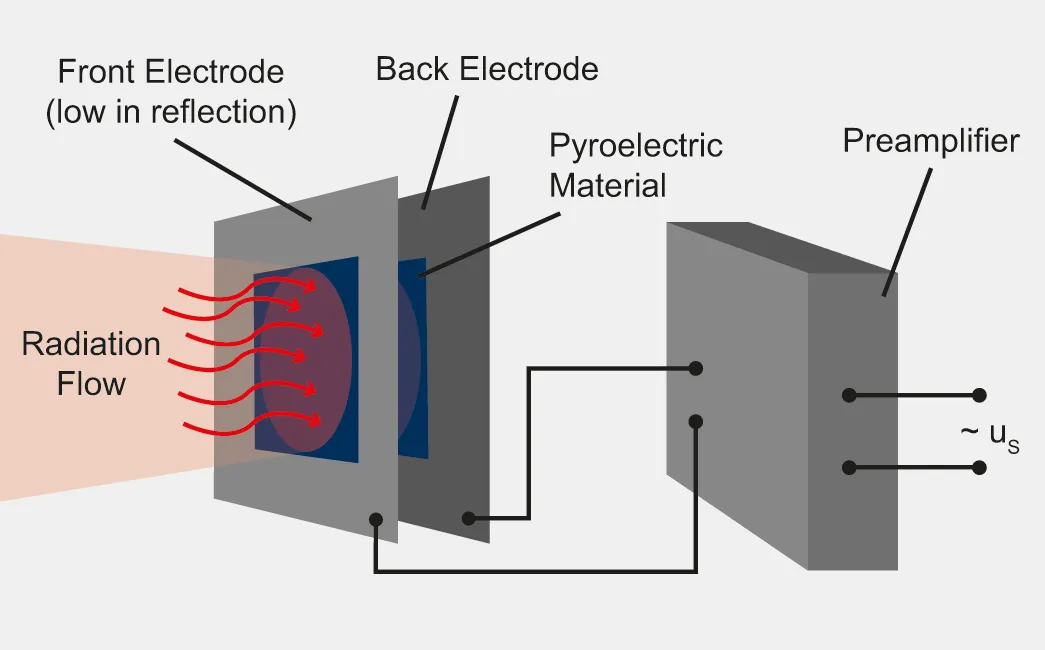
For pyroelectric detectors, the sensitive element consists of a pyroelectric material with two electrodes attached by evaporation deposition. The temperature change in the detector element created by the absorption of infrared radiation causes a change in surface charge as a result of the pyroelectric effect. This results in an electrical output signal which is processed further. Due to the way that charge is created in the pyroelectric material, the radiation flow must be continuously interrupted in an alternating manner (chopping). Otherwise, such a detector is well suited for detecting temperature changes (e.g., in motion detectors).
The bolometer is based on the temperature dependence of electrical resistance. The sensitive detector element comprises a resistor, whose value changes when heat radiation is absorbed. The change in resistance causes a change in the signal voltage drop across the bolometer resistance.
Back to Lexicon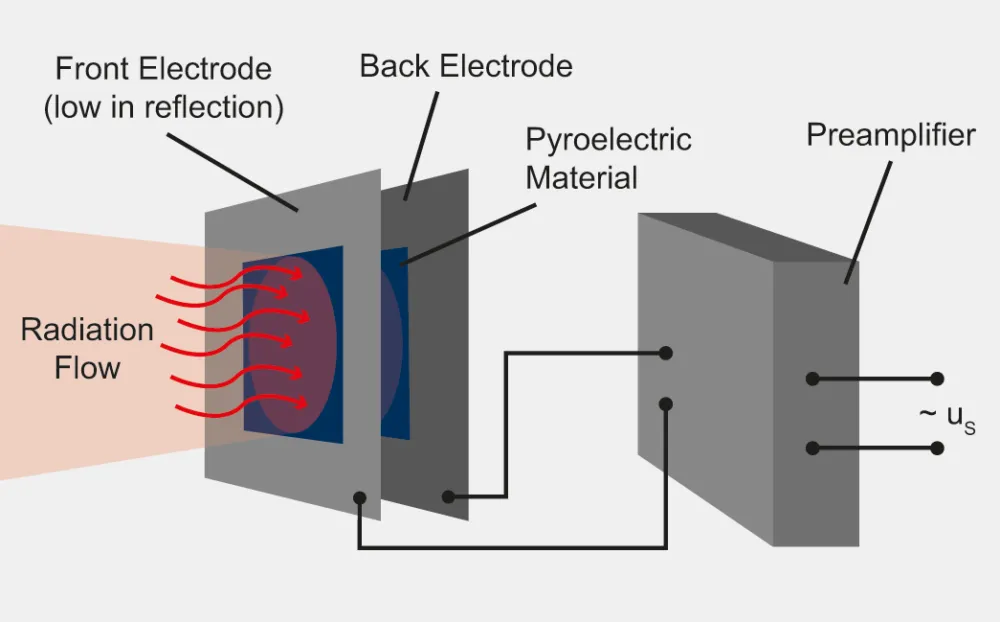
Recommended Products











Talk to us about your IR Temperature Measurement Requirements
Our Infrared Temperature Measurement experts can help you find the right Optris product for your application.
