


Wedge Effect
In infrared thermography, the wedge effect describes the increase in apparent emissivity of a surface when it resides within a wedge-shaped structure—such as a groove, slit, or recess—compared to when it is flat. This heightened emissivity occurs due to multiple reflections of infrared radiation inside the wedge. As radiation bounces within the wedge, each reflection enhances the probability of the radiation being absorbed and re-emitted, thereby increasing the surface’s apparent emissivity.
The combined effect of these internal reflections results in a near-blackbody condition, with emissivity values nearing 0.998, independent of the material’s intrinsic emissivity. This effect minimizes the influence of variations in material emissivity or external radiation on the accuracy of temperature measurements. Achieving such high emissivity requires the wedge’s depth to be considerably larger than its opening.
Applying the wedge or semi-wedge effect boosts the emissivity of surfaces, effective when natural or artificial wedges, such as grooves or slits, are present.
Back to Lexicon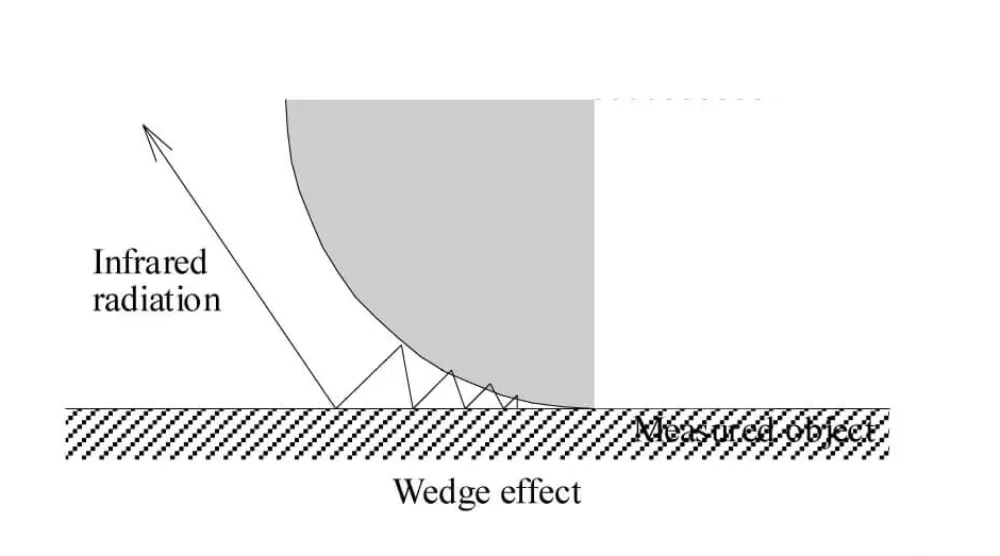
Recommended Products








Talk to us about your IR Temperature Measurement Requirements
Our Infrared Temperature Measurement experts can help you find the right Optris product for your application.
