


RS485 Interface-Kit
The RS485 interface, used for CT, CTlaser, and CTratio pyrometers, is ideal for industrial infrared temperature monitoring.
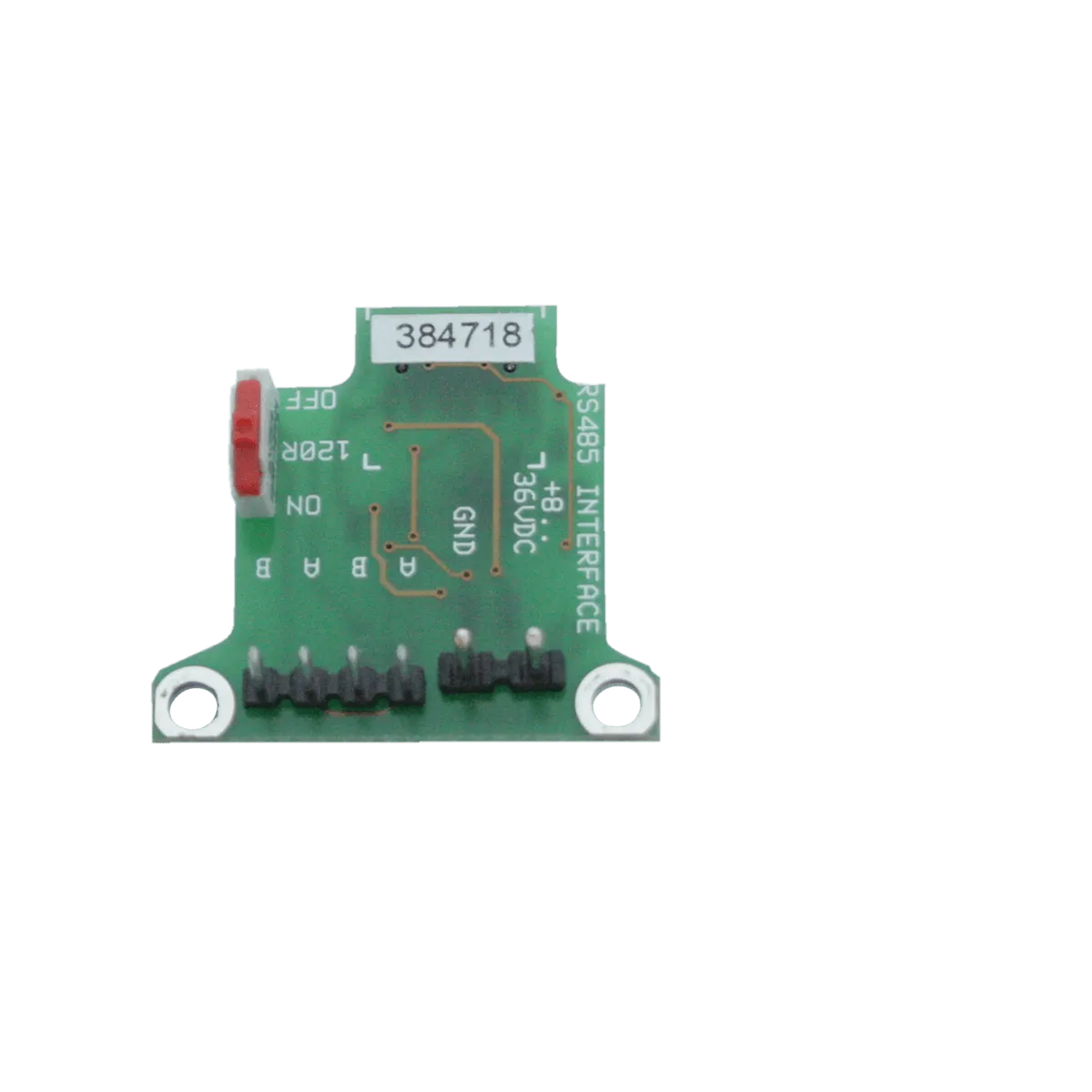
- RS485 interface for CT, CTlaser, and CTratio pyrometer
- Robust communication standard for industrial use
- Up to 32 devices in one RS485 network
- 1200 m range
- Reliable data transmission
50,00€
Product Description
The RS485 interface, used for CT, CTlaser, and CTratio pyrometers, is ideal for industrial infrared temperature monitoring. It operates in half-duplex mode over two wires (A and B) with differential signaling for noise immunity, supporting up to 32 devices over 1200 m. Typical baud rates are up to 921.6 kbps. Proper 120-ohm termination ensures reliable data transmission for precise infrared temperature readings.
- RS485 interface for CT, CTlaser, and CTratio pyrometer
- Robust communication standard for industrial use
- Up to 32 devices in one RS485 network
- 1200 m range
- Reliable data transmission
Specification
General Specifications
Environmental rating: IP67 (Nema-4) (when installed)
Operating temperature: -20 °C to 80 °C
Relative humidity: 10 – 95 %, non-condensing
Interface Board Characteristics
Port protocol: serial Communication
Transfer speed: up to 921.6 kbps
Connector: none
Physical layer: RS485 (2-wire), line, Master/ slave system
Maximal number of devices in network: Up to 32 devices
FAQs
What is the difference between RS485 and RS232 for infrared pyrometers?
RS485 and RS232 are communication standards used in various applications. RS485 supports long-distance (up to 1200 m) and multi-device communication with high noise immunity, ideal for industrial environments. It operates at up to 921.6 kbps. RS232 is suitable for short-distance (up to 15 m) point-to-point connections, operating at up to 115.2 kbps, and is simpler but less noise-immune.
How is the RS485 interface installed on a CT device?
The RS485 interface board is plugged into the designated slot beside the display and secured with M3x5 screws. Connections are made by matching terminal A to A and B to B on the devices.
What is the purpose of the 120-ohm termination resistor?
The 120-ohm termination resistor is used at the last device in the RS485 network to prevent signal reflections and ensure reliable communication.
How are device addresses managed in an RS485 network?
Each device on the RS485 bus requires a unique multidrop address, which can be set using the device interface or communication commands. Addresses range from 1 to 32.
What protocol does the RS485 interface use for communication?
The RS485 interface typically uses a binary protocol for communication, ensuring fast data transfer without additional overhead bytes like CR, LR, or ACK.
How do you change the baud rate for the RS485 interface?
The baud rate can be adjusted via the device interface to match the required communication speed.
What happens if multiple devices on the RS485 bus try to communicate simultaneously?
In RS485 networks, devices are slaves and cannot communicate simultaneously. Commands are broadcast to all devices, but only the addressed device responds.
Scope of Supply
- 1x RS485 interface board
- 1x M12 cable gland
- 1x Set of Mounting screws, cable tie
- 1x Quick reference

Talk to us about your IR Temperature Measurement Requirements
Our Infrared Temperature Measurement experts can help you find the right Optris product for your application.
